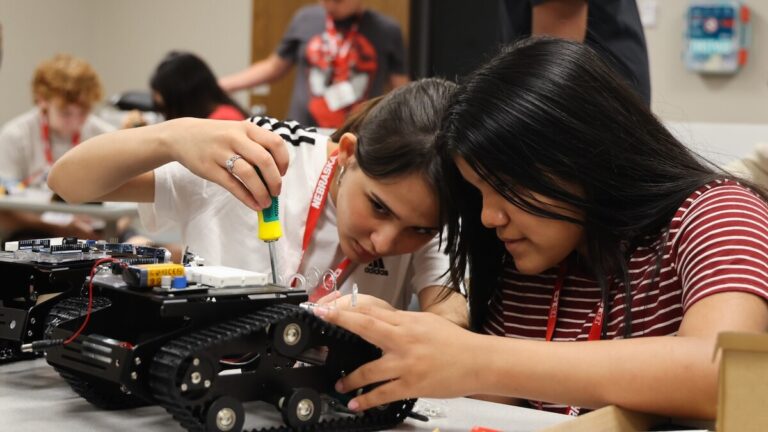

The relentless march of artificial intelligence continues to redefine our world, transforming industries, reshaping daily tasks, and opening up entirely new frontiers of innovation. From smart assistants that streamline our lives to complex algorithms powering medical breakthroughs and autonomous vehicles, AI is no longer a futuristic concept; it’s an integral part of our present and, even more profoundly, our future. For young minds currently navigating the complexities of high school, this rapid evolution presents not just a fascinating spectacle, but a burgeoning landscape of professional potential. The question for many isn’t *if* AI will impact their future careers, but *how* they can actively participate in shaping it.
As an AI specialist, writer, and tech enthusiast, I’ve witnessed firsthand the incredible growth and diversification within the AI sector. What was once a niche field for a select few computer scientists has blossomed into a multidisciplinary domain requiring a wide array of talents and perspectives. This is precisely why introducing the vast scope of **AI career opportunities** to high school students is more critical than ever. Just as some programs aim to educate young individuals about traditional career paths, it is imperative that we illuminate the exciting, dynamic, and impactful roles available in artificial intelligence. This article aims to demystify AI professions, highlight the skills needed, and chart potential pathways for the next generation of innovators, creators, and problem-solvers.
### AI Career Opportunities: Paving the Way for Tomorrow’s Innovators
The perception of an “AI job” often conjures images of a solitary programmer hunched over lines of code. While software development remains a cornerstone, the reality of **AI career opportunities** is far richer and more varied. The demand for skilled professionals in artificial intelligence is skyrocketing across virtually every sector, from healthcare and finance to entertainment and environmental science. According to a report by PwC, AI could contribute up to $15.7 trillion to the global economy by 2030, underscoring a massive demand for talent. This growth isn’t just about building AI; it’s about applying it, understanding its ethical implications, and designing its interactions with humanity.
Consider the sheer diversity of roles emerging: **Data Scientists** are the detectives of the digital age, sifting through massive datasets to extract insights that drive AI models. They use statistical analysis and machine learning algorithms to uncover patterns, predict trends, and inform strategic decisions. Without them, AI models would lack the fuel and guidance to learn effectively. Then there are **Machine Learning Engineers**, who are responsible for designing, building, and maintaining AI systems, often translating theoretical research into practical, scalable applications. They work with various programming languages, frameworks, and tools to create intelligent machines.
Beyond these core technical roles, the landscape expands dramatically. **AI Ethicists** play a crucial role in ensuring AI systems are fair, unbiased, and operate within societal values—a field becoming increasingly vital as AI integrates deeper into our lives. **Natural Language Processing (NLP) Specialists** enable computers to understand, interpret, and generate human language, powering everything from virtual assistants to translation software. **Robotics Engineers** combine AI with mechanical engineering to design and program intelligent robots for manufacturing, exploration, or even surgical assistance. **UX Designers specializing in AI** focus on creating intuitive and effective interfaces for AI-powered products, ensuring that human-AI interaction is seamless and productive. Furthermore, roles like **AI Project Managers**, **AI Consultants**, and **AI Sales Engineers** are emerging, requiring a blend of technical understanding, business acumen, and communication skills. These diverse **AI career opportunities** demonstrate that there’s a place for almost any skill set in the evolving AI ecosystem, debunking the myth that only coding prodigies can contribute.
### Building Foundational Skills for an AI-Powered Future
For high schoolers gazing at the horizon of their professional lives, the thought of preparing for a field as complex and rapidly evolving as AI might seem daunting. However, many foundational skills crucial for AI are already being taught, or can be cultivated, during these formative years. It’s about recognizing how current studies can become stepping stones.
**Computational thinking and problem-solving** are perhaps the most vital. These aren’t just about coding; they involve breaking down complex problems into manageable parts, designing step-by-step solutions, and understanding algorithms. Engaging in logic puzzles, participating in robotics clubs, or simply learning how to approach a challenging math problem all contribute to developing this critical mindset. **Mathematics**, particularly statistics, probability, and linear algebra, forms the bedrock of most AI algorithms. A solid grasp of these concepts at a foundational level will significantly ease the transition into higher-level AI studies. Students shouldn’t shy away from advanced math courses, as they directly equip them for future AI roles. Even seemingly abstract concepts become tangible tools when applied to machine learning models.
**Basic programming skills**, especially in languages like Python, are highly advantageous. Python is the lingua franca of AI due to its readability, extensive libraries (like TensorFlow and PyTorch), and vast community support. Many online platforms offer free or low-cost courses that can introduce high schoolers to Python fundamentals, often through engaging, project-based learning. Schools with computer science departments might also offer introductory programming classes, providing a structured learning environment.
Beyond the technical, **critical thinking, creativity, and ethical reasoning** are increasingly valuable. As AI becomes more powerful, the ability to question its implications, design innovative solutions, and ensure its responsible deployment becomes paramount. Debating ethical dilemmas, engaging in creative writing or design projects, and participating in discussions about technology’s societal impact are all ways to hone these soft skills. **Data literacy**—the ability to understand, analyze, and interpret information—is another non-negotiable skill. Even without deep statistical knowledge, understanding how data is collected, processed, and used (or misused) is fundamental to working with AI.
High school is an ideal time for exploration. Engaging with online communities, attending virtual workshops, or even starting small personal projects (e.g., building a simple chatbot or training a basic image recognition model) can provide invaluable hands-on experience. Many educational organizations and tech companies now offer programs specifically designed to introduce high school students to AI concepts, much like the spirit of programs designed to introduce various career fields, but tailored for the digital age. These early exposures can spark curiosity and provide a tangible sense of what **AI career opportunities** entail, guiding academic choices and future professional aspirations.
### Navigating the AI Landscape: Pathways from High School to Professional Life
Charting a course from high school to a thriving career in AI requires strategic planning, continuous learning, and adaptability. The beauty of the AI field is that while traditional academic pathways are robust, alternative routes are also increasingly viable, catering to diverse learning styles and career ambitions.
The most conventional pathway involves pursuing a **university degree** in computer science, data science, artificial intelligence, or related engineering fields. These programs provide a comprehensive theoretical foundation and practical skills, often culminating in research opportunities or capstone projects that mimic real-world AI challenges. Many universities now offer specialized AI minors or concentrations, allowing students to tailor their studies. For those interested in the more human-centric aspects of AI, degrees in cognitive science, computational linguistics, or even philosophy (with a focus on ethics) can provide unique perspectives and highly sought-after expertise.
However, a four-year degree isn’t the only entry point into **AI career opportunities**. **Vocational training programs and specialized certifications** are gaining traction, offering intensive, focused learning paths that can equip individuals with job-ready skills in a shorter timeframe. Platforms like Coursera, Udacity, and edX offer professional certificates and specializations in areas like machine learning, deep learning, and data engineering, often developed in partnership with leading universities and tech companies. These can be excellent options for high school graduates looking to enter the workforce more quickly or for those seeking to upskill after gaining some initial experience.
**Internships and early exposure** are incredibly impactful. Even high school students can seek out opportunities, whether formal internships at local tech companies, mentorships with AI professionals, or participation in hackathons and coding competitions. These experiences provide practical application of learned skills, networking opportunities, and a realistic glimpse into day-to-day AI work. A summer program focused on AI, similar in structure to those designed for other career explorations, could be transformative, offering hands-on projects and direct interaction with industry experts. Such initiatives can demystify the field and solidify a young person’s interest, providing a competitive edge when applying for university or entry-level positions.
Ultimately, a successful career in AI, regardless of the entry pathway, hinges on **continuous learning and adaptability**. The field evolves at an unprecedented pace, with new algorithms, tools, and research emerging constantly. Professionals in AI must embrace lifelong learning, staying updated with the latest advancements through conferences, research papers, online courses, and collaborative projects. This commitment to growth ensures that one remains at the forefront of innovation and can pivot as the technological landscape shifts. The journey into **AI career opportunities** is less of a fixed path and more of an ongoing adventure, ripe with challenges and boundless rewards for those willing to engage with its dynamic nature.
The digital age is not merely presenting a new set of tools; it is fundamentally altering the fabric of our economy and society. At the heart of this transformation lies artificial intelligence, a domain rich with potential for discovery, creation, and impact. For high school students on the cusp of defining their professional journeys, the landscape of **AI career opportunities** offers an unparalleled invitation to engage with the future, not as passive observers, but as active architects.
By fostering foundational skills, exploring diverse pathways, and embracing a spirit of continuous learning, young innovators can not only find their place within this exciting field but also contribute meaningfully to its ethical and beneficial development. The time to explore, learn, and engage with AI is now, for the decisions and passions cultivated today will undoubtedly shape the intelligent world of tomorrow. The journey promises to be challenging, inspiring, and profoundly rewarding, offering a chance to truly make a difference in how humanity interacts with technology.