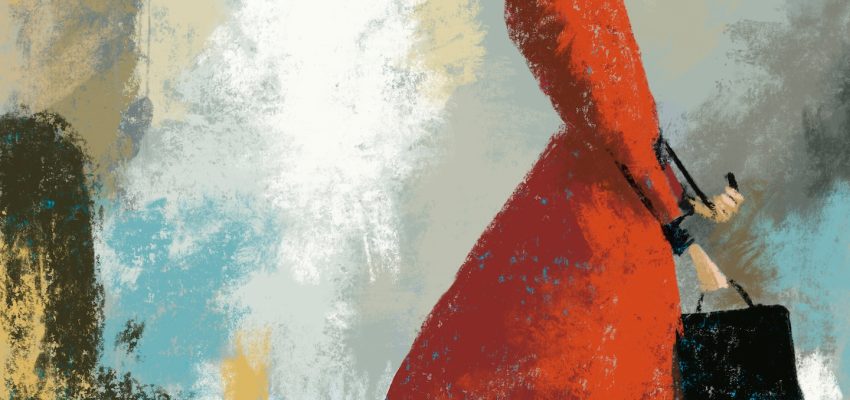

The world of work is in constant flux, a dynamic ballet choreographed by technological innovation, economic shifts, and evolving societal values. As an AI specialist and keen observer of these transformations, I’ve witnessed firsthand how artificial intelligence is not just automating tasks but fundamentally reshaping what it means to have a meaningful and impactful career. Yet, amidst this rapid evolution, some deeply ingrained societal perceptions stubbornly persist, particularly concerning the value and recognition of highly committed professional paths.
It’s a peculiar paradox: we celebrate innovation and economic growth, often driven by intense dedication and long hours, but sometimes struggle to acknowledge the human effort behind it, especially when it doesn’t fit traditional molds. The narrative that often emerges is one of a **demanding modern career** being casually dismissed – perhaps as a ‘hobby’ or a temporary pursuit – rather than the foundational pillar it often is for an individual or even an entire family. This dissonance is particularly pronounced for those who, against historical expectations, have become the primary financial support for their households, navigating complex roles that require immense skill, resilience, and strategic acumen. The challenge isn’t just about workload; it’s about the psychological burden of having one’s profound professional contributions overlooked or trivialized.
My aim today is to delve into this often-unseen struggle. We’ll explore why such demanding roles, particularly those embraced by women, continue to face an uphill battle for societal recognition, and how the advent of AI presents both new challenges and profound opportunities to redefine professional value. As we push the boundaries of technology, it’s imperative that our understanding of human labor, dedication, and success evolves in tandem. This is a conversation not just about careers, but about respect, equity, and the future of work itself.
### Demanding Modern Career: A Shifting Landscape of Value
The notion of a **demanding modern career** has fundamentally transformed in the digital age, especially with the pervasive influence of artificial intelligence. It’s no longer solely about manual labor or even long hours in an office, though those elements can certainly be part of it. Today, a demanding career often implies a role that requires continuous learning, complex problem-solving, high-stakes decision-making, and an unwavering commitment to innovation. Think of an AI researcher pushing the boundaries of machine learning algorithms, a cybersecurity expert defending critical infrastructure, or a project manager overseeing a multi-million-dollar tech rollout – these are roles steeped in intellectual rigor, requiring constant adaptation and a profound mental load that extends far beyond the typical 9-to-5 workday.
The advent of AI, while offering tools for efficiency, has also amplified the demand for uniquely human skills. While machines excel at repetitive tasks and data processing, the human element in a **demanding modern career** now lies in areas like ethical AI development, creative problem-solving, strategic foresight, emotional intelligence, and complex stakeholder management. These are attributes that are incredibly taxing to cultivate and maintain, yet their ‘output’ isn’t always tangible in the same way traditional manufacturing might be. The pressure to stay ahead of the curve, to continually upskill in a rapidly changing technological landscape, adds another layer of intensity to these roles.
Consider, for instance, the tech industry, a hotbed of demanding careers. A report by Blind in 2023 indicated that 72% of tech professionals experienced burnout, citing long hours, intense pressure, and the always-on culture as primary drivers. This isn’t just about coding; it’s about architecting solutions, debugging complex systems, and collaborating across time zones, often under tight deadlines. These professionals are not merely doing a job; they are often driving the very innovation that propels our societies forward. Yet, because the work is often abstract, digital, and intellectual, its true grind can be invisible to outsiders. The strategic thinking involved in navigating complex data landscapes, the sheer mental resilience required to pivot when a project hits an unforeseen roadblock – these are the hallmarks of a truly **demanding modern career**.
Historically, the value of labor has often been tied to visible, physical output or direct financial transactions. A farmer’s harvest, a builder’s structure, a doctor’s immediate intervention – these have clear, immediate impacts. In contrast, the intricate web of a data scientist’s models or an AI ethicist’s policy recommendations, while profoundly impactful, might not be as intuitively understood by those outside the field. This gap in understanding contributes significantly to the undervaluing of these essential, albeit less visible, contributions. As AI continues to redefine productivity and value, it’s critical that our societal lens for recognizing and appreciating diverse forms of demanding work broadens correspondingly.
### The Invisible Labor and Persistent Misconceptions
The frustrating experience of having a **demanding modern career** dismissed as a ‘hobby’ or a less serious pursuit is a stark illustration of persistent societal misconceptions about work, value, and gender roles. This issue takes on a particularly sharp edge when the professional in question is a **female breadwinner**, a scenario that still challenges deeply ingrained, often subconscious, expectations. While we have made strides towards gender equality in the workplace, the burden of proof, the need to constantly justify and validate one’s professional commitment, often falls disproportionately on women, especially those in leadership or high-impact roles.
The concept of ‘invisible labor’ is highly relevant here. This encompasses not just the actual work performed, but also the mental load, the emotional regulation, the constant strategic planning, and the navigation of subtle biases that accompany a **demanding modern career**, particularly for women. For a **female breadwinner**, this invisible labor is often compounded by traditional expectations around household management and childcare, creating a double shift that is rarely fully acknowledged. Friends and family, perhaps well-meaning, might interpret a demanding career as a choice rather than a necessity or a fundamental aspect of identity, failing to grasp the sheer dedication and sacrifice involved.
In the tech and AI sectors, where innovation cycles are relentless and global collaboration is the norm, the demands can be particularly intense. Developers often work against tight deadlines, data scientists spend countless hours refining models, and AI project managers coordinate diverse teams across continents. The pressure to be always-on, to continuously update skills, and to navigate complex technical and ethical challenges is immense. Yet, when a woman in such a role speaks about her work, it can sometimes be met with a casual nod or a suggestion to ‘take it easy,’ implying a lack of understanding of the strategic importance and personal investment involved. This dismissiveness isn’t just an inconvenience; it can be profoundly isolating and demotivating, undermining the very recognition that successful professionals crave.
This phenomenon isn’t new, but AI’s rise might be subtly intensifying it. As AI becomes more sophisticated, some might mistakenly believe that the human effort behind its development and deployment is diminishing, thus further obscuring the true intensity of a **demanding modern career** in this space. The complex algorithms, the ethical frameworks, the meticulous data curation – all require immense human intelligence and dedication. Yet, the perception that ‘the machines are doing the work’ can lead to an undervaluation of the human architects and operators. It highlights a critical need for greater literacy around the intricate relationship between human expertise and artificial intelligence, ensuring that the labor of innovation is properly seen and celebrated, not dismissed through outdated lenses or technological mystification.
### Navigating the Future: Redefining Recognition in the AI Era
The challenge of gaining proper recognition for a **demanding modern career**, especially for the **female breadwinner**, requires a multifaceted approach. It’s not simply about individual effort, but about a collective shift in how we perceive and value work in the rapidly evolving landscape shaped by AI. Education and awareness play a pivotal role. It is incumbent upon those of us deeply entrenched in the tech and AI sectors to articulate the complexities, the intellectual rigor, and the profound impact of our work to a broader audience. This means moving beyond jargon and explaining the ‘why’ and ‘how’ in accessible terms, demystifying the perceived ‘magic’ of AI to highlight the human ingenuity behind it.
Organizations also have a crucial role to play in fostering cultures that genuinely recognize and reward high-impact work, irrespective of gender or traditional role definitions. This involves implementing transparent evaluation metrics that consider not just hours worked, but strategic output, innovation, problem-solving prowess, and the mental load carried by employees. Companies that are at the forefront of AI development must also be at the forefront of modernizing their understanding of a **demanding modern career**, ensuring that recognition mechanisms are equitable and inclusive. This could mean leadership training that addresses unconscious biases, mentorship programs designed to elevate diverse talent, and flexible work arrangements that acknowledge the holistic lives of their employees.
Intriguingly, AI itself holds the potential to be a powerful ally in redefining recognition. By automating mundane, repetitive tasks, AI can free up human professionals to focus on higher-value, more creative, and ethically complex work—the very aspects that are often harder to quantify but are indispensable in a **demanding modern career**. Furthermore, AI-powered analytics could potentially offer objective insights into contributions, moving beyond subjective biases. Imagine AI tools helping to analyze the impact of strategic decisions, the efficiency of complex problem-solving, or the reach of innovative ideas, thus providing data-driven evidence for performance that might otherwise go unnoticed. This could level the playing field, making it harder to dismiss genuine professional achievement.
Finally, for individuals navigating a **demanding modern career**, self-advocacy and community are essential. Learning to articulate one’s value, to set boundaries, and to actively seek out supportive networks can counteract the isolation that can come with being misunderstood. Engaging with professional organizations, participating in thought leadership, and mentoring others can create a powerful ripple effect, gradually shifting broader perceptions. The future of work, heavily influenced by AI, demands that we move beyond outdated stereotypes and embrace a more nuanced, inclusive understanding of professional contribution and success, celebrating the diverse ways in which individuals contribute to our collective progress.
The journey to a future where a **demanding modern career**, regardless of who pursues it, is fully recognized and celebrated is ongoing. The anecdote of a professional’s intense dedication being trivialized as a mere ‘hobby’ highlights a critical area where societal understanding needs to catch up with the pace of technological and economic evolution. As André Lacerda, an AI specialist and tech enthusiast, I believe we are at a pivotal moment. The rapid advancements in artificial intelligence are not merely changing jobs; they are challenging us to redefine the very essence of professional value and respect. It is a call to action for all of us – individuals, organizations, and communities – to engage in a deeper dialogue about what truly constitutes a valuable contribution in the digital age.
Embracing this challenge means consciously dismantling old biases, actively promoting inclusive narratives around work, and championing the unsung heroes of our economy. Let us strive for a future where every demanding professional path, every strategic mind, and every dedicated effort is seen, understood, and celebrated for its profound impact, paving the way for a more equitable and appreciative professional landscape for generations to come. The era of AI is upon us, and with it, the opportunity to forge a world where human ingenuity and hard work, in all its forms, receive the recognition they truly deserve.