

The landscape of work is undergoing a seismic shift. Driven by rapid technological advancements, especially in artificial intelligence, jobs that once seemed stable are evolving, while entirely new roles emerge with dizzying speed. In this dynamic environment, the traditional educational model, often criticized for its theoretical bias and disconnect from practical application, faces an unprecedented challenge. How do we equip the next generation with the skills, knowledge, and adaptability needed to thrive in a world being reshaped by algorithms and automation?
This urgent question is precisely what innovative initiatives across the globe are attempting to answer. From forward-thinking school districts to visionary educational institutions, there’s a growing recognition that merely imparting academic knowledge is no longer sufficient. What’s required is a systemic overhaul, a deliberate effort to build robust bridges between the classroom and the career, ensuring that students are not just learned, but genuinely prepared for the professional journey ahead. As an AI specialist and tech enthusiast, I, André Lacerda, have keenly observed these transformative efforts, understanding their critical role in future-proofing our societies and empowering individuals to navigate the complexities of the 21st-century workforce. The goal is clear: to cultivate a generation that is not only proficient in core subjects but also possesses the critical thinking, problem-solving prowess, and technological fluency demanded by an ever-evolving global economy.
### Career Readiness Programs: Bridging the Academic-Professional Divide
The gap between what is taught in schools and what is needed in the workplace has long been a point of contention. Employers frequently report difficulties finding candidates with the right mix of technical and soft skills, while graduates often feel unprepared for the demands of their chosen professions. This chasm highlights a fundamental flaw in the conventional educational pipeline, emphasizing the need for a more integrated and pragmatic approach. Enter the **career readiness program** – a comprehensive educational framework designed to seamlessly connect academic learning with real-world professional development.
A well-structured **career readiness program** moves beyond simple vocational training. It aims to cultivate a holistic set of competencies essential for success in any field. This includes not only specific technical skills, such as coding or data analysis, but also crucial transversal skills like communication, collaboration, critical thinking, creativity, and adaptability – often referred to as ‘21st-century skills.’ These programs are predicated on the understanding that the future workforce will need to be agile, capable of learning new tools and adapting to new paradigms throughout their careers. They address the crucial need for students to understand career pathways, develop professional networks, and gain practical experience before entering the job market full-time. Research from organizations like the National Association of Colleges and Employers (NACE) consistently underscores the importance of internships and experiential learning in enhancing graduate employability, demonstrating a clear correlation between early exposure to professional environments and post-graduation success rates. These programs often begin as early as middle school, building foundational skills and career awareness, then intensify in high school with specialized pathways and direct industry engagement, culminating in students who are not just diploma-holders, but confident, capable professionals-in-training.
### The Architecture of Future-Proofing: Key Components of Effective Programs
To effectively bridge the divide between education and employment, a **career readiness program** must be meticulously designed, incorporating several interconnected components that reinforce each other. These elements work in concert to provide a rich, immersive, and highly practical learning experience:
**1. Robust Industry Partnerships:** At the heart of any successful workforce development initiative are strong collaborations with local and national industries. These partnerships are symbiotic: businesses gain early access to potential talent, influence curriculum development to ensure relevance, and fulfill their corporate social responsibility. Educational institutions, in turn, gain invaluable insights into current and future industry demands, access to state-of-the-art equipment, and opportunities for student placements. For example, a partnership with a local robotics company might provide students with hands-on experience in automation, while a collaboration with a healthcare provider could offer insights into medical technology and patient care. These relationships transform abstract concepts into tangible career prospects, making learning more meaningful and goal-oriented.
**2. Experiential Learning Pathways:** Passive learning has its limits. Effective career readiness demands active participation and direct experience. This is where components like internships, apprenticeships, co-op programs, and project-based learning (PBL) become indispensable. Internships offer students a taste of real-world work environments, allowing them to apply classroom knowledge, develop professional etiquette, and build a network. Apprenticeships go a step further, providing structured on-the-job training combined with academic instruction, leading to recognized qualifications. Project-based learning, integrated within the curriculum, challenges students to solve authentic problems, often in teams, mirroring the collaborative nature of professional work. These pathways not only build practical skills but also foster resilience, problem-solving capabilities, and a deeper understanding of industry practices.
**3. Integrated and Adaptive Curriculum:** The curriculum must evolve beyond traditional subject silos. A truly effective **career readiness program** integrates career-focused themes into academic subjects, demonstrating the practical application of math in engineering, science in healthcare, and literacy in business communication. This often involves the development of specialized academies or career pathways within schools, focusing on high-demand sectors like STEM (Science, Technology, Engineering, Math), healthcare, skilled trades, or creative arts. The curriculum must also be agile, continuously updated to reflect changes in industry standards and technological advancements. This includes modules on digital literacy, cybersecurity awareness, and, crucially, foundational understanding of artificial intelligence and data science – skills that are rapidly becoming non-negotiable across nearly all sectors.
**4. Mentorship and Soft Skills Development:** Technical proficiency is only half the equation. The ability to communicate effectively, lead teams, resolve conflicts, manage time, and adapt to new situations – often referred to as ‘soft skills’ or ‘power skills’ – are equally, if not more, critical for career longevity. Mentorship programs, where students are paired with industry professionals, provide invaluable guidance, role modeling, and networking opportunities. Workshops focused on resume writing, interview techniques, public speaking, and ethical decision-making further equip students with the interpersonal and professional competencies needed to navigate the complexities of the modern workplace. These skills are often best learned through practice and feedback in low-stakes environments before being tested in real-world scenarios.
**5. Technology Integration and AI Literacy:** As André Lacerda, I cannot emphasize enough the pivotal role of technology, and particularly AI, in shaping future careers. A robust **career readiness program** must not only teach students how to *use* technology but also how to *understand*, *create*, and *critically evaluate* it. This means introducing concepts like algorithmic thinking, machine learning fundamentals, data ethics, and the societal impact of AI. It involves providing access to coding platforms, robotics kits, data visualization tools, and AI development environments. The goal is not to turn every student into an AI engineer, but to ensure that every student is AI-literate, capable of interacting intelligently with AI systems, leveraging them for productivity, and understanding their ethical implications. This prepares them for jobs that don’t even exist yet, by building a foundation of adaptable technological understanding.
### Navigating the AI Frontier: Preparing Students for the Age of Automation
Artificial intelligence is not just a technological advancement; it’s a new paradigm that is fundamentally altering how we work, live, and interact. From automating routine tasks to powering complex decision-making, AI is weaving itself into the fabric of every industry. This presents both immense opportunities and significant challenges for workforce development. Students entering the job market today will face an environment where collaboration with AI systems will be commonplace, and roles requiring uniquely human skills – creativity, emotional intelligence, complex problem-solving, and ethical reasoning – will be at a premium.
Therefore, a future-oriented **career readiness program** must place a strong emphasis on AI literacy and its practical applications. This goes beyond just teaching basic coding; it involves fostering an understanding of how AI works, its limitations, its potential biases, and its ethical considerations. For instance, students might learn about how AI is used in healthcare for diagnostics, in finance for fraud detection, or in creative industries for content generation. They might engage in projects where they train simple machine learning models or analyze datasets to draw conclusions, developing data literacy alongside AI fluency. The emphasis should be on equipping students to be not just users of AI, but thoughtful collaborators and ethical architects of its future deployment. This proactive approach ensures that students are not merely observers of the AI revolution but active participants, capable of harnessing its power for innovation and societal good.
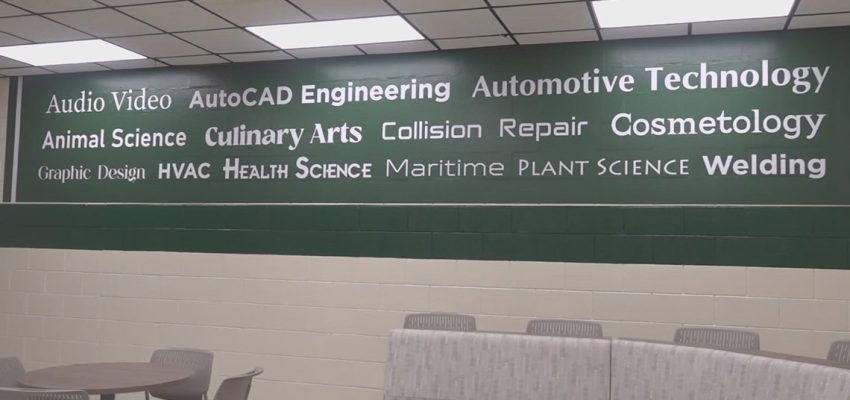
In conclusion, the imperative to equip our students with future-proof skills has never been greater. The traditional educational model, while foundational, requires significant augmentation to meet the demands of a world undergoing rapid technological and economic transformation. Initiatives like the Beaumont ISD program, which actively forge connections between classrooms and careers, represent a crucial step forward in this journey. They exemplify a forward-thinking vision where education is not just about accumulating knowledge, but about developing competence, confidence, and adaptability.
As André Lacerda, I firmly believe that by investing in comprehensive career readiness programs – programs that prioritize industry collaboration, experiential learning, integrated curricula, soft skills development, and, critically, AI literacy – we are not only preparing students for immediate employment but empowering them to thrive throughout their dynamic professional lives. These programs are not merely add-ons; they are essential pillars of a resilient, innovative, and equitable future workforce, ensuring that every student has the opportunity to navigate the exciting, yet challenging, landscape of tomorrow with skill and purpose.










