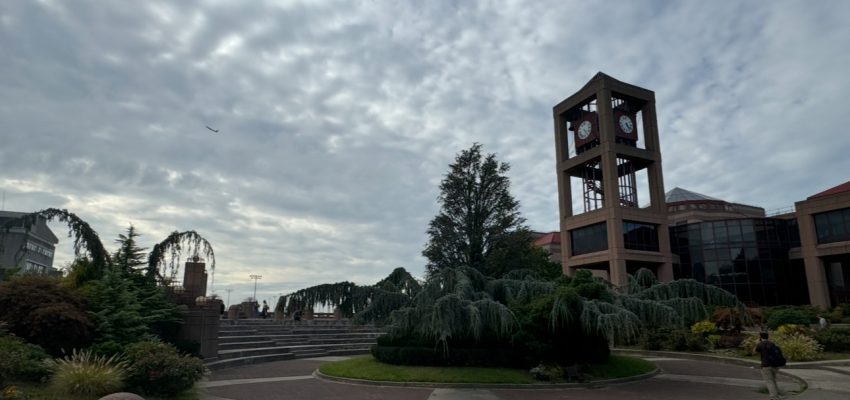

The promise of higher education has long been a beacon for ambitious students: a bridge, meticulously constructed, spanning the chasm between academic theory and the vibrant reality of professional life. Like countless others, I embarked on my computer science journey at Queens College with precisely this vision – a belief that diligent study and strong grades would naturally pave the way to a rewarding career. Yet, as my time in the classroom progressed, a subtle unease began to settle. The imagined bridge often felt elusive, its foundations obscured, and its true destination uncertain. This sentiment, I’ve come to realize, is not unique to my experience but rather a growing apprehension among students worldwide, grappling with an educational system that sometimes struggles to keep pace with an accelerating technological revolution.
We stand at the precipice of an unparalleled transformation, driven primarily by the relentless march of artificial intelligence. AI is not merely an abstract concept or a futuristic novelty; it is a fundamental force reshaping industries, redefining job roles, and demanding an entirely new skill set from the global workforce. The traditional model of education, designed for a more predictable industrial age, now faces an urgent imperative: how do we equip our graduates not just for jobs that exist today, but for careers that are yet to be fully imagined? As an AI specialist, writer, and tech enthusiast, I believe the answer lies in a radical re-evaluation of what constitutes true AI career readiness and how our institutions can authentically deliver it.
AI career readiness: Navigating the Shifting Sands of the Modern Workforce
For generations, the educational pipeline has operated under a relatively stable premise: learn foundational knowledge, specialize in a field, and then apply that expertise in a relatively consistent professional environment. However, the advent of artificial intelligence has fundamentally disrupted this model. A report by the World Economic Forum, for instance, projects that 85 million jobs may be displaced by AI by 2025, even as 97 million new roles emerge, many requiring entirely new skill sets. This isn’t just about automation; it’s about augmentation and the creation of hybrid roles that demand both technical acumen and uniquely human capabilities.
The traditional computer science curriculum, while providing invaluable theoretical foundations, often falls short in preparing students for the dynamic, project-driven, and interdisciplinary nature of real-world AI development and deployment. My own experience, and that of many peers, highlights this disconnect. We learn algorithms, data structures, and programming paradigms, which are crucial. But where is the emphasis on ethical AI design, understanding bias in machine learning models, or the critical soft skills needed to collaborate on complex AI initiatives? The demand for data scientists, machine learning engineers, and AI specialists is booming, yet the specific proficiencies sought by employers extend far beyond textbook knowledge. They seek individuals who can not only build models but also understand their societal implications, communicate complex ideas to non-technical stakeholders, and adapt to rapidly evolving tools and frameworks. This holistic approach to developing AI career readiness is what truly differentiates a future-proof graduate.
What does this expanded definition of AI career readiness entail? It encompasses deep technical proficiency in areas like machine learning, deep learning, natural language processing, and computer vision. But crucially, it also includes a robust understanding of data ethics, privacy laws, and responsible AI development. Furthermore, critical thinking, problem-solving, creativity, emotional intelligence, and effective communication are paramount. These are the skills that AI, at least in its current form, cannot replicate, and they become exponentially more valuable as machines handle increasingly complex cognitive tasks. Universities must transition from simply teaching *about* technology to teaching *with* technology and, most importantly, teaching students how to *think critically and ethically* within a technological ecosystem.
Bridging the Divide: Redefining the Educational Paradigm
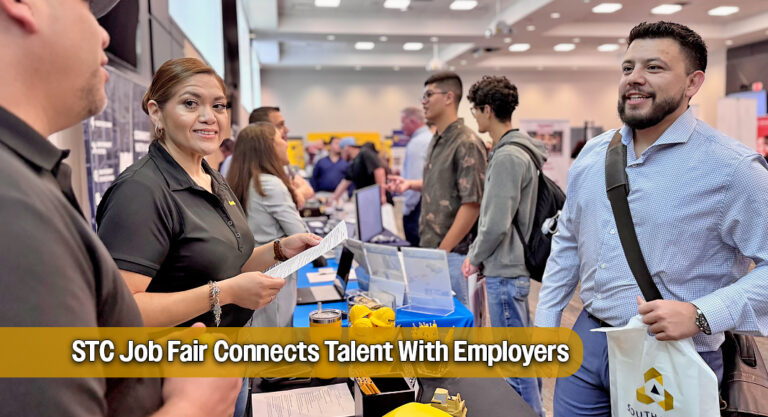
The challenge of cultivating comprehensive AI career readiness is significant, but far from insurmountable. It requires a fundamental rethinking of how higher education structures its curriculum, fosters industry partnerships, and cultivates a culture of continuous learning. One of the most effective strategies is to move beyond purely theoretical instruction towards an integrated model of experiential learning. Internships, co-op programs, and project-based courses that tackle real-world problems are no longer optional enhancements but essential components of a modern education. For example, institutions can collaborate with local tech companies and AI startups, allowing students to contribute to actual projects under mentorship, gaining invaluable practical experience and exposure to industry best practices.
Consider the success of institutions that have adopted this model: universities that embed AI ethics into every relevant course, from philosophy to engineering, or those that establish interdisciplinary AI labs where computer scientists work alongside sociologists, psychologists, and legal experts. This fosters a more nuanced understanding of AI’s capabilities and limitations, preparing students for roles that often blur traditional disciplinary boundaries. A compelling example is the rise of AI residencies and fellowships offered by leading tech companies, which provide a deep dive into practical application that traditional academic paths often miss. Universities can learn from this model, creating their own “internal residencies” or capstone projects that mimic industry challenges.
Moreover, the very structure of degree programs needs to become more agile. The rapid pace of technological change means that a four-year curriculum can quickly become outdated. Micro-credentials, bootcamps, and modular learning pathways that allow students to specialize, reskill, or upskill quickly in response to market demands are vital. This also means encouraging a mindset of lifelong learning – not just as a buzzword, but as an ingrained habit. Educators should also explore how AI itself can enhance learning, using AI-powered tools for personalized feedback, adaptive learning paths, and intelligent tutoring systems, thereby preparing students for an AI-integrated workplace by having experienced it in the classroom.
The AI Specialist’s Perspective: A Call to Action for Educators and Students
From my vantage point as an AI specialist, the urgency to address the gap between classrooms and careers has never been greater. While institutions bear a significant responsibility, students themselves must become proactive architects of their own learning journeys. The democratized access to online courses, open-source projects, and vibrant developer communities means that learning is no longer confined to lecture halls. Actively participating in hackathons, contributing to open-source AI projects, and building personal portfolios demonstrate initiative and practical skills in ways that a transcript alone cannot. Networking with professionals, attending industry conferences (even virtually), and seeking out mentorship are crucial steps in building effective AI career readiness.
For educators and administrators, the call to action is clear: embrace rapid iteration and collaboration. This means consulting regularly with industry leaders to understand current and future skill demands, integrating cutting-edge tools and platforms into the curriculum (not just theoretical concepts), and fostering an environment where ethical considerations are as central as technical proficiency. It’s not enough to teach Python; we must teach how to use Python responsibly to build intelligent systems that benefit society. Furthermore, empowering faculty with resources for continuous professional development in AI is essential, ensuring that those who teach are themselves at the forefront of the field.
We need to move beyond the notion that a degree is a terminal qualification. Instead, it must be viewed as a foundational launchpad for continuous professional evolution. The conversation at institutions like Queens College, and indeed globally, must shift from ‘what jobs will AI replace?’ to ‘how can we empower our students to thrive alongside AI, shaping its development and application for a better future?’ This proactive, human-centered approach to AI career readiness is not just about economic survival; it’s about fostering innovation, promoting ethical technological advancement, and ensuring that the next generation of leaders is equipped to navigate and define the complex AI-driven world.
The chasm between academic preparation and professional demand is real, and the pace of AI-driven change only widens it. However, this challenge also presents an unprecedented opportunity. By consciously and collaboratively reimagining our educational paradigms, fostering genuine partnerships between academia and industry, and empowering both students and educators with the tools and mindset for lifelong learning, we can not only bridge this gap but transform it into a robust, dynamic pathway to future success. The future workforce will not merely use AI; it will be shaped by it, and those who possess true AI career readiness will be its architects, innovators, and ethical stewards. Let’s ensure our educational institutions are not just teaching computer science, but building the foundations for a responsible and thriving AI future.