
In an era defined by rapid technological advancement, particularly the transformative march of artificial intelligence, the landscape of work is undergoing an unprecedented evolution. Old paradigms of education and career development are being challenged, giving way to innovative approaches that prioritize practical skills and real-world experience. At the heart of this shift lies Work-Based Learning – a dynamic methodology that isn’t just about gaining theoretical knowledge, but about actively engaging with the demands and intricacies of a professional environment.
For too long, the traditional classroom model has been the primary avenue for preparing individuals for their careers. While foundational knowledge remains indispensable, the gap between academic theory and practical application has grown increasingly wide, especially in highly specialized and rapidly evolving sectors. This is precisely where initiatives like the Iowa work-based learning series step in, shining a much-needed spotlight on industries critical to our infrastructure and innovation, such as construction and advanced manufacturing. As an AI specialist, writer, and tech enthusiast, I’ve observed firsthand how crucial it is to foster a symbiotic relationship between emerging technologies and human expertise. Programs that integrate learning directly into the workplace are not just beneficial; they are becoming an absolute necessity to cultivate a resilient, adaptable workforce capable of thriving alongside artificial intelligence.
Work-Based Learning: A Bridge to the Future of Work
So, what exactly is Work-Based Learning (WBL)? At its core, it refers to a range of educational experiences that integrate academic learning with practical application in a real work setting. It encompasses various forms, from internships and apprenticeships to co-operative education programs and externships, each designed to provide students and aspiring professionals with hands-on exposure to their chosen fields. Unlike mere job shadowing, WBL involves active participation, mentorship, and often, the completion of genuine work tasks that contribute to an organization’s objectives.
Historically, apprenticeships have been the backbone of skilled trades, passing down expertise from master craftsmen to eager novices. This model, far from being outdated, is experiencing a robust resurgence, particularly as industries grapple with significant skills gaps. Modern WBL extends beyond traditional trades, now encompassing fields as diverse as healthcare, information technology, and, crucially, advanced manufacturing and construction. The essence remains the same: learning by doing, under the guidance of experienced professionals, within the context of actual work challenges.
The benefits of WBL are multi-faceted, extending to individuals, employers, and the broader economy. For individuals, WBL offers invaluable opportunities for skill development, allowing them to acquire both technical competencies and essential soft skills – teamwork, problem-solving, communication, and critical thinking – that are highly prized by employers. It provides a clearer career pathway, allowing participants to explore different roles, network with industry professionals, and often earn wages while learning. This practical experience not only makes them more competitive in the job market but also fosters a deeper understanding of industry demands, often leading to higher job satisfaction and retention rates post-graduation. Research from organizations like the National Bureau of Economic Research has consistently shown that apprenticeships lead to higher wages and better long-term career prospects for participants.
For businesses, WBL programs serve as a vital talent pipeline, allowing them to cultivate a workforce tailored to their specific needs. By investing in future employees, companies can reduce recruitment costs, improve productivity, and foster innovation from within. It also helps in retaining institutional knowledge and adapting to new technologies, as apprentices bring fresh perspectives while learning established best practices. In an era where specialized skills are in high demand and short supply, WBL offers a proactive solution to building a skilled and loyal workforce. Furthermore, companies engaging in WBL often see increased employee morale, as existing staff take pride in mentoring the next generation, solidifying their own expertise in the process.
Building Tomorrow’s Workforce: Construction and Advanced Manufacturing in Focus
The construction and advanced manufacturing sectors stand out as prime examples where Work-Based Learning is not just beneficial, but absolutely indispensable. Both industries are undergoing massive transformations, driven by technological innovations that demand a new breed of skilled professional.
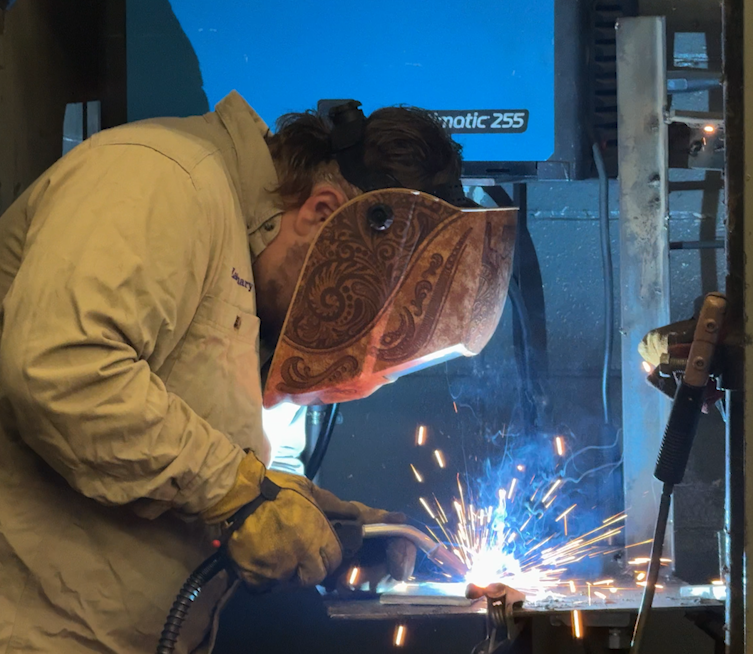
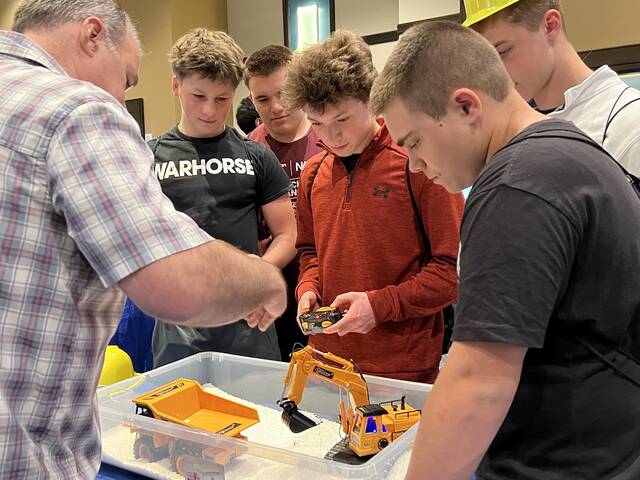
In construction, the traditional image of hard hats and manual labor is rapidly evolving. Today’s construction sites are increasingly sophisticated, integrating Building Information Modeling (BIM), drones for site surveys, robotics for repetitive tasks, and advanced analytics for project management. The industry faces a significant labor shortage, with projections consistently showing a need for hundreds of thousands of new workers annually. WBL programs, such as those highlighted by initiatives like Iowa’s, are directly addressing this by providing structured pathways into careers as electricians, plumbers, welders, heavy equipment operators, and project managers. These roles now require a blend of traditional craftsmanship with digital literacy, an understanding of automated systems, and the ability to interpret complex data. Imagine an apprentice learning to operate an autonomous excavator or programming a robotic bricklayer – these are not distant possibilities but current realities being integrated into modern training.
Advanced manufacturing is arguably at the forefront of the Fourth Industrial Revolution, or Industry 4.0. Factories are no longer just assembly lines; they are smart, interconnected ecosystems utilizing artificial intelligence, machine learning, the Internet of Things (IoT), and advanced robotics. The demand is shifting from purely manual skills to those involving system oversight, data analysis, predictive maintenance, and human-robot collaboration. Graduates need to understand digital twins, additive manufacturing (3D printing), and complex automation systems. Work-Based Learning in this context means apprentices might be configuring collaborative robots, troubleshooting AI-powered quality control systems, or optimizing production flows using real-time data. Programs that immerse individuals in these environments early on provide an invaluable head start, ensuring they are not just ready for the jobs of today, but also equipped for the rapid innovations of tomorrow. States like Iowa, with their strong agricultural and manufacturing bases, understand that these programs are crucial for maintaining economic competitiveness and fostering innovation locally.
The Synergy of Experiential Learning and Artificial Intelligence
From my perspective as someone deeply immersed in the world of AI, the convergence of Work-Based Learning and artificial intelligence represents a powerful synergy. As AI continues to automate routine and predictable tasks, the demand for uniquely human skills – creativity, critical thinking, complex problem-solving, emotional intelligence, and adaptability – will only intensify. WBL is perfectly positioned to cultivate these very attributes.
Consider how AI is transforming design in construction or predictive maintenance in manufacturing. Professionals in these fields won’t necessarily need to *code* AI, but they will absolutely need to understand how to *interact* with AI tools, interpret their outputs, and leverage them to make better decisions. WBL provides the practical context to develop these “AI-adjacent” skills. An apprentice in manufacturing, for example, might learn how to monitor an AI-driven quality control system, diagnose anomalies, and collaborate with engineers to refine the AI’s parameters. They gain hands-on experience not just with the machinery, but with the intelligent systems that orchestrate its operations.
Furthermore, WBL fosters a mindset of continuous learning, which is paramount in an AI-accelerated world. Technologies evolve at breakneck speeds, and the skills acquired today might need updating tomorrow. Experiential learning, by its very nature, encourages adaptability and problem-solving in dynamic environments, mirroring the constant need for upskilling and reskilling that AI presents. It teaches individuals how to learn on the job, how to seek out new information, and how to apply theoretical knowledge to unforeseen challenges – competencies that AI, in its current form, cannot replicate. Programs that integrate cutting-edge technology directly into the learning process are not just teaching a trade; they are future-proofing careers.
Moreover, ethical considerations surrounding AI are becoming increasingly prominent. While AI can optimize efficiency, human oversight and ethical judgment remain critical. Work-Based Learning, with its emphasis on mentorship and real-world consequences, provides a unique environment to instill these values, teaching future professionals not just *how* to use technology, but *how to use it responsibly* within the ethical frameworks of their industry. This means understanding data privacy when using smart tools, or considering the social impact of automated construction processes.
In essence, WBL prepares individuals for a future where human intelligence and artificial intelligence don’t compete but collaborate. It helps build a workforce that is not intimidated by automation but empowered by it, capable of leveraging sophisticated tools to achieve unprecedented levels of productivity and innovation. The investment in such programs is not just an investment in individual careers, but a strategic investment in the economic resilience and technological leadership of entire regions.
The imperative for robust Work-Based Learning programs has never been clearer. As sectors like construction and advanced manufacturing rapidly integrate artificial intelligence and automation, the demand for a workforce equipped with a unique blend of traditional craft and digital acumen will only grow. These programs offer a powerful, proven solution to bridging the persistent skills gap, ensuring that individuals are not just observers of technological change, but active participants and drivers of innovation.
By fostering a culture of practical experience, mentorship, and continuous learning, WBL initiatives create direct pathways to meaningful, high-demand careers. They empower individuals to adapt to an evolving job market, while providing industries with the skilled talent necessary to thrive in the era of AI. As we look towards the future, it is clear that investing in comprehensive, accessible Work-Based Learning is not merely an option, but a fundamental strategy for building a prosperous, technologically advanced society where human ingenuity and machine intelligence work in concert for the betterment of all.