
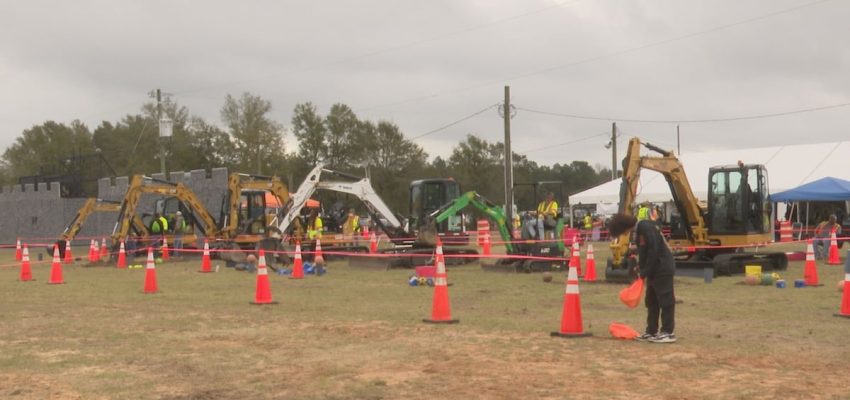

There’s an undeniable magic in hands-on learning, a tactile engagement that sparks curiosity far more effectively than any textbook. Imagine a student, perhaps initially hesitant, strapping into the seat of a massive bucket truck, feeling the rumble of the engine beneath them, and, under expert guidance, manipulating powerful controls to lift a colossal arm high into the sky. This isn’t a video game; it’s a real-world encounter that transforms abstract career concepts into tangible, thrilling possibilities.
Such was the scene at recent Construction Career Days events, designed to give young people an invaluable, up-close look at careers in construction and transportation. For many, the highlight wasn’t just observing, but actively participating—operating heavy machinery, from mighty excavators to versatile loaders, experiencing firsthand the immense power and precision required. This direct engagement is more than just fun; it’s an awakening, a moment where the future of an industry, rich with opportunity, clicks into focus for the next generation. As an AI specialist, writer, and tech enthusiast, I find these moments particularly compelling, not just for the immediate excitement they generate, but for how they subtly yet profoundly prepare students for an industry on the precipice of a technological revolution, where human ingenuity will increasingly collaborate with **AI in construction** to build the world of tomorrow.
### AI in Construction: Building Tomorrow’s Workforce
Construction Career Days are more than mere field trips; they are vital gateways to a sector that forms the backbone of our societies. By providing students with direct access to professionals and, crucially, the very equipment that defines the industry, these events demystify complex trades and ignite a passion for potential career paths. The raw excitement of maneuvering a piece of heavy equipment, feeling its power and precision, is often the spark that ignites a lifelong interest. For many students, this direct interaction with machinery like bucket trucks, skid steers, and graders provides an understanding that no classroom lecture can replicate. They learn about the intricate balance of physics, engineering, and human skill required to operate these sophisticated tools safely and efficiently. This experiential learning fosters problem-solving skills, encourages teamwork, and introduces them to the rigorous safety protocols that are paramount in any construction environment.
The global construction industry is a colossal economic engine, projected to reach a value of over $15 trillion by 2030, according to PwC. It’s an industry constantly seeking skilled talent, with projections often indicating a significant gap between available workers and demand. Events like Construction Career Days play a critical role in addressing this challenge by showcasing the diverse array of fulfilling and well-paying careers available, from skilled tradespeople to engineers, project managers, and even technology specialists. However, what makes these experiences even more significant today is the rapidly evolving landscape of construction itself, particularly with the integration of artificial intelligence. While students are learning to operate machinery manually, they are, perhaps unknowingly, also being introduced to the very tools that will be increasingly augmented by AI. This early exposure helps them develop a foundational understanding of the physical world they will one day help transform using cutting-edge technologies. The future of construction isn’t just about building structures; it’s about building smarter, safer, and more sustainably, and this is where **AI in construction** truly shines.
### From Lever to Algorithm: The Evolution of Heavy Equipment
For generations, operating heavy machinery has been a test of skill, strength, and spatial awareness. The levers, pedals, and joysticks control hydraulic systems that move tons of earth, lift steel beams, and clear pathways. The hands-on experience offered at Construction Career Days directly connects students to this rich history of mechanical prowess. They learn about the raw power of a bulldozer reshaping terrain or the delicate precision of an excavator digging a trench. These machines, iconic symbols of human endeavor, are now undergoing a profound transformation, becoming increasingly intelligent and interconnected.
Artificial intelligence is revolutionizing how heavy equipment is designed, operated, and maintained. Consider the bucket truck: while students might be learning its manual controls, future iterations are already incorporating semi-autonomous features that can stabilize the boom, prevent collisions, and even guide operators to optimal working positions. Excavators are being fitted with GPS and AI-powered sensors that can precisely dig to specifications, minimizing errors and material waste. Bulldozers can now execute predefined patterns with machine learning algorithms, optimizing fuel consumption and efficiency across large sites. Predictive maintenance, powered by AI, analyzes data from sensors on engines and hydraulic systems to anticipate failures before they occur, drastically reducing downtime and extending equipment lifespan. This shift from purely manual operation to AI-augmented control means that the next generation of operators will need not only traditional mechanical skills but also a fundamental understanding of data interpretation and human-machine interaction. Autonomous heavy equipment, once a futuristic concept, is becoming a reality on large, controlled construction sites, improving safety by removing human operators from hazardous environments and increasing productivity through continuous, optimized operation. This synergy of traditional machinery and advanced algorithms represents the exciting frontier of **AI in construction**, where the physical and digital worlds coalesce to create unprecedented capabilities.
### Nurturing the Next Generation of Builders and Innovators
The impact of events like Construction Career Days extends far beyond merely demonstrating equipment; they are crucial in inspiring a new generation of problem-solvers and innovators. By putting powerful tools into the hands of students, even for a brief moment, these programs demystify the industry and highlight the immense satisfaction that comes from building something tangible. This experience is particularly valuable in an era where vocational skills are sometimes undervalued in favor of purely academic pursuits. The construction sector desperately needs skilled tradespeople, engineers, architects, and, increasingly, technology specialists. The American Society of Civil Engineers, for instance, routinely highlights the need for continuous infrastructure investment and the workforce to support it.
Introducing students to construction at a young age, particularly in a hands-on format, helps bridge the skilled labor gap that many regions face. It exposes them to diverse career paths, from welding and electrical work to civil engineering and project management, all of which offer robust opportunities for growth and professional development. More importantly, these events help foster a mindset of practical application and innovation. The students who are today learning to operate a backhoe might tomorrow be programming an autonomous construction robot, designing smart infrastructure with generative AI, or using virtual reality to plan complex building projects. They are gaining an intuitive understanding of scale, force, and precision that will serve as a foundational layer for understanding more advanced technologies. Cultivating a workforce that is comfortable with both the physical demands of construction and the intellectual challenges of technological integration is paramount. This holistic approach ensures that as **AI in construction** continues to evolve, the industry will have the human talent ready to harness its full potential, ensuring a future where innovation and skill go hand-in-hand.
The thrill of operating heavy machinery at Construction Career Days offers more than just a momentary burst of excitement; it’s a profound seed planted in the minds of future builders. These events are crucial for demonstrating the tangible impact and vast opportunities within an industry that literally shapes our world, igniting passions and clarifying career paths for countless young individuals.
As we look ahead, the blend of traditional hands-on skill and cutting-edge technology will define the construction sector. The students who today experienced the power of a bucket truck will tomorrow be the innovators leveraging **AI in construction** to build smarter cities, more resilient infrastructure, and a sustainable future for us all. The human element, empowered by artificial intelligence, will remain at the heart of progress, proving that the most advanced tools are only as powerful as the imaginative minds wielding them.










