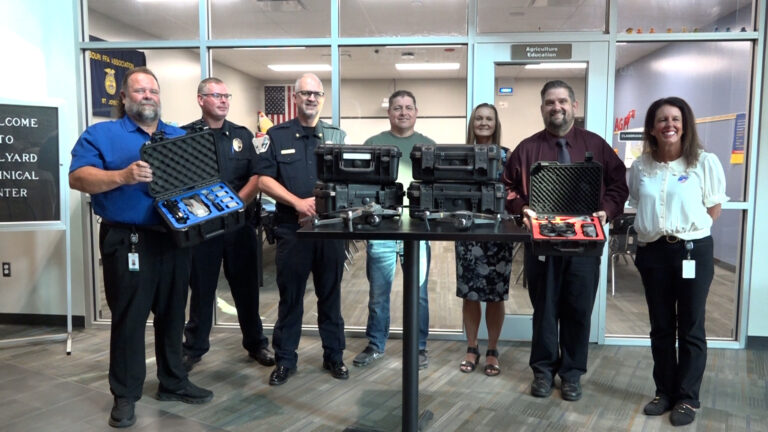

The air crackles with a familiar energy as we stand on the precipice of profound change, much like the vibrant buzz of a career day where young minds first glimpse their future. Yet, the landscape we now survey is far vaster and more dynamically fluid than any single school gymnasium could ever contain. We are not just exploring paths; we are witnessing the very ground beneath our feet being reshaped by the most powerful technological force of our time: Artificial Intelligence.
As an AI specialist and a passionate observer of technology’s march, I’ve spent years tracking the subtle shifts and seismic upheavals that AI brings. It’s easy to fall into sensationalist narratives about automation and job displacement, but the true story of AI is far more nuanced, exciting, and ultimately, about creation. It’s about the emergence of entirely new fields, roles, and opportunities that are redefining what it means to work, to innovate, and to contribute. This article delves into how AI isn’t merely altering our existing jobs but is actively forging new paths, giving rise to fascinating and often unexpected `AI-driven careers`.
### AI-driven Careers: Exploring New Frontiers
The narrative that AI will simply replace human labor is a simplistic one, largely overlooking the incredible new avenues it opens. While automation certainly takes over repetitive or data-intensive tasks, it simultaneously liberates human potential for creativity, complex problem-solving, and emotional intelligence – areas where AI currently, and perhaps always will, fall short. What we are witnessing is not just job elimination, but job transformation and, crucially, job *creation* on an unprecedented scale. Consider the rise of roles that simply didn’t exist a decade ago, yet are now fundamental.
Think about the specialized expertise required for a **Prompt Engineer**, someone who crafts precise, effective queries to guide AI models to desired outputs. This role combines linguistic prowess with a deep understanding of AI’s capabilities and limitations. Then there are **AI Ethicists**, who navigate the complex moral and societal implications of AI technologies, ensuring fairness, transparency, and accountability in their design and deployment. As AI systems become more autonomous and pervasive, the demand for individuals who can ensure their responsible development is paramount. Reports from institutions like the World Economic Forum consistently highlight the increasing demand for these specialized roles, projecting millions of new `AI-driven careers` by the end of the decade.
Beyond these entirely new professions, AI is also augmenting and elevating existing ones. Doctors leverage AI for faster, more accurate diagnostics and personalized treatment plans, transforming healthcare delivery. Financial analysts use AI algorithms to detect fraud, predict market trends, and manage risk with greater precision. Even creative industries are seeing a surge in `AI-driven careers`, from artists collaborating with generative AI to musicians using AI tools for composition and sound design. This paradigm shift requires professionals who are not only experts in their traditional domains but also adept at integrating and interacting with AI tools, turning data into actionable insights and innovation into reality.
### The Transformative Power of AI Across Industries
The ripple effect of artificial intelligence is felt across virtually every sector, fundamentally redefining how industries operate and, consequently, the types of expertise they require. From optimizing supply chains to personalizing consumer experiences, AI is the invisible engine driving a new era of efficiency and innovation. In healthcare, for instance, AI algorithms are accelerating drug discovery processes, analyzing vast datasets of patient information to identify patterns and predict disease progression. This has led to the emergence of bioinformatics specialists and AI health strategists, bridging the gap between medical science and advanced computing. The global AI in healthcare market, valued at over $10 billion in 2021, is projected to grow exponentially, underscoring the demand for new `AI-driven careers` in this vital sector.
In finance, algorithmic trading, fraud detection, and personalized banking services are now standard, demanding experts in machine learning for financial modeling and cybersecurity. Manufacturing, too, has been revolutionized by AI-powered predictive maintenance, smart factories, and robotics, creating demand for robotic engineers, industrial AI specialists, and data scientists focused on operational efficiency. Education is seeing the rise of AI in personalized learning platforms, intelligent tutoring systems, and adaptive assessments, requiring instructional designers with AI proficiency. Even in agriculture, AI is optimizing crop yields and resource management through precision farming techniques, opening up `AI-driven careers` in agritech.
The common thread across these diverse industries is the need for individuals who can not only understand complex AI systems but also translate their capabilities into practical applications that solve real-world problems. This isn’t just about programming; it’s about strategic thinking, domain expertise, and an entrepreneurial mindset that can identify opportunities where AI can create value. The sheer scale of AI investment—expected to exceed $500 billion globally by 2024, according to some reports—is a testament to the pervasive belief in its transformative power and the sustained demand for `AI-driven careers`.
### Cultivating the Skills for Tomorrow’s Workforce
Navigating this dynamic landscape requires a conscious effort to cultivate both technical proficiency and crucial soft skills. While the specifics of AI technologies will continue to evolve, certain foundational competencies will remain indispensable for anyone aspiring to thrive in `AI-driven careers`. On the technical front, a strong grasp of programming languages like Python and R, coupled with an understanding of machine learning algorithms, deep learning frameworks (TensorFlow, PyTorch), and data visualization techniques, forms the bedrock. Data science, in particular, is an overarching discipline that empowers professionals to extract meaningful insights from the deluge of information generated by AI systems. Moreover, familiarity with cloud platforms (AWS, Azure, GCP) and an understanding of MLOps (Machine Learning Operations) are becoming increasingly vital as AI solutions move from research labs to scalable, production-ready deployments.
However, focusing solely on technical skills would be a grave mistake. The uniquely human attributes are perhaps even more critical. **Critical thinking** allows us to evaluate AI outputs with discernment, questioning assumptions and identifying biases. **Problem-solving** skills are essential for leveraging AI to tackle complex challenges that don’t have straightforward algorithmic solutions. **Creativity** and innovation drive the development of novel AI applications and help us envision entirely new possibilities. Perhaps most importantly, **adaptability** and a commitment to **lifelong learning** are non-negotiable. The pace of AI innovation means that today’s cutting-edge tool might be superseded tomorrow; thus, a growth mindset and continuous skill acquisition are paramount. Furthermore, **ethical reasoning** and **collaboration** are vital, as AI solutions are rarely developed in isolation and their societal impact must always be considered.
Educational institutions, online learning platforms, and corporate training programs are rapidly adapting to meet this demand, offering everything from specialized degrees in AI and machine learning to bootcamps and certifications in data science and prompt engineering. The onus is on individuals to proactively engage with these learning opportunities, seeing continuous education not as a chore, but as an exciting journey into the future of work and the gateway to impactful `AI-driven careers`.
### Ethical Considerations and the Human Element in AI
As we embrace the promise of artificial intelligence, it is imperative to confront its challenges, particularly regarding ethics and the future of human labor. The fear of job displacement is a legitimate concern, and it underscores the critical need for proactive policies around reskilling and upskilling the workforce. Governments, industries, and educational bodies must collaborate to create robust pathways for individuals to transition from roles susceptible to automation into emerging `AI-driven careers` or roles augmented by AI.
Beyond economic impact, the ethical implications of AI are profound. Questions of bias in algorithms, data privacy, accountability for AI decisions, and the potential for misuse demand our urgent attention. This is where the **human element** remains irreplaceable. Roles like AI ethicists, policy analysts specializing in technology, and compliance officers with AI expertise are not just important; they are fundamental to ensuring that AI development is guided by human values and serves the greater good. These professionals design frameworks, audit systems, and advocate for responsible AI practices, ensuring that innovation does not outpace societal safeguards.
Ultimately, AI is a tool, a powerful extension of human ingenuity. It thrives when integrated thoughtfully, augmenting our capabilities rather than diminishing our humanity. The concept of the “human in the loop” is vital – ensuring that human oversight, judgment, and empathy remain central to critical AI applications. It’s about harnessing AI’s incredible analytical and predictive power to solve problems, free up time, and expand our horizons, all while preserving the core human need for creativity, connection, and purpose. The most valuable `AI-driven careers` will be those that master this symbiotic relationship, leveraging technology to elevate human potential.
In conclusion, the journey into the age of artificial intelligence is not merely a technological one; it is a profound reimagining of our professional landscape. The days of linear career paths are giving way to a dynamic ecosystem where adaptability, continuous learning, and a blend of technical acumen and uniquely human skills are paramount. We are not just witnessing the rise of machines; we are observing the emergence of a new generation of `AI-driven careers` that demand ingenuity, ethical foresight, and a passion for innovation.
For those of us who observe and build in this space, the future is not something to be feared but embraced with informed optimism. As André Lacerda, I believe the greatest opportunities lie in understanding AI’s capabilities, navigating its ethical dimensions, and actively shaping the future of work rather than passively observing it. Let us approach this transformative era with curiosity, courage, and a commitment to lifelong learning, empowering ourselves and future generations to thrive in a world increasingly defined by intelligent machines yet ultimately guided by human vision.