

For centuries, agriculture has been the bedrock of human civilization, a sector often romanticized by tradition and the unwavering rhythm of the seasons. However, in the 21st century, the fields of agriculture are undergoing a profound transformation, evolving from manual labor into a high-tech, data-driven science. As an AI specialist, writer, and tech enthusiast, I find myself increasingly drawn to understanding how artificial intelligence and advanced technologies are not just optimizing crop yields but fundamentally redefining the landscape of agriculture careers.
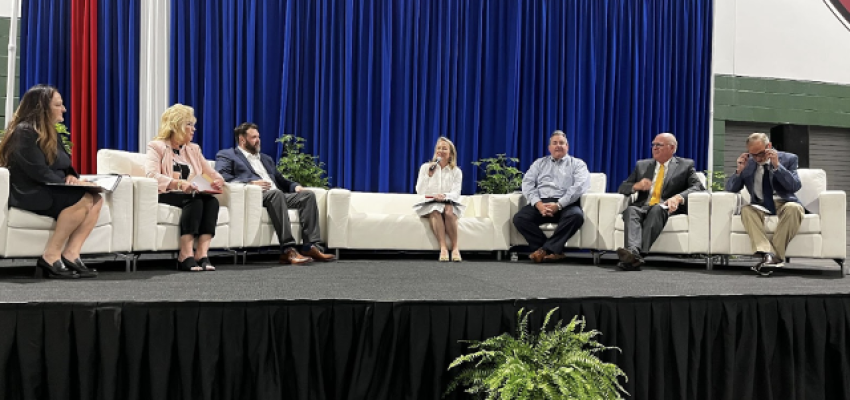
This dynamic shift was brought into sharp focus by the recent announcement regarding Representative Nikki Budzinski’s third Workforce Summit in Decatur, Illinois, scheduled for July 9. While the immediate focus is on addressing local workforce needs and highlighting vocational pathways, its significance extends far beyond the regional. This summit, hosted at Richland Community College, serves as a microcosm of a global imperative: preparing a skilled workforce for an industry that is rapidly integrating cutting-edge technology. It’s a critical moment for stakeholders to discuss not just the present state of agricultural employment, but to proactively shape the future of work within this vital sector.
The traditional image of farming – a solitary figure on a tractor, or laborers harvesting by hand – is being supplemented, and in many cases, revolutionized, by smart sensors, AI-powered analytics, autonomous robotics, and sophisticated biotechnology. This isn’t just about efficiency; it’s about sustainability, food security for a growing global population, and creating more resilient food systems in the face of climate change. Consequently, the demand for new skill sets and entirely new types of agriculture careers is skyrocketing. Initiatives like Budzinski’s summit are thus not merely about filling existing job vacancies; they are about foresight, innovation, and equipping the next generation with the tools they need to thrive in a technologically advanced agricultural landscape.
Agriculture Careers: A New Horizon for Innovation
The evolution of agriculture is nothing short of remarkable. From the rudimentary tools of ancient civilizations to the mechanization of the industrial age, each era has brought its own wave of innovation. Today, we stand at the precipice of another, perhaps even more transformative, revolution driven by digital technologies. This new era, often dubbed ‘Agriculture 4.0’ or ‘smart farming,’ is characterized by the convergence of data science, robotics, biotechnology, and artificial intelligence. These advancements are not eliminating the need for human input; rather, they are elevating the nature of work and creating fascinating new agriculture careers.
Consider precision agriculture, a paradigm shift that uses data from satellites, drones, and ground sensors to optimize inputs like water, fertilizers, and pesticides. This approach minimizes waste, reduces environmental impact, and maximizes yields. Roles emerging in this field include agricultural data scientists, who analyze vast datasets to provide actionable insights, and drone operators, who pilot sophisticated UAVs to monitor crop health and irrigation needs. These are far removed from the conventional imagery associated with farm work, requiring expertise in GIS (Geographic Information Systems), remote sensing, and statistical analysis.
Beyond precision farming, the rise of robotics is another game-changer. Automated planters, harvesters, and even weeding robots are becoming increasingly common. These machines require skilled technicians for maintenance, programming, and troubleshooting – a specialized branch of mechatronics or agricultural engineering. Furthermore, AI-powered vision systems are being developed to identify plant diseases, assess ripeness, and even sort produce with unprecedented accuracy, leading to new opportunities for AI specialists and machine learning engineers to apply their skills directly to farming operations. The global agritech market, valued at over $20 billion in 2022, is projected to grow substantially, indicating a robust future for these technologically advanced agriculture careers.
Biotechnology and genetic engineering are also transforming crops to be more resilient, nutritious, and sustainable, creating roles for biotechnologists, geneticists, and plant scientists who work at the cutting edge of biological innovation. Vertical farming, which utilizes controlled environments and often AI-driven systems to grow crops indoors, irrespective of climate or soil conditions, opens up urban agriculture careers for plant scientists, environmental engineers, and facility managers with a strong grasp of sophisticated climate control and hydroponic systems. These roles are critical for sustainable food production in densely populated areas.
Even traditional areas like supply chain management are being revolutionized by AI. Predictive analytics optimize logistics, reduce waste, and ensure produce reaches consumers fresh and efficiently. This creates roles for supply chain analysts and logistics specialists who can leverage AI tools to manage complex global networks. The future of farm work isn’t just about cultivating crops; it’s about cultivating data, managing robots, and engineering sustainable solutions. This diversity of roles highlights the immense breadth and depth of modern agriculture careers, demanding a workforce that is not only knowledgeable in agricultural principles but also adept with digital tools and computational thinking.
Bridging the Skills Gap: CTE, Partnerships, and the AI Imperative
The rapid transformation of agriculture naturally leads to a significant skills gap. The workforce needed for today’s and tomorrow’s agriculture careers looks very different from that of previous generations. This is precisely where initiatives like Representative Budzinski’s Workforce Summit and the role of institutions like Richland Community College become indispensable. Career and Technical Education (CTE) programs are the front lines of preparing individuals for these evolving roles, offering practical, hands-on training that directly addresses industry needs.
Community colleges are uniquely positioned to serve as catalysts for this change. Their proximity to local industries, flexibility in curriculum development, and focus on practical skills make them ideal partners for workforce development. Richland Community College, for example, is likely to offer programs that blend traditional agricultural science with emerging technologies. This could include certifications in drone operation for agricultural mapping, courses in agricultural robotics maintenance, or workshops on data analytics for farm management. The ability to quickly adapt and offer relevant training is crucial, as the technological landscape continues to shift at an unprecedented pace, directly impacting the skill requirements for all agriculture careers.
Furthermore, partnerships between educational institutions, industry leaders, and government agencies are vital. These collaborations ensure that training programs are aligned with actual job market demands. Industry partners can provide insights into the specific technologies they are adopting, offer internships, and even contribute equipment or expertise. Government support, through funding and policy, can create an enabling environment for these partnerships to flourish. For instance, grants could be made available to community colleges to invest in state-of-the-art agricultural technology labs, or tax incentives could encourage farmers to adopt new technologies, thereby increasing the demand for skilled workers in these new agriculture careers.
From an AI perspective, the potential for technology to assist in bridging this skills gap is immense. AI-powered learning platforms can personalize educational pathways, adapting to individual learning styles and paces. Virtual reality (VR) and augmented reality (AR) can simulate complex farm operations or machinery maintenance, providing immersive and safe training environments. Imagine learning to program an autonomous seeding robot in a virtual field, or diagnosing a fault in a smart irrigation system using an AR overlay. These technologies can make highly technical agriculture careers more accessible and engaging, attracting a broader demographic to the sector. AI can also analyze real-time labor market data to predict future skill shortages, allowing educational institutions to proactively develop curricula that will meet tomorrow’s needs.
The emphasis on continuous learning and upskilling is paramount. As technology evolves, so too must the skills of the workforce. CTE programs and community colleges are essential not just for new entrants but also for existing agricultural professionals who need to adapt to new tools and methodologies. This lifelong learning approach is critical for ensuring that the agricultural sector remains competitive and sustainable, fostering a dynamic environment where individuals can grow and adapt their agriculture careers alongside technological advancements.
Cultivating Tomorrow’s Leaders: The Role of Education and Policy
Beyond immediate workforce needs, the broader implications of these shifts touch upon education policy, economic development, and even the philosophical underpinnings of our relationship with food. To cultivate tomorrow’s leaders in the agricultural sector, a holistic approach is required, one that integrates foundational knowledge with forward-thinking technological literacy. The efforts spurred by summits like the one in Decatur are crucial for fostering this long-term vision for sustainable and innovative agriculture careers.
Education must evolve to meet these demands. K-12 curricula could introduce basic coding, robotics, and data literacy within the context of agriculture, sparking interest in younger generations. Universities need to offer interdisciplinary programs that combine agricultural science with computer science, engineering, and environmental studies. The goal is to produce graduates who are not only experts in specific domains but also critical thinkers capable of integrating diverse knowledge sets to solve complex problems inherent in modern agriculture careers. For example, understanding the ethical implications of AI in crop monitoring or the socio-economic impacts of automated farming are just as important as technical proficiency.
Policy frameworks also play a pivotal role. Governments can incentivize research and development in agritech, support rural broadband expansion (essential for smart farming technologies), and create regulatory environments that encourage innovation while ensuring responsible technology deployment. Subsidies for farmers adopting precision agriculture tools, or grants for startups developing sustainable farming solutions, can accelerate the transition to a more technologically advanced and environmentally friendly sector. These policy choices directly influence the demand for specific types of agriculture careers and the ecosystem in which they thrive.
Furthermore, we must address the ethical considerations that arise with advanced technology in agriculture. Questions of data privacy for farmers, the potential for job displacement due to automation, and equitable access to these new technologies need careful consideration. As an AI specialist, I advocate for a human-centric approach to AI development and deployment, ensuring that technology serves to augment human capabilities and improve quality of life, rather than solely focusing on efficiency. This means designing AI systems that are transparent, fair, and controllable, and ensuring that policies are in place to support workers through transitions, potentially retraining those displaced for new agriculture careers that emerge.
Ultimately, the goal is to create a resilient and dynamic agricultural sector that can feed a growing world population while protecting our planet. This requires not just technological innovation, but also human ingenuity, adaptability, and leadership. The future of agriculture careers is bright, diverse, and deeply intertwined with technological progress. By fostering strong educational pathways, strategic partnerships, and forward-thinking policies, we can ensure that the workforce is well-prepared to lead this vital transformation.
The transformation of agriculture, driven by AI and other advanced technologies, is one of the most compelling narratives of our time. It’s a story of innovation meeting tradition, of global challenges being met with scientific solutions, and of a workforce evolving to meet unprecedented demands. Representative Budzinski’s Workforce Summit in Decatur, while local in its execution, echoes a universal need to proactively shape the future of our industries and the jobs within them. By focusing on CTE and strong training partnerships, it lays essential groundwork for cultivating a skilled workforce ready for the intricate, tech-driven roles that characterize modern agriculture careers.
As we look ahead, the collaboration between educational institutions like Richland Community College, industry stakeholders, and government bodies will be crucial. They must work hand-in-hand to equip individuals not just with technical skills, but also with critical thinking, problem-solving abilities, and an adaptable mindset – qualities that remain irreplaceable even in the most technologically advanced environments. The future of agriculture careers is not merely about planting seeds; it’s about nurturing innovation, fostering continuous learning, and building a sustainable, tech-empowered future for food production across the globe. It’s a journey that I, and many others passionate about technology and humanity’s progress, will be watching closely.










