
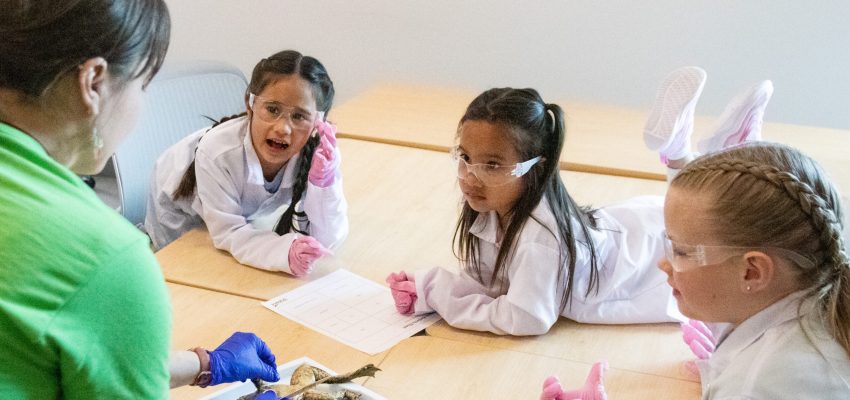

The future of healthcare often feels like a grand, abstract concept, discussed in policy meetings and advanced research labs. Yet, sometimes, the most profound solutions begin with something as fundamental as a group of elementary school students, a few dissecting tools, and a plastic frog. This seemingly simple scene from southeast Kansas, where community health centers are engaging young minds with the intricacies of the human — or in this case, amphibian — body, represents a vital, grassroots effort to inspire the next generation of medical professionals. It’s a tangible step towards nurturing a talent pipeline, aiming to combat a pressing issue: the chronic shortage of healthcare workers, particularly in underserved rural communities.
As an AI specialist, writer, and tech enthusiast, I find immense inspiration in both the human-centric dedication of these educators and the boundless potential of artificial intelligence. While a frog dissection might seem a world apart from machine learning algorithms and predictive analytics, both represent critical facets of a comprehensive strategy for **addressing healthcare shortages**. One builds the foundational interest and human connection, while the other offers powerful tools to amplify human capabilities, streamline operations, and extend care where it’s desperately needed. The challenge of ensuring equitable access to quality healthcare is multi-layered, demanding solutions that span from foundational educational initiatives to the most cutting-edge technological innovations. This article delves into how these seemingly disparate approaches can converge to build a more resilient and accessible healthcare ecosystem for everyone.
The global healthcare landscape is grappling with an escalating crisis. The World Health Organization (WHO) projects a shortfall of 18 million health workers by 2030, with rural and remote areas disproportionately affected. In the United States, the Association of American Medical Colleges (AAMC) predicts a shortage of up to 124,000 physicians by 2034, a figure that only hints at the broader deficits across nursing, allied health, and mental health professions. This isn’t merely a statistical anomaly; it translates into longer wait times, reduced access to specialized care, increased patient travel burdens, and, ultimately, poorer health outcomes for millions. Rural communities, in particular, face a compounding challenge: fewer existing professionals, difficulties in recruiting and retaining new talent due to limited resources and professional isolation, and often an older, sicker population requiring more intensive care. The ripple effects are profound, impacting not just individual health but also the economic vitality and social fabric of these communities. Understanding the depth of this systemic issue underscores the urgent need for innovative, long-term strategies that address both the supply of skilled professionals and the efficiency of care delivery.
Addressing Healthcare Shortages: Sowing Seeds for Future Medical Professionals
The initiative observed in Kansas is far more than just a science lesson; it’s a strategic investment in human capital. By exposing elementary school students to hands-on medical activities, community health centers are doing something remarkably powerful: they are demystifying healthcare careers at an age when curiosity is boundless and career paths feel limitless. Imagine a child, perhaps from a family with no prior medical background, discovering the intricate beauty of anatomy through a frog dissection. This moment of discovery can spark a lifelong passion, transforming abstract career notions into tangible, exciting possibilities. These early interventions are crucial because they create a ‘pipeline’ – a sustained effort to guide young individuals from foundational education through specialized training, ultimately leading them back to serve their own communities.
Research consistently shows that individuals who grow up in rural areas are more likely to return to practice in similar settings after completing their education. By fostering an early interest in medicine within these communities, programs like the one in Kansas increase the likelihood of cultivating homegrown talent who are not only aware of the local needs but also committed to fulfilling them. Such programs often involve more than just dissections; they can include visits from local healthcare professionals, interactive simulations, and mentorship opportunities that provide a realistic glimpse into the day-to-day life of a doctor, nurse, or technician. These experiences are invaluable for building self-efficacy, encouraging STEM (Science, Technology, Engineering, and Mathematics) engagement, and providing a foundational understanding of the healthcare ecosystem. Over time, these nurtured interests mature into academic pursuits and professional aspirations, gradually alleviating the severe staffing deficits that currently plague many rural hospitals and clinics. This approach, while long-term, addresses the root cause of the scarcity by building a sustainable future workforce from the ground up.
The Technological Imperative: AI as a Force Multiplier in Healthcare
While inspiring young minds is foundational, the scale and urgency of healthcare worker shortages demand immediate and powerful augmentation. This is where artificial intelligence enters the fray, not as a replacement for human caregivers, but as an indispensable partner and force multiplier. AI’s ability to process vast amounts of data, identify patterns, and automate complex tasks can profoundly enhance every aspect of healthcare delivery, thereby directly contributing to **addressing healthcare shortages** by optimizing existing resources and extending reach.
Consider the realm of diagnostics. AI-powered algorithms are already demonstrating superior accuracy in interpreting medical images like X-rays, MRIs, and CT scans, often identifying subtle anomalies that might be missed by the human eye. In cardiology, AI can analyze ECG data to predict heart conditions with remarkable precision. This not only speeds up diagnosis but also frees up highly skilled radiologists and specialists to focus on more complex cases requiring human judgment and interaction. Similarly, in drug discovery, AI can rapidly screen billions of compounds, predict their interactions, and accelerate the development of new treatments – a process that traditionally takes years and billions of dollars. Predictive analytics, driven by machine learning, can also forecast patient readmission rates, identify individuals at high risk for certain diseases, and even optimize hospital bed allocation, ensuring resources are deployed efficiently.
Perhaps most critically for rural areas, AI facilitates advanced telehealth solutions. Remote diagnostic tools, virtual consultations powered by natural language processing, and AI-driven symptom checkers can provide immediate, preliminary care without requiring a patient to travel long distances to see a specialist. AI can also assist in administrative burdens, automating tasks like scheduling, billing, and electronic health record management, thereby giving doctors and nurses more time for direct patient care and reducing the administrative burnout that often drives professionals away from the field. Furthermore, AI-powered virtual assistants can educate patients, monitor chronic conditions, and provide medication reminders, extending the reach of care beyond the clinic walls and into patients’ homes. These capabilities transform how healthcare can be delivered, offering new avenues for comprehensive care in areas historically underserved by traditional medical infrastructure.
Bridging the Divide: Integrating Human Touch with Intelligent Systems
The narrative surrounding AI in healthcare often swings between utopian visions and dystopian fears. However, the most effective path forward lies in understanding AI not as a competitor to human intelligence, but as its most potent collaborator. The frog dissection in Kansas teaches empathy, critical thinking, and the delicate art of observation – skills that AI, for all its power, cannot replicate. What AI can do is augment these human capabilities, providing real-time data analysis, decision support, and efficiency gains that allow human professionals to focus on what they do best: applying compassion, ethical judgment, and complex reasoning.
Integrating AI effectively into healthcare requires a new generation of professionals who are not only clinically proficient but also AI-literate. This means evolving medical school curricula to include modules on AI applications, data science, and bioethics. Future doctors, nurses, and technicians will need to understand how to interpret AI-generated insights, assess the limitations and biases of algorithms, and critically evaluate the ethical implications of AI deployment. The goal is to foster a hybrid intelligence model where human intuition and experience are enhanced by AI’s analytical precision. This synergistic relationship is vital for building a resilient healthcare system capable of **addressing healthcare shortages** sustainably. For instance, a rural primary care physician, facing a daunting patient load, could leverage an AI diagnostic assistant to quickly prioritize cases, or use an AI-powered platform to monitor multiple patients with chronic conditions remotely, intervening only when human interaction is most critical.
Moreover, the development and deployment of AI in healthcare must be guided by principles of fairness, transparency, and accountability. Ensuring that AI algorithms are trained on diverse datasets to avoid perpetuating existing health disparities, protecting patient privacy, and establishing clear regulatory frameworks are paramount. The ‘human in the loop’ principle remains crucial, ensuring that AI tools serve as aids, not ultimate decision-makers, always allowing for human oversight and intervention. The success of this integration hinges on fostering trust, educating both professionals and the public, and continuously refining AI systems to meet the complex, nuanced demands of human health.
In conclusion, the journey toward **addressing healthcare shortages** is a multifaceted endeavor that requires both nurturing foundational human talent and embracing transformative technology. The image of elementary students dissecting frogs in Kansas is a powerful reminder of the enduring importance of early education and community-led initiatives in cultivating future generations of caregivers. These grassroots efforts lay the essential groundwork, inspiring curiosity and commitment at a pivotal developmental stage, ensuring a steady stream of dedicated professionals.
Simultaneously, artificial intelligence stands ready to revolutionize the efficiency, accessibility, and quality of care. By automating routine tasks, enhancing diagnostics, facilitating telehealth, and providing powerful analytical insights, AI acts as an indispensable force multiplier, allowing existing healthcare professionals to operate at the peak of their abilities and extending care to previously unreachable populations. As André Lacerda, I believe that the most robust and resilient healthcare system of tomorrow will be one where human empathy, critical thinking, and tireless dedication are harmoniously amplified by the intelligence and efficiency of AI, creating a future where quality healthcare is not a privilege, but an accessible reality for all.










