

In an era defined by rapid scientific advancement and an ever-increasing demand for specialized expertise, the investment in cutting-edge education has never been more critical. As an AI specialist and enthusiast, I’ve long understood that progress in any scientific field hinges not just on technological tools, but on the brilliant minds wielding them. This principle holds especially true for the dynamic and fast-paced world of life sciences. That’s why the recent announcement regarding Clark University has resonated so strongly within the innovation community, signaling a strategic step forward in fostering the next generation of scientific leaders.
Clark University, a revered institution known for its commitment to liberal education and impactful research, has been awarded a significant grant of $354,443. This substantial funding, originating from the Healey-Driscoll administration and the esteemed Massachusetts Life Sciences Center (MLSC), is specifically earmarked for a pivotal mission: to significantly expand experiential learning opportunities within its life sciences programs. More than just an injection of funds, this grant represents a critical investment in strengthening Worcester’s burgeoning biotech talent pipeline, ensuring that the region remains a vibrant hub for scientific discovery and economic growth.
The implications of this grant extend far beyond the university’s campus. It underscores a broader recognition of the paramount importance of hands-on training in preparing students for the complex challenges and groundbreaking opportunities that await them in modern laboratories, research facilities, and biotech companies. In a world where theoretical knowledge must seamlessly translate into practical application, initiatives like these are the bedrock upon which future innovations, from life-saving medicines to sustainable biotechnologies, will be built. Let’s delve deeper into how this grant will serve as a catalyst for educational excellence and regional prosperity.
Life Sciences Education: A Catalyst for Innovation and Economic Growth
The global life sciences industry is a powerhouse of innovation, constantly pushing the boundaries of what’s possible in health, agriculture, and environmental sustainability. From advanced therapeutics and gene editing to diagnostic tools and biomanufacturing, the sector’s growth trajectory is steep and relentless. Projections indicate a market size expected to reach trillions of dollars in the coming years, underscoring the immense economic potential and the critical need for a highly skilled workforce.
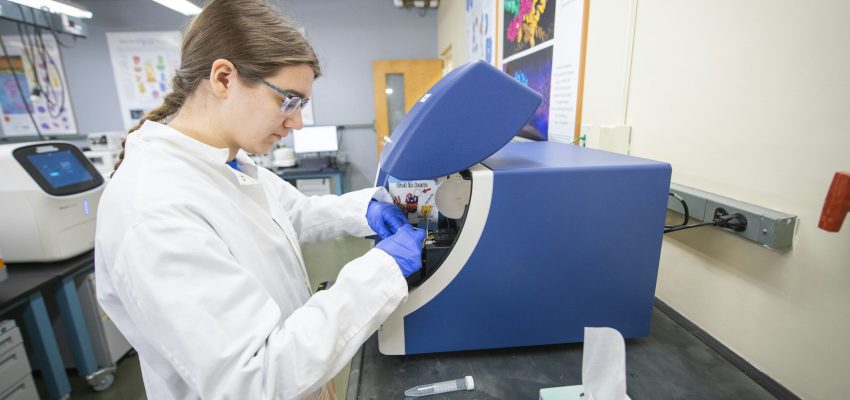
At the heart of sustaining and accelerating this growth lies robust **life sciences education**, particularly programs that emphasize experiential learning. Unlike traditional classroom settings, experiential learning immerses students directly in the scientific process. This can include intensive laboratory work using state-of-the-art equipment, participation in ongoing faculty research, internships at biotech companies, or even engaging in community-based science initiatives. Why is this hands-on approach so vital? Because it bridges the gap between abstract concepts and real-world application. Students don’t just memorize protocols; they troubleshoot experiments, interpret complex data, collaborate on projects, and confront the inevitable setbacks that are part of genuine scientific inquiry. They learn to think like scientists, not just about science.
Clark University’s initiative, powered by this substantial grant, aims to amplify these opportunities. The $354,443 will likely translate into enhanced laboratory infrastructure, the acquisition of cutting-edge scientific instruments, the development of new experiential courses, and potentially increased stipends or support for student internships. Imagine biology students gaining proficiency with advanced genomic sequencing technologies, chemistry students synthesizing novel compounds, or environmental science students utilizing sophisticated analytical tools in field studies. These direct experiences not only solidify their theoretical understanding but also cultivate critical thinking, problem-solving abilities, and an entrepreneurial spirit – traits highly prized by employers in the biotech sector.
Massachusetts, often dubbed ‘BioCapital USA,’ stands at the forefront of this global industry. The state boasts an unparalleled ecosystem of academic research institutions, pharmaceutical giants, emerging biotech startups, and venture capital. The Massachusetts Life Sciences Center (MLSC) is a quasi-public agency specifically created to support this ecosystem. Since its inception, the MLSC has strategically invested billions to foster innovation, create jobs, and expand the life sciences workforce across the Commonwealth. The Healey-Driscoll administration’s support further underscores a statewide commitment to maintaining Massachusetts’ leadership in this crucial sector. This grant to Clark University is a prime example of such strategic investment, recognizing the university’s pivotal role in preparing the talent that will drive the next wave of scientific breakthroughs right here in Worcester and beyond.
Building a Robust Biotech Talent Pipeline: The Worcester Ecosystem
Worcester’s transformation into a vibrant biotech hub is a testament to strategic planning and collaborative effort. Once known primarily for its industrial past, the city has successfully leveraged its academic institutions and a proactive economic development strategy to attract and nurture life sciences companies. Today, Worcester is home to a growing cluster of biotech firms, research parks, and medical facilities, contributing significantly to Massachusetts’ overall economic vitality. However, for this growth to be sustainable, a steady influx of well-trained professionals is paramount. This is precisely where the concept of a “biotech talent pipeline” becomes critical.
A robust talent pipeline ensures a continuous flow of skilled individuals from educational institutions into the industry. It prevents skill gaps, reduces recruitment challenges for companies, and ultimately fosters a more dynamic and innovative regional economy. Clark University, situated right in the heart of Worcester, is uniquely positioned to act as a vital artery in this pipeline. The grant to enhance **life sciences education** directly feeds into this objective by producing graduates who are not just academically proficient but also immediately employable and ready to contribute from day one.
Experiential learning, in particular, plays a crucial role in shaping these industry-ready professionals. Internships, for instance, offer students invaluable exposure to corporate culture, real-world project deadlines, and professional networking opportunities. They learn how to operate within a regulated environment, understand industry best practices, and often contribute to actual research or product development initiatives. This hands-on experience often leads directly to job offers upon graduation, shortening the time it takes for new graduates to become productive members of the workforce. By making these opportunities more accessible and robust, Clark University is directly addressing the needs expressed by biotech employers in the Worcester area, who are consistently searching for candidates with practical skills alongside strong theoretical foundations.
Furthermore, this investment in educational infrastructure attracts more aspiring scientists to the region, creating a virtuous cycle. As Clark’s reputation for cutting-edge **life sciences education** grows, it will draw a more diverse and talented pool of students, many of whom will ultimately choose to stay and work in Worcester post-graduation. This strengthens the local talent pool, making the region even more attractive to new biotech companies looking to establish or expand their operations. The synergy between academia and industry is a hallmark of successful innovation ecosystems, and this grant is a significant step towards reinforcing that synergy in Worcester, ensuring its sustained growth as a beacon of scientific excellence.
The Future of Scientific Discovery: Integrating Technology and Hands-On Learning
As we look to the future, the boundaries between traditional scientific disciplines are increasingly blurring. Modern life sciences are becoming inextricably linked with data science, artificial intelligence, robotics, and advanced computing. From AI-driven drug discovery platforms that sift through vast molecular libraries to personalized medicine approaches informed by genomic data, technology is revolutionizing how scientific research is conducted and applied. Therefore, modern **life sciences education** must not only impart foundational biological knowledge but also equip students with the technological literacy and computational skills essential for navigating this new landscape.
Experiential learning, in this context, becomes even more critical. It allows students to engage with real-world datasets, use bioinformatics tools, simulate complex biological systems, and even interact with laboratory automation. By providing access to advanced instrumentation and computational resources through the grant, Clark University is preparing its students for a future where interdisciplinary collaboration and technological fluency are paramount. They will graduate not just as biologists or chemists, but as versatile scientific problem-solvers capable of working at the intersection of various fields.
Moreover, hands-on learning fosters a deep sense of scientific curiosity and critical inquiry. It encourages students to ask challenging questions, design experiments to test hypotheses, and interpret results with a discerning eye. These are the fundamental intellectual muscles that drive scientific discovery, regardless of the specific tools or technologies involved. By immersing students in authentic research experiences, Clark is nurturing not just technicians, but future innovators who will be capable of identifying novel problems and devising creative solutions that could transform healthcare, agriculture, and environmental protection globally.
Beyond the technical skills, experiential learning often involves teamwork, communication, and ethical considerations—all vital components of responsible scientific practice. Students learn to articulate their findings, collaborate effectively in a lab setting, and understand the societal implications of their research. This holistic approach to **life sciences education** ensures that graduates are not only scientifically competent but also well-rounded individuals ready to contribute meaningfully to scientific communities and society at large. This grant is, therefore, an investment not just in equipment or programs, but in cultivating the innovative spirit and ethical leadership that will guide future scientific endeavors.
The grant received by Clark University is far more than a financial contribution; it is a strategic endorsement of a pedagogical approach proven to be highly effective in preparing students for the demands of the modern scientific landscape. By expanding experiential learning opportunities in **life sciences education**, Clark is not only enhancing its own academic offerings but also directly bolstering Worcester’s burgeoning biotech talent pipeline. This investment underscores the critical understanding that a thriving innovation ecosystem relies fundamentally on a highly skilled, adaptable, and forward-thinking workforce.
As we look ahead, the impact of such initiatives will reverberate across the Commonwealth and beyond. Graduates emerging from these enhanced programs will be equipped not just with theoretical knowledge but with the practical expertise, critical thinking skills, and innovative mindset necessary to drive the next generation of scientific breakthroughs. This commitment to hands-on, real-world learning ensures that Massachusetts, and specifically Worcester, will continue to be a fertile ground for scientific discovery and economic prosperity for years to come, shaping a future where informed scientific progress continues to improve lives globally.










