

In an era defined by unprecedented technological acceleration, where artificial intelligence is rapidly reshaping industries, economies, and daily life, the foundation for future innovation is laid long before university lecture halls or corporate boardrooms. It’s laid in the curious minds of young students, in the classrooms and extracurricular activities that spark their interest in the world around them. As an AI specialist and tech enthusiast, I’ve witnessed firsthand the transformative power of emerging technologies, and it’s clear that equipping the next generation with foundational skills in science, technology, engineering, and mathematics (STEM) is not just beneficial, but absolutely essential.
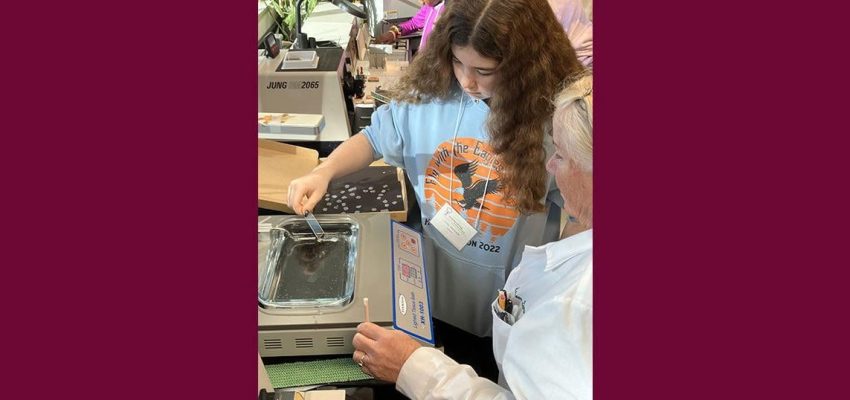
Events like the annual Expanding Your Horizons conference, hosted by Southern Illinois University (SIU) in Carbondale, perfectly embody this forward-thinking approach. This conference, designed for girls and boys in grades 5-9, offers a dynamic, hands-on environment for exploring diverse careers in STEM and beyond. It’s more than just an event; it’s a gateway to discovery, a practical manifestation of the belief that every child deserves the opportunity to engage with the disciplines that will define their future. Such initiatives are vital for fostering the problem-solvers, critical thinkers, and innovators who will navigate and lead the complex, AI-infused world of tomorrow.
### STEM Education: Igniting the Spark of Innovation from a Young Age
The importance of early exposure to the foundational principles of science, technology, engineering, and mathematics cannot be overstated. These fields are not merely subjects to be studied; they are lenses through which we understand the universe, tools with which we build new realities, and frameworks for systematic problem-solving. For children in grades 5-9, this period is particularly formative. Their minds are sponges, eager to absorb new information and conceptualize complex ideas, often with a natural curiosity that can be cultivated into a lifelong passion. **STEM education** at this stage moves beyond rote memorization, encouraging inquiry, experimentation, and critical thinking – skills that are invaluable in any career path, but especially within the rapidly evolving tech landscape.
Consider the rise of artificial intelligence. AI is not a standalone discipline; it is an amalgamation of advanced mathematics, computational science, sophisticated engineering principles, and often, an understanding of human cognition and data. A child exposed to basic coding concepts, logical problem-solving in mathematics, or the design process in engineering is, unknowingly, building the mental scaffolding necessary to comprehend and eventually contribute to AI development. For instance, understanding algorithms begins with simple sequences and conditional logic, fundamental concepts taught in early computer science programs. Grasping data analysis, crucial for machine learning, can be introduced through basic statistics and pattern recognition exercises.
Data consistently highlights the growing demand for STEM professionals. The U.S. Bureau of Labor Statistics projects significant growth in STEM occupations over the next decade, with many of the fastest-growing jobs being in areas like data science, AI, and robotics. However, there’s a persistent gap in the pipeline. Many students, particularly girls and underrepresented minorities, lose interest in these fields by middle school, often due to a lack of engaging experiences or preconceived notions about what a ‘scientist’ or ‘engineer’ looks like. Early, hands-on **STEM education** experiences directly combat this, showcasing the diversity of roles and the excitement inherent in discovery. They demystify these fields, making them accessible and relatable, thereby broadening the pool of future talent essential for maintaining innovation and competitiveness in a global economy.
### The Power of Experiential Learning: Fun, Hands-On Exploration
The SIU Expanding Your Horizons conference’s emphasis on “fun, hands-on” activities is precisely what makes early STEM engagement effective. Abstract concepts can be daunting, but when children can touch, build, experiment, and see the immediate results of their actions, learning becomes an adventure. Imagine a fifth-grader building a simple circuit to light an LED, or a ninth-grader programming a small robot to navigate a maze. These aren’t just isolated tasks; they are tangible triumphs that foster a sense of accomplishment and curiosity. Such experiences transform potentially dry subjects into vibrant, interactive challenges.
These hands-on activities are crucial for developing several key competencies. Firstly, they foster problem-solving skills. When a circuit doesn’t work, students learn to troubleshoot. When a robot takes a wrong turn, they debug their code. This iterative process of trial, error, and refinement mirrors the real-world work of scientists and engineers. Secondly, they cultivate creativity. Engineering challenges often have multiple solutions, encouraging students to think outside the box and innovate. Thirdly, they promote collaboration. Many STEM projects are best tackled in teams, teaching communication, negotiation, and shared goal achievement – soft skills that are increasingly important in interdisciplinary fields like AI ethics and development.
Furthermore, these conferences play a critical role in breaking down stereotypes. By showcasing diverse role models – women in engineering, men in biology, people from various backgrounds working in tech – they help young participants envision themselves in these roles. When a child sees a female engineer enthusiastically demonstrating a bridge design, it plants a seed of possibility. When a young boy is captivated by a marine biologist discussing conservation, it broadens his understanding of what science truly entails. This exposure is especially impactful for grades 5-9, a period when children are actively forming their identities and future aspirations. By making **STEM education** inclusive and exciting, we ensure that the next generation of innovators reflects the diversity of our society, bringing richer perspectives and solutions to complex global challenges.
### Future-Proofing Careers in an AI-Driven World
As AI continues to evolve, the job market is undergoing a profound transformation. While some routine tasks will be automated, new roles requiring uniquely human skills – creativity, critical thinking, emotional intelligence, and complex problem-solving – will emerge. The bedrock for these future-proof skills lies squarely within robust **STEM education**. Children who participate in conferences like Expanding Your Horizons are not just learning about science; they are learning how to learn, how to adapt, and how to innovate – qualities that will be invaluable in a world where continuous upskilling is the norm.
Beyond technical proficiency, early engagement with STEM helps students develop a foundational understanding of data literacy and algorithmic thinking. In an AI-driven world, understanding how data is collected, analyzed, and used (or misused) is as crucial as traditional literacy. Furthermore, comprehending the basic principles behind AI allows individuals to engage more thoughtfully with ethical considerations, societal impacts, and the future trajectory of these technologies. It’s not just about building AI; it’s about responsibly interacting with it and shaping its development for the greater good.
Southern Illinois University, by hosting such a vital event, demonstrates its commitment to fostering regional talent and preparing students for the demands of the 21st century. It acts as a crucial bridge between academic theory and practical application, providing a glimpse into the myriad opportunities available within STEM fields. For these young participants, the conference isn’t just a day of fun; it’s an investment in their future, equipping them with the curiosity, knowledge, and confidence to pursue careers that will inevitably be intertwined with artificial intelligence and other emerging technologies.
The future is being built today, one inquisitive mind at a time. The enthusiasm sparked by a simple robot, the wonder ignited by a chemical reaction, or the logical satisfaction derived from solving a coding puzzle, are the sparks that ignite lifelong passions. These passions, cultivated through accessible and engaging **STEM education**, will ultimately fuel the innovations that address humanity’s grand challenges, push the boundaries of knowledge, and ethically guide the proliferation of AI for the benefit of all.
In conclusion, initiatives like SIU’s Expanding Your Horizons conference are far more than just educational events; they are pivotal investments in our collective future. By offering children in their formative years a hands-on, engaging, and inspiring introduction to science, technology, engineering, and mathematics, we are not only nurturing individual talents but also cultivating the very mindset required to thrive in an increasingly complex and AI-infused world. These experiences demystify challenging subjects, break down societal barriers, and empower young minds to envision themselves as the architects of tomorrow’s solutions.
As we stand on the precipice of a new technological age, the importance of robust **STEM education** for all children cannot be overstated. It is through these early exposures and continuous encouragement that we will foster a generation equipped not only to understand and utilize artificial intelligence but also to shape its ethical development and harness its power for positive change. Let us continue to support and expand such vital programs, ensuring that every child has the opportunity to explore, innovate, and ultimately, help build a brighter, more intelligent future for us all.










