
The dawn of artificial intelligence has ushered in an era of unprecedented technological advancement, fundamentally reshaping industries and re-evaluating the very nature of work. As an AI specialist and enthusiast, I’ve witnessed firsthand the transformative power of these technologies. Yet, alongside the excitement, a common undercurrent of apprehension persists: will AI take our jobs? While it’s true that automation will undoubtedly alter various sectors, it’s equally crucial to recognize that the future of work is not a zero-sum game. Rather, it’s an evolving landscape where uniquely human attributes are not just valued, but increasingly indispensable. This article delves into a vital aspect of this transformation: identifying and understanding the top entry-level careers that are not only fast-growing and potentially higher-paying but, most importantly, inherently resilient to the march of artificial intelligence.
At its core, the most future-proof career choices, especially those at the entry-level, lean heavily on skills that machines, for all their sophistication, still struggle to replicate. These are roles demanding hands-on expertise, real-time problem-solving in dynamic environments, and genuine human interaction – domains where our cognitive and emotional capabilities provide an undeniable edge. The narrative isn’t about competing with AI; it’s about complementing it, leveraging our innate strengths to navigate a world increasingly augmented by intelligent systems. Understanding this paradigm shift is key to making informed career decisions and fostering a resilient, fulfilling professional life in the AI era.
AI-resistant careers: Understanding the Human Edge
When we talk about **AI-resistant careers**, we are essentially referring to professions where human ingenuity, empathy, and adaptability remain irreplaceable. The distinction lies in tasks that require nuanced understanding, ethical judgment, creative thought, or direct physical interaction with unpredictable variables. While AI excels at processing vast datasets, identifying patterns, and performing repetitive tasks with remarkable efficiency, it fundamentally lacks consciousness, true emotional intelligence, and the capacity for abstract, subjective reasoning.
Consider the limitations of current AI. It struggles with genuine empathy – the ability to understand and share the feelings of another. This makes roles in healthcare, education, and social services particularly robust. A therapist, for instance, doesn’t just process information about a patient’s symptoms; they interpret non-verbal cues, build trust, and provide comfort, elements that are deeply human. Similarly, a teacher does more than impart facts; they inspire, mentor, and adapt their approach to diverse student needs, fostering critical thinking and emotional growth.
Furthermore, AI’s capabilities in real-time, unstructured problem-solving are limited. While an AI can play chess better than any human, it cannot easily diagnose a novel structural fault in an aging building or improvise a solution to a sudden plumbing emergency that involves unexpected pipe configurations. These scenarios demand a unique blend of experience, spatial reasoning, fine motor skills, and on-the-spot critical thinking that current robotic systems and algorithms cannot fully replicate. Tradespeople like electricians, plumbers, and HVAC technicians exemplify this category. According to the U.S. Bureau of Labor Statistics (BLS), many skilled trades are projected to grow significantly over the next decade, often outpacing the average job growth rate due to consistent demand and a retiring workforce. For example, jobs for plumbers, pipefitters, and steamfitters are projected to grow 2% from 2022 to 2032, translating to approximately 40,300 new jobs, with median salaries that are often very competitive, highlighting their resilience and value.
The human edge also extends to creativity and strategic foresight. While AI can generate art, music, or text based on existing patterns, it doesn’t possess original intuition or the capacity to conceive truly novel ideas born from subjective experience and abstract thought. Strategic consultants, innovative designers, and certain content creators leverage this unique human ability to envision futures, craft compelling narratives, and solve complex, ill-defined problems that require out-of-the-box thinking. These roles often require a deep understanding of human psychology, cultural nuances, and market dynamics – areas where AI serves as a powerful tool for analysis, but not as a replacement for human judgment and vision.
Navigating the New Landscape: Skills for the Future
Understanding which roles are inherently more secure is only one part of the equation; cultivating the right skills is equally critical. The future workforce, augmented by AI, will place a premium on a blend of traditional human strengths and new digital literacies. The focus shifts from rote memorization and repetitive task execution to higher-order cognitive and socio-emotional skills.
**Critical Thinking and Problem-Solving:** As AI handles more data analysis, humans will be responsible for interpreting results, identifying deeper implications, and formulating strategic solutions to complex, unstructured problems. This isn’t about processing data, but about understanding context, making judgments, and deciding on courses of action that involve ethical considerations or unpredictable human elements.
**Creativity and Innovation:** The ability to generate novel ideas, design new processes, and envision unique solutions will remain a core human competitive advantage. From developing new products and services to crafting engaging stories or designing user experiences, creativity drives progress in ways AI cannot yet replicate. Roles in product design, R&D, marketing strategy, and entrepreneurial ventures thrive on this skill.
**Emotional Intelligence and Communication:** In a world increasingly mediated by technology, the demand for authentic human connection, empathy, and effective communication is rising. Roles that involve direct client interaction, team leadership, negotiation, mentorship, or caregiving will depend heavily on emotional intelligence – the ability to understand and manage one’s own emotions, and to perceive, understand, and influence the emotions of others. This makes fields like customer success, human resources, counseling, and any form of personalized service highly valuable and resistant to full automation. Consider the role of a physical therapist assistant or occupational therapist assistant; they not only guide patients through exercises but also provide emotional support and encouragement, tailoring their approach to each individual’s unique physical and psychological state.
**Adaptability and Lifelong Learning:** The pace of technological change means that job roles will continually evolve. A commitment to continuous learning, acquiring new skills, and adapting to novel tools and methodologies will be paramount. This includes not just technical skills, but also the meta-skill of learning how to learn. Individuals who can quickly grasp new AI tools and integrate them into their workflow will be in high demand, seeing AI not as a threat but as a powerful collaborator.
**Digital Literacy and AI Fluency:** While the focus is on human skills, a fundamental understanding of how AI works, its capabilities, and its limitations is becoming essential for nearly every profession. This doesn’t mean everyone needs to be an AI programmer, but rather to understand how to effectively use AI tools, interpret their outputs, and even ethically question their design and deployment. Roles like prompt engineers, data annotators, and AI ethicists are emerging directly from this need, offering exciting entry points into the AI ecosystem itself, often requiring more domain expertise and critical judgment than pure coding skills.
Beyond Automation: The Value of Human Connection and Creativity
The fundamental premise of **AI-resistant careers** is that certain human endeavors are simply too complex, too nuanced, or too intrinsically tied to our shared human experience to be fully automated. This extends beyond just technical limitations and touches upon our societal values and needs.
**The Irreplaceability of Empathy and Care:** In healthcare, for instance, while AI can assist in diagnostics and administrative tasks, the role of nurses, doctors, and support staff in providing compassionate care remains sacrosanct. The comfort of a human touch, the reassurance of a listening ear, and the nuanced judgment in crisis situations are attributes that AI cannot replicate. Entry-level roles such as Certified Nursing Assistants (CNAs), home health aides, and medical assistants are experiencing significant growth. The BLS projects a 22% growth for home health and personal care aides from 2022 to 2032, with about 684,000 new jobs, showcasing an immense demand for human care.
**The Power of Unscripted Interaction:** Customer experience roles, particularly those dealing with complex or emotionally charged issues, also fall into this category. While chatbots handle routine inquiries, a human customer service representative or client success manager is invaluable when a customer needs to express frustration, resolve an intricate problem, or feel truly heard. These roles require high emotional intelligence, problem-solving under pressure, and the ability to de-escalate situations – skills that are inherently human.
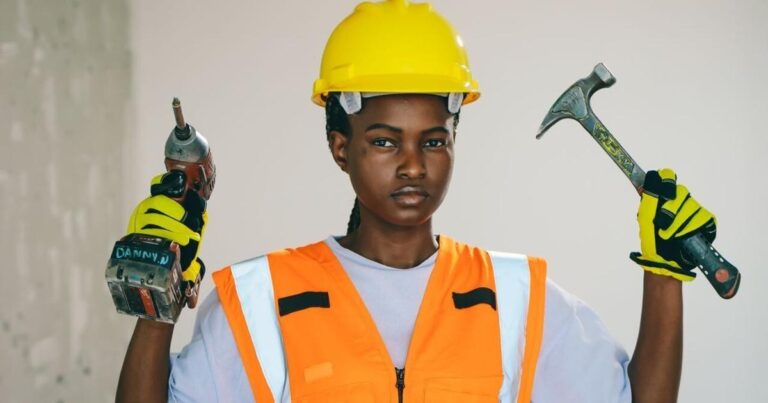
**Craftsmanship and Skilled Trades:** The physical world around us constantly needs building, maintaining, and repairing. Carpenters, electricians, plumbers, welders, and mechanics possess hands-on skills honed through years of practice and an intuitive understanding of physical systems that make them incredibly resilient. These are jobs that demand spatial reasoning, dexterity, and the ability to adapt to unique, on-site challenges that defy standardized algorithms. The demand for these professions often outstrips supply, leading to stable employment and competitive wages, illustrating their crucial role in society.
**Education and Mentorship:** While AI tools can personalize learning and deliver content, the human element in education – inspiring students, adapting teaching methods to individual learning styles, fostering social skills, and providing mentorship – is irreplaceable. Early childhood educators, special education teachers, and vocational trainers provide a foundational human connection that AI cannot replicate, guiding the development of the next generation with empathy and expertise.
**Creative Arts and Storytelling:** The drive to create, to express, and to connect through art, music, writing, and performance is a deeply human trait. While AI can assist in the creative process, the initial spark, the emotional resonance, and the unique voice that define truly impactful creative work still originate from human experience. From graphic designers and writers to performers and artists, these professions continue to thrive on original human insight and expression.
**Conclusion**
The narrative around AI and the future of work need not be one of fear and displacement, but rather one of evolution and opportunity. The most resilient and rewarding careers in the coming decades will be those that lean into our distinct human capabilities: our capacity for empathy, our innovative spirit, our ability to solve complex, unstructured problems, and our need for genuine connection. By understanding the fundamental limitations of artificial intelligence and emphasizing skills where humans truly excel, we can proactively shape our professional trajectories.
For those entering the workforce or considering a career change, focusing on fields that value hands-on skills, critical thinking, emotional intelligence, and creativity offers a clear path to future-proof employment. The future is not about humans *versus* machines, but about humans *with* machines, forging a symbiotic relationship where technology amplifies our potential and allows us to focus on what makes us uniquely human. Embracing lifelong learning and adapting to new tools will be crucial, ensuring that we remain valuable architects of our shared future, rather than just passive observers.