
In an age defined by relentless technological advancement, the landscape of work is undergoing a profound transformation. Artificial intelligence, automation, and ever-evolving digital tools are not just altering existing jobs but creating entirely new industries and career paths at an unprecedented pace. For educators and policymakers, the challenge is clear: how do we adequately prepare the next generation for a future that is still being written? The answer, increasingly, lies in proactive, collaborative strategies that bridge the traditional divide between academic institutions and the dynamic needs of the professional world.
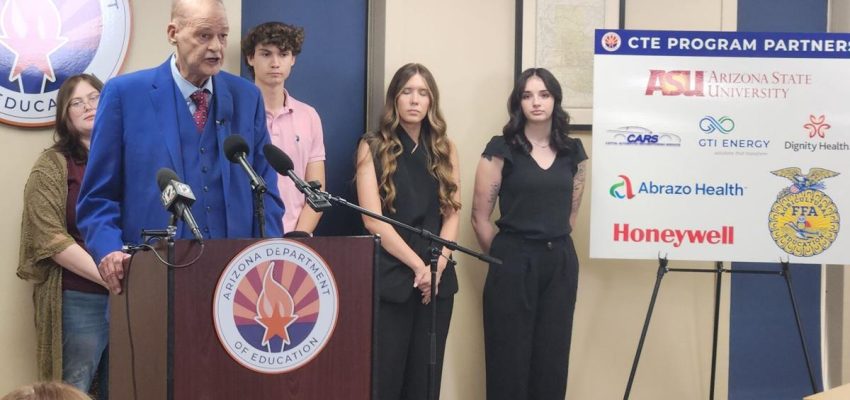
As an AI specialist and tech enthusiast, I’ve long advocated for a closer synergy between education and industry. It’s not enough to teach theoretical concepts; students need practical experience, relevant skills, and direct exposure to the sectors they aspire to join. This is precisely why the success story emerging from Arizona, highlighted by the state’s schools chief, is so compelling. It demonstrates a powerful model where strategic industry partnerships are not just an aspiration but a tangible reality, yielding career-ready graduates at rates far exceeding state averages. This isn’t merely about ticking boxes; it’s about building a robust pipeline of talent equipped to thrive in the complex, technology-driven economy of tomorrow.
Industry Partnerships: A Blueprint for Future Workforce Development
The concept of connecting education with industry is not entirely new. Vocational training and apprenticeships have historically played a vital role in preparing individuals for specific trades. However, what we observe in successful modern initiatives, like those celebrated in Arizona, is a far more integrated, sophisticated, and responsive approach. These are not merely ad-hoc arrangements but strategic, long-term collaborations designed to align curriculum with real-world demand, provide experiential learning, and cultivate a talent pool directly relevant to the needs of local and national economies.
The core philosophy behind these powerful
The benefits of such robust educational-industrial collaborations are multifaceted. For students, these programs offer invaluable opportunities for internships, mentorships, and hands-on projects that complement classroom learning. Imagine a high school student interning at a local advanced manufacturing plant, learning about robotics and automation, or a college student contributing to a real-time data science project for a tech company. These experiences provide not only practical skills but also professional networking, a deeper understanding of corporate culture, and a clearer career trajectory – all of which significantly enhance employability upon graduation. Moreover, by potentially shortening the time to gain relevant experience and secure stable employment, these partnerships can also alleviate the burden of student debt, a pressing concern for many.
For industries, the advantages are equally compelling. Faced with persistent skills gaps in critical sectors like technology, healthcare, and advanced manufacturing, businesses gain access to a pre-trained, highly motivated talent pool. This significantly reduces recruitment costs, onboarding time, and the need for extensive internal training programs. Furthermore, by actively participating in curriculum development, companies can ensure that future employees possess the exact competencies needed to drive innovation and maintain competitiveness. This symbiotic relationship fosters a local ecosystem where businesses thrive due to a steady supply of skilled labor, and educational institutions remain relevant and impactful.
From an economic development perspective, strong cross-sector partnerships are a magnet for investment and growth. Regions that can consistently produce a skilled workforce become attractive hubs for businesses looking to expand or relocate. This, in turn, stimulates further job creation, increases local tax revenues, and fosters a vibrant, resilient economy. Leaders like Arizona’s state schools chief, Horne, are rightfully celebrating these initiatives, recognizing their pivotal role in securing the state’s economic future.
Cultivating AI and Tech Talent Through Collaborative Ecosystems
My particular interest, of course, lies in how these collaborative models are shaping the future of AI and tech talent. The demand for professionals skilled in artificial intelligence, machine learning, data science, cybersecurity, and cloud computing is skyrocketing globally. A report by LinkedIn, for instance, identified AI Specialist as one of the fastest-growing jobs in the U.S. for several consecutive years. Yet, the supply of qualified candidates often struggles to keep pace, leading to a significant skills gap. It is precisely in this context that well-executed industry partnerships become not just beneficial, but absolutely critical.
These strategic alliances provide a direct conduit for cutting-edge technological knowledge to flow from the industry into the classroom. For example, a major semiconductor manufacturer might partner with a university to establish a specialized lab equipped with the latest fabrication technology, allowing students to gain practical experience that would otherwise be inaccessible. Tech giants could collaborate with high schools to develop coding academies or data science bootcamps, offering certifications that are immediately recognized and valued by employers.
Consider the myriad ways these partnerships can foster AI and tech talent: Curriculum co-creation, where leading tech companies advise on the inclusion of specific programming languages (Python, R), machine learning frameworks (TensorFlow, PyTorch), and cloud platforms (AWS, Azure, Google Cloud) into academic programs. Experiential learning opportunities are paramount: internships at AI startups, capstone projects tackling real-world business problems using machine learning, or even virtual apprenticeships in cybersecurity operations centers. Furthermore, industry professionals can serve as guest lecturers, adjunct faculty, or mentors, sharing their insights into emerging trends, ethical considerations in AI, and practical problem-solving methodologies.
Beyond technical prowess, these collaborations are instrumental in developing crucial soft skills that are indispensable in the tech world. Complex AI projects often require interdisciplinary teamwork, critical thinking, adaptability, and effective communication. Working on industry-sponsored projects compels students to navigate real-world constraints, manage deadlines, and articulate technical solutions to non-technical stakeholders – skills that are often overlooked in purely academic settings but are highly valued by employers. An Accenture study, for instance, highlighted that creativity, critical thinking, and complex problem-solving are increasingly vital alongside technical acumen in the age of AI.
The development of a robust talent pipeline starts long before college. Effective partnerships can reach down into K-12 education, inspiring young students to pursue STEM fields through engaging workshops, coding clubs, and exposure to tech professionals. This creates a foundational interest and provides early pathways into technical vocational programs or university degrees that feed directly into the growing demands of the tech sector. Such comprehensive ecosystems ensure a continuous supply of skilled individuals ready to innovate and contribute to the advancements in AI and other emerging technologies.
The Economic Imperative and the Path Forward
The economic imperative for nurturing strong industry-education links is undeniable. In a globally competitive landscape, a region’s ability to innovate and attract high-value industries is directly tied to the strength and relevance of its workforce. Countries like Germany, with its dual education system blending academic and vocational training, have long understood the value of such integration, leading to robust industrial sectors and low youth unemployment rates. Similarly, regions in the U.S. that have successfully fostered these relationships, such as Silicon Valley or research triangles, have become global leaders in technological innovation.
However, sustaining and scaling these successful models comes with its own set of challenges. One key hurdle is ensuring long-term funding and commitment from both public and private sectors. Partnerships require resources—for equipment, faculty training, program development, and student support. Governments can play a crucial role through incentives, grants, and policy frameworks that streamline collaboration. Another challenge is the sheer pace of technological change; curriculum must be agile and continuously updated to remain relevant. This necessitates ongoing dialogue and flexible program structures that can adapt rapidly to new technologies and emerging skill requirements, particularly in fields as dynamic as AI and data science.
Moreover, ensuring equitable access to these opportunities is paramount. The benefits of such specialized programs must extend to diverse student populations, including those from underserved communities, to prevent the widening of existing socio-economic disparities. Outreach programs, scholarships, and accessible pathways are essential to democratizing access to high-demand careers fostered by these partnerships. The goal should be to empower every student with the tools and opportunities to succeed in the future economy, regardless of their background.
Looking ahead, these **industry partnerships** must evolve into living, dynamic ecosystems that continuously learn and adapt. They should not be viewed as static programs but as ongoing conversations between education, industry, and policy-makers, all committed to a shared vision of prosperity and innovation. The future of work demands a workforce that is not only skilled but also adaptable, resilient, and committed to lifelong learning. These collaborations are perhaps our most effective tool for instilling these qualities.
The success stories emerging from Arizona and elsewhere are not isolated incidents but represent a crucial strategic shift in how we approach workforce development. By deeply integrating the needs of industry with the mission of education, we empower students with relevant skills, foster innovation within businesses, and strengthen our economies against the disruptions of tomorrow. These are not merely partnerships; they are vital arteries feeding the future of our workforce.
As we navigate an increasingly AI-driven world, the cultivation of talent equipped with both technical acumen and critical thinking becomes a national imperative. My hope is that the models championed by initiatives like those in Arizona will inspire broader adoption and deeper investment across the globe. By working together, academia and industry can ensure that humanity not only adapts to the future of technology but actively shapes it, creating opportunities and fostering progress for generations to come. It is through these collaborative ecosystems that we truly unlock human potential in an age of unprecedented technological change.