
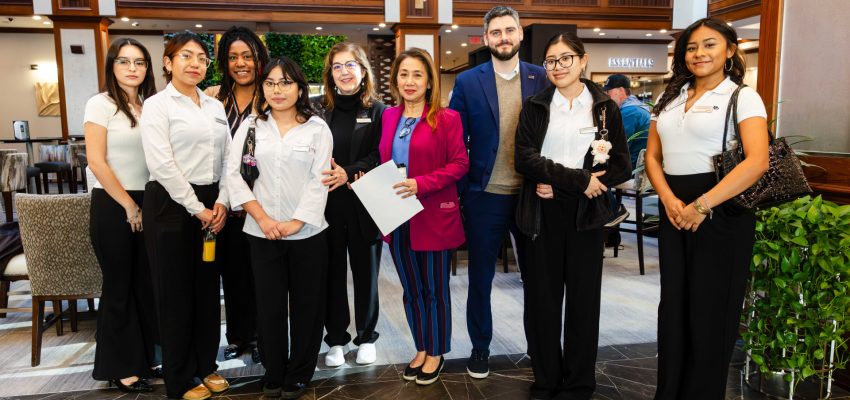

Every year, students across the globe embark on job shadow days, peeking behind the curtains of various industries, hoping to catch a glimpse of their potential future. Recently, students from Blanson Career and Technology Education High School in Aldine ISD participated in such an initiative, exploring the intricate world of hospitality within two of Houston’s most esteemed hotels, The Westin Houston Memorial City and The Westin Houston Downtown. Guided by their dedicated instructors, Dr. Ashley Ingraham and Eric Howard, these young minds rotated through departments, witnessing firsthand the meticulous operations that ensure a seamless guest experience.
As an AI specialist and tech enthusiast, I find these moments of career exploration profoundly significant. They are not merely about understanding current roles but about anticipating the future. While these students observed the vital functions of front office operations and various behind-the-scenes tasks, they were, perhaps unknowingly, stepping into an industry on the cusp of profound transformation. The hospitality sector, often perceived as deeply human-centric, is rapidly integrating artificial intelligence, reshaping everything from guest services to operational efficiencies. This evolution demands a new set of skills and a fresh perspective, making the lessons learned during a job shadow day more critical than ever.
AI in Hospitality: A Glimpse into Tomorrow’s Operations
The students who visited The Westin hotels were immersed in the ‘how’ of hospitality – how a hotel runs, how guests are checked in, how various departments coordinate. What they experienced was the current state, but the future of these very operations is increasingly intertwined with artificial intelligence. The presence of AI in hospitality is no longer a futuristic concept but a burgeoning reality, actively enhancing efficiencies and opening new frontiers for service. Behind the polished lobbies and welcoming smiles, algorithms are at work, optimizing everything from room rates to energy consumption.
Consider the ‘front office’ many students observed. While human interaction remains paramount, AI-driven solutions are streamlining processes. Automated check-in kiosks or mobile apps, for instance, allow guests to bypass queues, receive digital keys, and even select their preferred room features before arriving. These systems leverage machine learning to process identification, manage bookings, and even handle minor inquiries, freeing human staff to focus on more complex issues or personalized interactions that truly define luxury service. The global market for AI in hospitality is projected to grow significantly, with some reports estimating it could reach over $3 billion by 2028, underscoring its rapid adoption.
Beyond guest-facing roles, the impact of AI extends deep into the hotel’s infrastructure. Revenue management, a critical function for profitability, is being revolutionized by AI. Sophisticated algorithms analyze vast datasets—including historical occupancy rates, local events, competitor pricing, weather forecasts, and even social media sentiment—to predict demand with remarkable accuracy. This allows hotels to dynamically adjust room rates in real-time, maximizing revenue during peak periods and stimulating demand during slower seasons. This intelligent pricing optimization ensures financial viability, a complex task that human analysts alone could never manage with such precision.
Further backstage, AI is instrumental in predictive maintenance. Imagine a system that monitors the performance of HVAC units, elevators, and plumbing in real-time. Instead of reactive repairs, AI can predict potential failures based on operational data, scheduling maintenance proactively. This not only prevents costly disruptions and enhances guest comfort but also extends the lifespan of expensive equipment. Moreover, intelligent inventory management systems, powered by machine learning, can optimize procurement for everything from linens to food supplies, reducing waste and ensuring that hotels are always well-stocked without over-ordering. These examples illustrate how machine learning for hotel management is silently but profoundly enhancing operational excellence.
Enhancing the Guest Journey: AI-Powered Personalization
The true magic of hospitality lies in making guests feel seen, valued, and catered to. Here, AI in hospitality is not just about efficiency; it’s about elevating the guest experience to unprecedented levels of personalization. The advent of intelligent systems in tourism is shifting the paradigm from ‘one-size-fits-all’ to ‘one-size-fits-one.’
Picture this: a guest checks into their room, and the smart lighting adjusts to their preferred ambiance, the thermostat sets to their ideal temperature, and a personalized welcome message appears on the in-room display, suggesting local attractions or dining options based on their past preferences or declared interests. This is not science fiction; it’s the reality unfolding in many forward-thinking hotels. In-room voice assistants, similar to those found in smart homes, can fulfill requests ranging from ordering room service to setting wake-up calls or controlling entertainment systems, all through natural language commands.
Moreover, AI-powered chatbots are increasingly handling guest inquiries before, during, and after their stay. From answering frequently asked questions about amenities or local transport to facilitating booking modifications or even resolving minor complaints, these virtual concierges provide instant, 24/7 support. This instantaneity significantly boosts guest satisfaction, as studies show that quick response times are a key driver of positive experiences. By handling routine queries, these AI solutions allow human staff to dedicate their time to more complex problems, emotional interactions, and delivering truly exceptional, memorable service that only a human can provide. This collaborative model demonstrates how artificial intelligence in hotels can amplify, rather than diminish, human connection.
Even in areas like housekeeping, AI is making strides. Intelligent scheduling systems can optimize cleaning routes based on check-out times, guest preferences (e.g., ‘do not disturb’ requests), and even predictive analysis of areas that might require more frequent attention. This digital transformation of hospitality ensures resources are allocated effectively, maintaining high standards of cleanliness and efficiency.
Navigating the Future: Skills for Tomorrow’s Hospitality Professionals
The evolving landscape driven by AI in hospitality presents both exciting opportunities and new challenges for the workforce. For students like those from Blanson CTE High School, understanding these shifts is paramount to building a resilient and successful career path. The traditional roles they observed during their job shadow will continue to exist, but they will be augmented and transformed by technology. The future of hotel jobs is not about humans versus machines, but about human-AI collaboration.
What skills, then, will be most valuable in this AI-augmented future? First and foremost, human-centric skills will be more critical than ever. Emotional intelligence, empathy, communication, problem-solving, and critical thinking cannot be fully replicated by machines. These are the unique human attributes that build genuine connections, resolve complex guest issues, and create truly unforgettable experiences. As AI handles routine and repetitive tasks, human professionals will be elevated to roles requiring higher-order thinking and emotional engagement.
Secondly, digital literacy and a fundamental understanding of AI tools will be indispensable. Future hospitality professionals won’t necessarily need to be programmers, but they will need to be proficient users of AI-driven platforms, capable of interpreting data generated by intelligent systems, and comfortable interacting with new technologies. This includes understanding how to leverage AI for personalized marketing, using data analytics to improve service, or even troubleshooting basic AI system functions. Continuous learning and adaptability will be key; the technology landscape evolves rapidly, and professionals must be willing to learn new skills throughout their careers.
Programs like Blanson CTE’s hospitality and tourism curriculum are vital in preparing students for this future. Integrating modules on data analytics, digital tools, and the ethical implications of AI would provide an invaluable edge. The emphasis should be on developing ‘hybrid’ skills – combining a deep understanding of hospitality principles with technological fluency. This means fostering creativity to design innovative guest experiences, and developing the analytical prowess to derive insights from AI-generated data.
The shift towards an AI-driven guest experience also means a greater focus on cybersecurity and data privacy. With more personal data being processed by intelligent systems, professionals must be aware of best practices to protect sensitive information and maintain guest trust. The responsibility of safeguarding guest data will become an increasingly important aspect of hospitality management.
The journey the Blanson CTE students undertook was more than just a job shadow; it was an early step into a dynamic and thrilling future. The insights they gained into hotel operations, however conventional they might have seemed, serve as a foundational understanding upon which they can build their careers, preparing them to innovate and thrive in an industry being reimagined by intelligence. The blending of human warmth with technological prowess will define the next generation of hospitality leaders.
As we look ahead, the integration of AI in hospitality is poised to create a more efficient, personalized, and ultimately more rewarding experience for both guests and staff. For the aspiring professionals, this transformation isn’t a threat but an invitation to innovate, to learn, and to sculpt the future of an industry that truly touches lives. The hotels of tomorrow will be smart, but their heart will always be human, driven by the passion and creativity of individuals prepared to embrace the intelligent revolution. The next wave of hospitality leaders will be those who can expertly navigate this exciting synergy between people and technology.










