
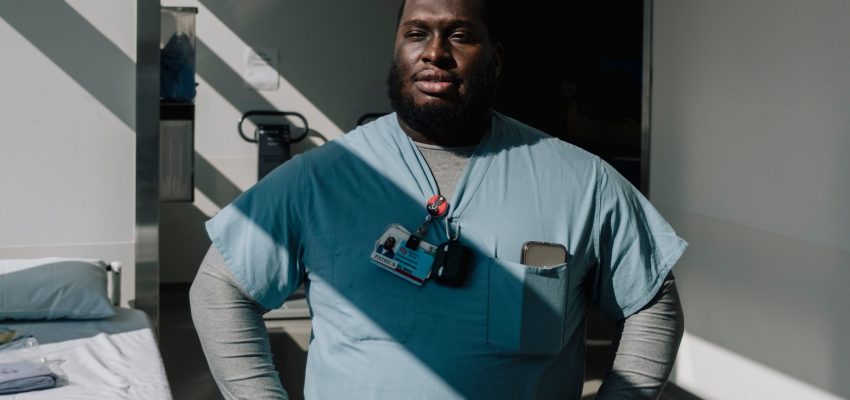

The roar of the stadium, the adrenaline rush of a game-winning play, the spotlight of national acclaim — these are the defining elements of a professional football career. But what happens when the cleats are hung up, and the jersey retired? For a fascinating handful of former NFL athletes, the next chapter isn’t in coaching, broadcasting, or business; it’s on the front lines of healthcare, in scrubs, dedicated to patient care. This intriguing phenomenon of professional football stars pivoting to nursing is more than just a surprising career change; it’s a testament to transferable skills, a search for purpose beyond the gridiron, and a glimpse into a future where human dedication meets technological advancement, particularly in the realm of artificial intelligence.
As an AI specialist and tech enthusiast, I find these narratives particularly compelling. They challenge our perceptions of what a career path ‘should’ look like and highlight the enduring human qualities—discipline, resilience, empathy—that remain irreplaceable, even as AI transforms industries. These athletes, accustomed to high-stakes decisions and rigorous training, are now applying that same intensity to a field critical to societal well-being. It’s a powerful metaphor for adaptation and the continuous evolution of professional identity in a rapidly changing world.
NFL Players Choosing Nursing: A Deep Dive into Unconventional Paths
The transition from the intensely physical and competitive world of the National Football League to the demanding, empathetic domain of nursing seems, on the surface, disparate. Yet, upon closer inspection, the parallels begin to emerge. Professional athletes, especially those in the NFL, operate under immense pressure. They must make split-second decisions, work seamlessly within a team, manage pain and injuries, and maintain an unwavering commitment to a common goal. These are not merely athletic traits; they are profound life skills that translate remarkably well into the healthcare sector.
Consider the discipline required to maintain peak physical condition year-round, to adhere to strict training regimens, and to meticulously study playbooks. This same discipline is invaluable in nursing, where precision, adherence to protocols, and continuous learning are paramount. The camaraderie of a locker room, the trust built among teammates, mirrors the essential teamwork required in a hospital setting, where nurses, doctors, and support staff collaborate under stressful conditions. Moreover, the resilience forged through grueling seasons, devastating losses, and personal injuries equips these individuals with an inherent ability to cope with the emotional and physical demands of nursing.
Data consistently shows that healthcare, particularly nursing, is a profession facing significant challenges, including burnout and staffing shortages. The US Bureau of Labor Statistics projects about 193,100 openings for registered nurses each year, on average, over the decade. Attracting individuals with the mental fortitude and commitment seen in professional athletes offers a unique, albeit niche, solution. These individuals aren’t just seeking a job; many are driven by a profound desire to serve, to make a tangible difference in people’s lives after careers where their impact, while celebrated, was often indirect or performance-based. The shift from the physical game to the human experience of care underscores a search for deeper meaning and contribution.
Bridging the Gridiron to the Clinic: Transferable Skills and Tech Acumen
Beyond the obvious virtues of discipline and teamwork, former NFL players bring a unique perspective shaped by constant performance analysis and a data-driven approach to improvement. In their athletic careers, every play, every movement, every recovery protocol was often analyzed with statistics and biomechanical data. This inherent comfort with data analysis and optimization positions them well for modern nursing, a field increasingly reliant on technology and analytics.
Today’s nursing isn’t just about traditional bedside care; it’s a sophisticated blend of clinical expertise, technological literacy, and critical thinking. From electronic health records (EHRs) to advanced patient monitoring systems, nurses interact daily with complex digital tools. The advent of artificial intelligence is further revolutionizing this landscape. AI-powered diagnostic aids can help nurses quickly interpret complex data, identifying patterns that might indicate a patient’s deteriorating condition even before symptoms become evident. Predictive analytics can forecast patient needs, allowing for proactive care interventions, while AI-driven administrative tools can automate routine tasks, freeing up nurses to focus on direct patient interaction – the invaluable human touch.
For individuals like NFL players choosing nursing as a second career, this technologically integrated environment might feel surprisingly familiar. Their experience in absorbing vast amounts of information (playbooks, opponent tendencies), executing complex procedures under pressure, and understanding the ‘systems’ involved in high-level performance prepares them for the systematic and data-rich environment of modern healthcare. They are entering nursing at a time when technology is not merely a tool but a fundamental aspect of care delivery, making their adaptive and performance-oriented mindset a significant asset.
The Future of Care: How AI Empowers the Next Generation of Nurses (Including Ex-Athletes)
The synergy between human expertise and artificial intelligence is nowhere more evident and crucial than in healthcare. AI is not replacing nurses; it is augmenting their capabilities, making them more efficient, more precise, and more effective. Consider the role of AI in medical imaging interpretation, where algorithms can assist in detecting anomalies in X-rays or MRIs, or in managing complex medication schedules, significantly reducing the potential for human error. Virtual nursing assistants, powered by AI, can handle routine patient queries, provide health education, and monitor vital signs remotely, extending the reach of care beyond the hospital walls.
For former athletes who have committed to nursing, embracing these technological advancements is part of their journey. Their commitment to excellence and their understanding of peak performance align well with the goal of leveraging AI to achieve optimal patient outcomes. They exemplify how individuals from diverse backgrounds can find new purpose in a tech-driven world, bringing unique strengths to a profession that deeply benefits from both human compassion and analytical rigor. The ability to adapt to new training methodologies, which often now include AI-powered simulations for medical procedures or scenario-based learning, is another area where their background might give them an edge.
Moreover, AI tools can help manage the immense mental and emotional load of nursing. From identifying early signs of nurse burnout to optimizing staffing schedules, AI can contribute to a healthier work environment, ensuring that the dedicated individuals who choose this profession can sustain their careers. The journey of these NFL players choosing nursing highlights a broader truth: the future workforce, especially in critical sectors like healthcare, will be characterized by lifelong learning, adaptability, and the seamless integration of human skill with intelligent technology.
These former gridiron heroes, now donning scrubs, are more than just inspiring stories of personal transformation. They represent the evolving nature of work, the enduring call to service, and the dynamic interplay between human potential and technological progress. As healthcare continues its rapid evolution, driven by innovation and AI, the human element—embodied by dedicated professionals like these former athletes—remains the bedrock of compassionate and effective care. Their journey underscores that the most profound advancements often occur at the intersection of unexpected paths, where dedication meets opportunity, and human hands work in concert with intelligent machines to heal and uplift.
In conclusion, the fascinating phenomenon of professional football players transitioning to nursing illustrates several key trends shaping our modern world: the fluidity of career paths, the enduring value of transferable skills, and the transformative power of purpose. These individuals bring a unique blend of discipline, teamwork, and resilience from their high-stakes athletic careers to the equally demanding, yet profoundly rewarding, field of healthcare. Their stories remind us that true strength often lies not just in physical prowess, but in the courage to redefine one’s impact and serve a greater good.
As we navigate an era increasingly defined by artificial intelligence, the role of human empathy, critical thinking, and dedicated service becomes even more pronounced. The choices made by these NFL players choosing nursing are a powerful testament to the fact that while technology augments our capabilities, the heart of care remains unequivocally human. Their new careers highlight a future where human professionals, enhanced by AI, will continue to be the cornerstone of health and well-being, demonstrating that true champions find ways to excel, no matter the arena.










