

We often speak of grand technological shifts and the sweeping impact of artificial intelligence on our world. Yet, the foundations for these future innovations are often laid in the most unassuming of places: the curious minds of children. As an AI specialist and tech enthusiast, I’ve spent considerable time contemplating the evolving landscape of work and how we prepare the next generation. It’s a profound truth, brilliantly articulated by Professor Carol Davenport, that children unconsciously absorb possibilities for their future careers from a remarkably young age. This insight underscores the immense importance of intentional interventions, such as robust STEM (Science, Technology, Engineering, and Mathematics) outreach programs. Recently, a North East initiative, recognized with a prestigious award from the Institute of Physics, stands as a beacon, highlighting how targeted efforts in foundational education are not just beneficial, but absolutely critical for shaping the innovators and leaders of tomorrow, especially in an era increasingly defined by AI.
Early Career Development: The Unconscious Curriculum of Childhood
The path to a fulfilling career begins much earlier than most realize. From the moment children begin to observe the world around them, they start piecing together a mosaic of understanding about various professions. This isn’t a conscious, deliberate study of career pathways; rather, it’s an ‘unconscious curriculum,’ as Professor Davenport aptly describes. They see a doctor on TV, hear about a relative who is an engineer, or encounter a teacher in the classroom, and these fragmented observations contribute to their developing mental models of what different jobs entail. Unfortunately, these early perceptions are often colored by societal stereotypes, media portrayals, and limited exposure. A young girl might not naturally envision herself as a software engineer if all the engineers she sees in popular culture are men. A child from a rural area might not know the breadth of opportunities in urban tech hubs.
Research in cognitive development consistently shows that by the age of six or seven, children already hold strong, often rigid, ideas about gender roles in professions. This can significantly narrow their perceived career options long before they even step into secondary school. If their early experiences don’t present diverse role models or expose them to a wide array of fields, particularly in STEM, they might prematurely self-select out of pathways that could genuinely ignite their passion. This is where the power of targeted outreach becomes evident. By introducing engaging, hands-on experiences and presenting a diverse array of professionals, we can actively counteract these unconscious biases and broaden the scope of what children believe is possible for their own future professional trajectory, profoundly influencing their **early career development**.
STEM Outreach: Building the Foundation for an AI-Driven Future
In a world increasingly reliant on technology and data, the foundational skills offered by STEM education are no longer just an advantage but a necessity. **Early career development** in STEM, fostered through outreach initiatives, serves as a crucial bridge, connecting abstract concepts to tangible, exciting experiences. These programs go beyond rote learning, aiming to ignite curiosity, foster critical thinking, and develop problem-solving abilities – skills that are absolutely paramount in the rapidly evolving landscape of artificial intelligence.
Consider the skills required to navigate and contribute to an AI-driven future: algorithmic thinking, data literacy, logical reasoning, and an innovative mindset. These are not skills that magically appear overnight; they are cultivated through sustained engagement with scientific principles and technological challenges. Effective STEM outreach provides children with opportunities to experiment, build, code, and explore, transforming potentially intimidating subjects into accessible and fun adventures. For example, a workshop on robotics doesn’t just teach mechanics; it introduces principles of design, programming, and problem-solving through iteration. A coding club might introduce the basics of logic gates or machine learning concepts through game development, planting seeds for future specializations in data science or AI engineering.
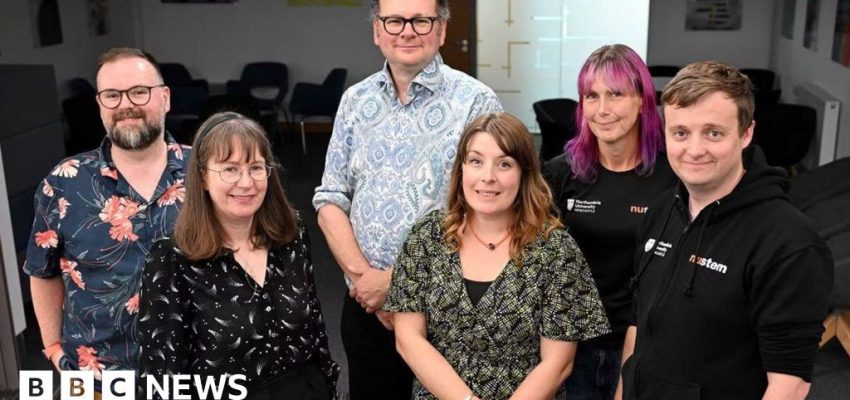
The North East scheme, which earned the Institute of Physics award, exemplifies this approach. While details of its specific activities are broad in the original source, such programs typically involve school visits from scientists and engineers, interactive workshops, museum excursions, and mentorship opportunities. They make science tangible and relatable, showing children that physics isn’t just about formulas in a textbook, but about understanding the universe, designing sustainable technologies, or even developing the next generation of AI systems. These experiences are vital for demystifying complex fields and encouraging children to see themselves as future contributors, thereby kickstarting their **early career development** in vital areas.
Nurturing Diversity and Bridging Gaps in Technology
Beyond skill development, early STEM engagement plays a pivotal role in addressing one of the most pressing challenges in the technology sector: diversity. For decades, industries like AI and engineering have struggled with a lack of representation, particularly for women and ethnic minorities. This isn’t just an issue of fairness; it’s a critical barrier to innovation. Diverse teams bring diverse perspectives, leading to more robust, ethical, and universally applicable solutions, especially crucial in the development of powerful AI systems that impact everyone.
The unconscious curriculum often reinforces stereotypes that discourage certain groups from pursuing STEM paths. By proactively reaching out to diverse communities and schools, STEM initiatives can dismantle these barriers before they fully form. Seeing a female physicist explain quantum mechanics, or a Black engineer demonstrate robotics, can be a transformative experience for a young girl or boy who might otherwise never encounter such role models. These programs can specifically target underrepresented groups, providing them with the resources, encouragement, and self-belief to explore STEM careers. This intentional focus on inclusion in **early career development** helps to create a more equitable talent pipeline, ensuring that the future workforce, particularly in AI, is reflective of the global population it serves. It’s an investment not just in individual potential, but in the collective intelligence and ethical integrity of our technological future.
The Ripple Effect: Societal Impact of Early Engagement
The benefits of robust STEM outreach extend far beyond individual children. When a society invests in **early career development** in science and technology, it cultivates a fertile ground for innovation and economic growth. A skilled workforce is the backbone of a thriving economy, and in the 21st century, that workforce must be proficient in STEM. Countries that prioritize scientific literacy and technological proficiency from a young age are better positioned to lead in global innovation, attracting investment and creating high-value jobs.
Moreover, a populace with a strong grounding in STEM is better equipped to understand and engage with complex societal challenges, from climate change and public health crises to the ethical implications of advanced AI. A citizenry capable of critical scientific thinking is less susceptible to misinformation and better able to make informed decisions, both personally and civically. The North East’s award-winning scheme, by fostering a new generation of scientifically literate individuals, is not just preparing children for jobs; it is preparing them to be informed, engaged citizens in an increasingly complex world. This holistic approach ensures that the impact of early STEM engagement resonates through every layer of society, contributing to a more resilient, innovative, and intelligent future.
AI and the Future Workforce: Why STEM Foundations Matter More Than Ever
As AI continues its exponential growth, reshaping industries and creating entirely new job categories, the discussion around **early career development** takes on an even greater urgency. The skills that AI currently excels at – pattern recognition, data processing, automation of routine tasks – mean that the human workforce must evolve. Future jobs will demand uniquely human capabilities: creativity, critical thinking, complex problem-solving, emotional intelligence, and interdisciplinary collaboration. These are precisely the skills that a well-rounded STEM education, particularly when delivered through engaging outreach programs, nurtures from a young age.
AI isn’t just about coding algorithms; it’s about understanding ethical implications, designing user-centric interfaces, and applying AI to solve real-world problems in diverse fields from medicine to environmental science. Therefore, a narrow technical focus alone won’t suffice. Children need a broad and curious mind, fostered by **early career development** that encourages exploration across scientific disciplines. They need to understand the ‘why’ behind the ‘how’, question assumptions, and imagine novel applications for technology. Programs that bring engineers, data scientists, and AI ethicists into schools, allowing children to interact directly with these professionals, can provide invaluable insight into the varied and exciting careers awaiting them in the AI era. It’s about equipping them not just with tools, but with the mindset to wield those tools responsibly and innovatively.
The success of the North East STEM outreach scheme, recognized by the Institute of Physics, serves as a powerful reminder of a fundamental truth: the future workforce, especially one thriving in the age of AI, is not born, but meticulously cultivated. Professor Carol Davenport’s observation about children unconsciously learning about careers from a young age is not just a psychological insight; it’s a call to action. It emphasizes the profound responsibility we share in shaping these formative experiences, ensuring they are rich with possibility, free from limiting stereotypes, and brimming with the transformative potential of STEM.
Investing in robust, inclusive STEM outreach programs is an investment in our collective future. It’s how we ensure that the next generation is not merely prepared for the challenges of an AI-driven world, but empowered to lead its advancements, imbued with creativity, critical thinking, and a diverse range of perspectives. By nurturing **early career development** in science and technology, we are not just building a skilled workforce; we are fostering a more innovative, equitable, and intelligent society, ready to harness the full promise of artificial intelligence for the betterment of all.










