

The landscape of modern healthcare is a vast, intricate, and ever-evolving ecosystem, continually shaped by scientific breakthroughs, technological innovations, and the enduring human need for care. For young minds standing at the precipice of their professional journeys, understanding this complex world can be both daunting and incredibly inspiring. It is precisely at this critical juncture that initiatives designed to illuminate the myriad pathways within the medical field become indispensable. Providing high school students with an early, immersive glimpse into the possibilities is not just beneficial; it is a strategic investment in the future well-being of our communities.
In this spirit, events like the recent ‘Choose Your Path’ program, meticulously organized by Stormont Vail Health in Topeka, Kansas, stand out as beacons of opportunity. This particular gathering brought together enthusiastic high school students from Topeka and Lawrence, offering them a unique, hands-on perspective on the diverse and dynamic world of healthcare careers. Beyond the traditional images of doctors and nurses, these students were invited to explore the vast spectrum of roles that collectively uphold the edifice of modern medicine. As an AI specialist and tech enthusiast, I find such initiatives particularly compelling, as they not only foster critical early exposure but also lay the groundwork for a generation that will inevitably integrate advanced technologies, including artificial intelligence, into every facet of patient care and medical innovation.
### Healthcare Careers: Unveiling a World of Opportunity
For many young people, the concept of a career in healthcare often conjures images of physicians in scrubs performing surgeries or nurses providing bedside care. While these roles are undoubtedly central and heroic, they represent merely a fraction of the expansive opportunities available within the health sector. The truth is, modern healthcare is a multi-disciplinary endeavor, requiring a vast array of specialized skills, passions, and educational backgrounds. From the meticulous precision of laboratory technicians analyzing samples to the compassionate empathy of social workers supporting patients and families, the field offers a place for nearly every talent and interest.
Consider the sheer breadth: alongside physicians and nurses, there are pharmacists ensuring medication safety, physical therapists aiding in recovery, occupational therapists helping individuals regain independence, speech-language pathologists addressing communication challenges, and radiologic technologists operating cutting-edge diagnostic imaging equipment. Beyond direct patient care, there’s a critical need for health information technologists managing vast datasets, biomedical engineers developing new medical devices, public health specialists tracking diseases and promoting community wellness, and researchers pushing the boundaries of scientific knowledge. Even within administrative functions, roles range from hospital management and human resources to financial planning and public relations – all integral to the smooth operation of complex medical institutions.
According to the U.S. Bureau of Labor Statistics, employment in healthcare occupations is projected to grow much faster than the average for all occupations, adding about 2 million new jobs over the next decade. This growth is driven by an aging population, longer life expectancies, and increasing rates of chronic conditions. Such statistics underscore the critical importance of fostering interest in healthcare careers from an early age. Providing students with a realistic, experiential view of these diverse roles can help them identify their own strengths and interests, steering them towards paths they might never have considered.
Furthermore, the evolution of healthcare is accelerating. The integration of advanced technologies, from telemedicine to robotic surgery, and increasingly, artificial intelligence, is transforming how care is delivered, diagnosed, and managed. This means that future healthcare professionals will not only need clinical acumen but also a strong understanding of technology, data literacy, and adaptability to continuous innovation. Events that showcase the practical application of these roles, allowing students to interact with professionals and observe daily operations, serve as invaluable stepping stones toward informed career choices.
### The Immersive Experience at Stormont Vail Health’s ‘Choose Your Path’ Event
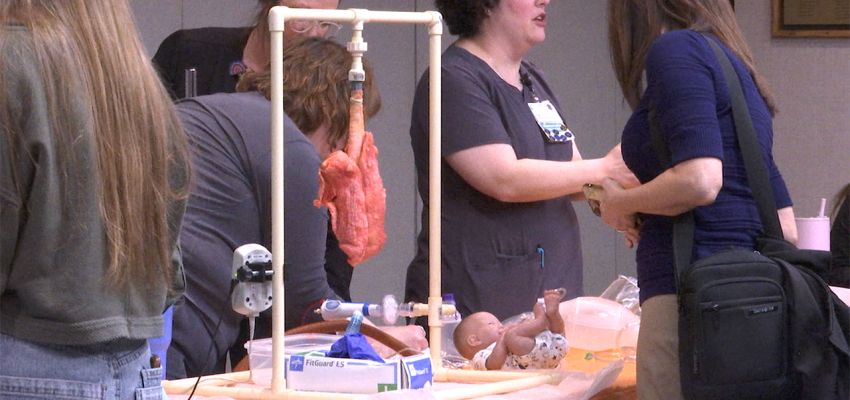
Stormont Vail Health’s ‘Choose Your Path’ event was designed to move beyond theoretical discussions and provide students with tangible experiences. Imagine a high school student, perhaps uncertain about their future, suddenly finding themselves in a simulation lab, learning how to perform basic first aid, or understanding the mechanics of a surgical robot. These are the kinds of transformative moments such events aim to create. Stormont Vail Health, as a leading integrated health system in Kansas, understands the profound impact of such early exposure. Their commitment extends beyond providing care to developing the next generation of caregivers and innovators.
At ‘Choose Your Path,’ students likely rotated through various stations, each dedicated to a different facet of healthcare. One station might have offered an interactive demonstration of phlebotomy techniques, allowing students to practice on mannequins. Another could have showcased the intricate world of medical imaging, explaining how X-rays, CT scans, and MRIs contribute to diagnostics. Students might have engaged with pharmacists discussing drug interactions, physical therapists demonstrating rehabilitation exercises, or even IT specialists explaining the complexities of electronic health records. These aren’t passive lectures; they are opportunities for active participation, questioning, and discovery.
Such immersive programs are particularly effective because they demystify complex professions. They transform abstract concepts into concrete, relatable experiences. Students can directly ask professionals about their daily routines, the challenges they face, and the rewards they reap. This direct interaction helps dispel myths and provides a realistic picture of various healthcare careers, allowing students to gauge their own alignment with different specialties. Moreover, these events often include discussions on the educational pathways required for each role, offering practical guidance on college courses, certifications, and specialized training programs.
The strategic location of such an event within a working hospital or healthcare facility further amplifies its impact. Being in the environment itself, even if in dedicated learning spaces, allows students to absorb the atmosphere, the pace, and the collective purpose that defines a medical institution. It’s an opportunity to see the collaborative spirit in action and understand how different departments and professionals work in concert to provide holistic patient care. This comprehensive approach ensures that students leave with not just information, but inspiration and a clearer vision for their potential future in the health sector.
### Beyond the Clinic: Technology, AI, and the Evolving Medical Landscape
As a technologist, I’m particularly keen to emphasize that the future of healthcare careers is inextricably linked with technological advancement, especially in the realm of Artificial Intelligence. The students exploring their options today are entering a field that will be profoundly different from that of their predecessors. AI is no longer a futuristic concept; it is actively reshaping diagnostics, treatment planning, drug discovery, and even administrative efficiencies within healthcare.
Consider how AI is already impacting various healthcare careers: Radiologists are beginning to work alongside AI algorithms that can detect subtle anomalies in medical images with incredible speed and accuracy. Pathologists are using AI to analyze tissue samples, potentially leading to earlier and more precise cancer diagnoses. Researchers leverage AI for drug discovery, simulating molecular interactions to identify promising new compounds faster and more cost-effectively. Even in patient-facing roles, AI-powered chatbots and virtual assistants are streamlining patient inquiries, scheduling appointments, and providing preliminary symptom assessments, freeing up human professionals for more complex and empathetic interactions.
For the next generation, this means that alongside traditional medical knowledge and clinical skills, a proficiency in digital literacy, data analysis, and an understanding of AI principles will become increasingly crucial. Future nurses might utilize AI-driven tools for predictive analytics to monitor patient deterioration. Future administrators might employ AI to optimize hospital resource allocation and reduce operational costs. Future therapists might use AI-powered wearables to track patient progress and personalize rehabilitation programs.
Events like ‘Choose Your Path’ provide an ideal platform to subtly introduce these technological dimensions. While the core focus might be on traditional clinical roles, even a brief mention or a demonstration of how a specific department uses technology, or a discussion with a health informatics professional, can spark an interest in the intersection of medicine and technology. It’s about cultivating a mindset that views technology not as a replacement for human expertise, but as a powerful augmentation that enhances capabilities, improves outcomes, and allows professionals to focus on the truly human aspects of care.
The demand for skilled professionals who can navigate this technological frontier is immense. The blend of medical knowledge with computational thinking is creating entirely new healthcare careers, such as clinical informaticists, AI ethics specialists in medicine, and data scientists specializing in public health. By exposing students to this dynamic evolution early on, we equip them with the foresight to pursue education and training that will make them invaluable assets in the healthcare landscape of tomorrow.
Nurturing the next generation of healers and innovators is a collective responsibility. From healthcare institutions to educational bodies and policymakers, a concerted effort is required to provide comprehensive guidance and opportunities. Early exposure events, like the one orchestrated by Stormont Vail Health, are critical components of this broader strategy. They don’t just inform; they inspire. They don’t just present options; they ignite passions.
The students from Topeka and Lawrence who participated in ‘Choose Your Path’ are not just future employees; they are future leaders, innovators, and caregivers. They are the individuals who will confront the health challenges of tomorrow, leveraging advancements in science and technology, including AI, to deliver better, more equitable, and more effective care. By showing them the vast and exciting world of healthcare now, we empower them to make informed decisions that will benefit not only their own futures but the health and vitality of entire communities. This investment in our youth is an investment in a healthier, smarter future for us all.










