

In an era defined by rapid technological advancement, the landscape of work is undergoing a profound transformation. Industries across the globe are increasingly embracing automation, not merely as a novelty but as a fundamental pillar for enhanced efficiency, precision, and scalability. From sprawling manufacturing plants to sophisticated logistics hubs, automated systems are becoming ubiquitous, fundamentally reshaping operational paradigms. This technological surge, while promising unprecedented productivity, simultaneously creates a pressing demand for a highly specialized workforce capable of implementing, maintaining, and optimizing these complex systems.
It’s within this dynamic context that we witness a compelling narrative unfold: individuals, often referred to as nontraditional students, are seizing the opportunity to pivot their careers, equipping themselves with skills essential for this new industrial revolution. Their journeys, rich with diverse life and professional experiences, are proving invaluable as they step into programs designed to meet this escalating demand. Texas State Technical College (TSTC) in Marshall, for instance, stands out as a pioneering institution recognizing this critical need, developing comprehensive
This isn’t just about learning new tools; it’s about understanding a new philosophy of work. The demand for skilled professionals in automation and controls isn’t a fleeting trend; it’s a foundational shift in how industries operate, and how economies evolve. These nontraditional students, often bringing a wealth of life experience and a profound commitment to learning, are not just adapting to change – they are actively shaping the future workforce.
Automation and Controls: A New Horizon for Career Reinvention
The global embrace of industrial automation is undeniable. Reports from organizations like the International Federation of Robotics (IFR) consistently highlight year-on-year growth in robot installations, with projections indicating a continuous upward trajectory. This isn’t confined to any single sector; manufacturing, logistics, healthcare, agriculture, and even service industries are integrating automated solutions to streamline processes, improve safety, and unlock new levels of productivity. As an AI specialist, I’ve observed firsthand how this wave of automation, increasingly empowered by artificial intelligence, is not just changing jobs but creating entirely new categories of roles that demand specialized expertise.
But what exactly does automation and controls encompass? At its core, it’s the multidisciplinary field focused on developing, deploying, and managing technology to automate processes in industrial and commercial settings. This includes, but is not limited to, robotics, Programmable Logic Controllers (PLCs), Supervisory Control and Data Acquisition (SCADA) systems, industrial sensors, human-machine interfaces (HMIs), and increasingly, the integration of Industrial Internet of Things (IIoT) devices. Professionals in this domain are the architects and caretakers of the machines that build our world, manage our infrastructure, and deliver our goods.
For many, the allure of this field lies in its future-proof nature. Traditional industries are being reimagined, and workers in sectors facing contraction are proactively seeking pathways to remain relevant and employed. Nontraditional students – a broad category encompassing veterans transitioning to civilian life, individuals seeking a mid-career change, parents re-entering the workforce, or those simply dissatisfied with their current trajectory – are perfectly positioned to fill this gap. They often bring a maturity, a strong work ethic, and a practical mindset derived from previous experiences, which are invaluable assets in a hands-on, problem-solving field like automation and controls. Their journey is less about starting over and more about strategic career reinvention, leveraging existing soft skills while acquiring cutting-edge technical expertise.
Bridging the Skills Gap: TSTC’s Strategic Approach to Workforce Development
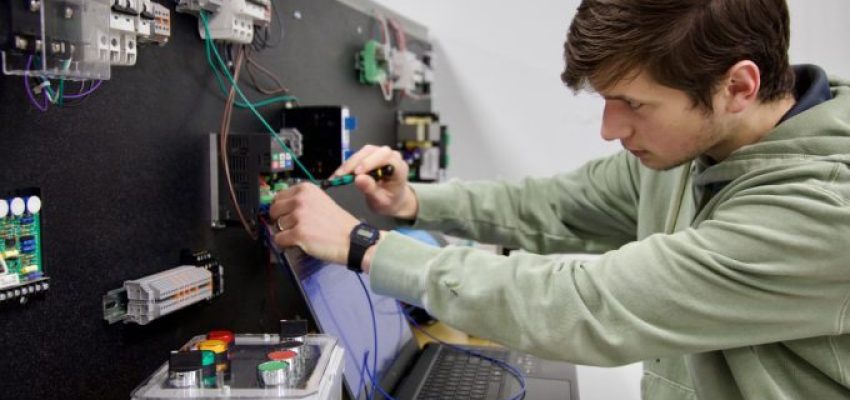
Recognizing the profound shift in industrial needs, educational institutions are stepping up to bridge the emerging skills gap. Texas State Technical College (TSTC), particularly its Marshall campus, has emerged as a beacon in this endeavor. Their automation and controls program is meticulously designed to provide students with the practical, hands-on skills demanded by modern industries. This isn’t abstract theoretical learning; it’s an immersive experience in real-world scenarios, using industry-standard equipment that students will encounter on the job.
The curriculum at TSTC is a testament to responsive education. It covers essential areas such as electrical theory, motor controls, PLC programming, hydraulics, pneumatics, and robotics. Students learn to diagnose and repair automated systems, program industrial robots, and understand the intricate logic governing complex control processes. The emphasis is on applied knowledge, ensuring graduates are not just conceptually aware but functionally proficient from day one. This practical focus is crucial, as employers in the automation and controls sector prioritize candidates who can hit the ground running, troubleshoot issues, and contribute effectively to production lines.
The success stories emanating from TSTC’s program are particularly inspiring. They illustrate how individuals from diverse backgrounds—a former corrections officer seeking a stable, high-demand career; a veteran applying their disciplined problem-solving skills; or someone transitioning from a physically demanding trade to a more technical role—are finding their stride. These nontraditional students often demonstrate an exceptional level of dedication and motivation, understanding the long-term value of their investment in education. Their life experiences often translate into superior critical thinking, adaptability, and teamwork skills—qualities that are highly prized in any technical field. TSTC’s approach isn’t just about teaching technical skills; it’s about fostering a new generation of problem-solvers who can navigate the complexities of automated industrial environments. By providing state-of-the-art facilities and instructors with extensive industry experience, TSTC ensures its graduates are not just qualified but truly competitive in the evolving job market for automation and controls specialists.
The Synergy of Human Ingenuity and Automated Intelligence
As the line between automation and artificial intelligence continues to blur, the role of human professionals in this field becomes even more critical. There’s a common misconception that automation leads to widespread job displacement. While it undeniably changes the nature of work, it also elevates the demand for human ingenuity in new capacities. The future workforce in automation and controls will not merely operate machines; they will supervise, optimize, troubleshoot, and innovate alongside increasingly intelligent systems.
Consider predictive maintenance, a burgeoning application where AI algorithms analyze data from industrial sensors to anticipate equipment failure before it occurs. This proactive approach minimizes downtime and extends the lifespan of machinery, but it still requires skilled human technicians to interpret the insights, verify findings, and perform the necessary maintenance or upgrades. Similarly, as automated systems become more complex and adaptive, the need for controls engineers who can design, program, and continuously refine these systems based on performance data and changing production demands will only intensify. The integration of machine learning into process control allows systems to learn and improve over time, making the role of the human operator more about guiding and training the AI, rather than just routine operation.
The career opportunities within automation and controls are vast and varied. Graduates can pursue roles as automation technicians, controls engineers, robotics programmers, industrial electricians, maintenance specialists, or even move into industrial IoT development. As an AI specialist, I foresee an increasing demand for professionals who understand the intersection of physical automation and intelligent algorithms. Skills in data analysis, machine learning basics, and cybersecurity for industrial control systems will become increasingly valuable. Continuous learning will be paramount, as the technologies in this field evolve at a breathtaking pace.
Moreover, the ethical considerations and societal impact of advanced automation will require human oversight and philosophical guidance. Designing systems that are not only efficient but also safe, secure, and beneficial to society necessitates a human touch that no algorithm can replicate. The synergy between human ingenuity and automated intelligence is not just a technological partnership; it’s a collaborative evolution of work itself, where human judgment, creativity, and adaptability remain indispensable.
The burgeoning field of automation and controls represents a remarkable convergence of opportunity and innovation. As industries worldwide continue their relentless pursuit of efficiency and advanced capabilities, the demand for skilled professionals to design, implement, and maintain these sophisticated systems will only intensify. Institutions like TSTC are at the forefront of this educational revolution, empowering a diverse cohort of nontraditional students to not only adapt to technological shifts but to actively thrive within them, forging meaningful and future-proof careers. Their success stories underscore a powerful truth: with the right training and determination, anyone can pivot towards a career that is not just viable, but vital to the global economy.
For those contemplating a career change or seeking to enhance their existing skill set, the path to becoming an expert in automation and controls offers immense potential. It’s a field that promises intellectual challenge, hands-on engagement, and the profound satisfaction of working at the cutting edge of industrial technology. As automation continues to integrate with artificial intelligence, the human element—our ability to learn, adapt, and innovate—will remain the most crucial component in shaping a productive and prosperous automated future.










