
In an era defined by unprecedented technological acceleration, the landscape of work is undergoing a seismic transformation. Artificial intelligence, once a realm of science fiction, is now a tangible force reshaping industries, creating entirely new job categories, and redefining what it means to be ‘career-ready.’ As an AI specialist and tech enthusiast, I’m consistently fascinated by not just the technology itself, but its profound implications for human potential, especially for the next generation. The traditional career paths that many of us considered foundational are evolving at breakneck speed, presenting both challenges and incredible opportunities for young people seeking to carve out their niche in the digital age. This rapid evolution underscores an urgent question: how do we effectively prepare our youth for a professional world that is increasingly intelligent, automated, and interconnected?
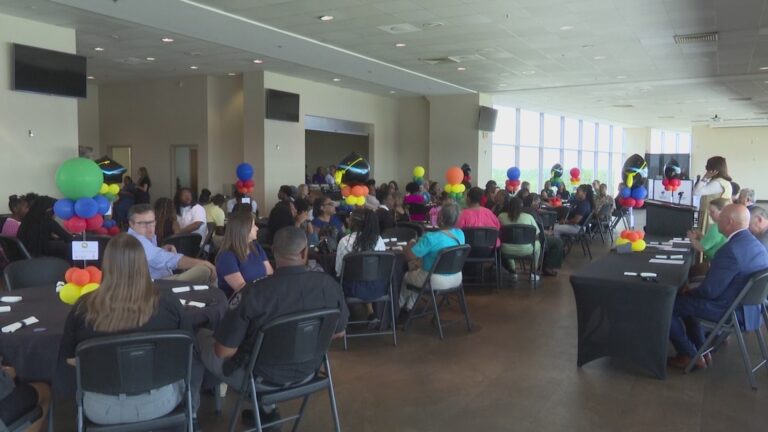
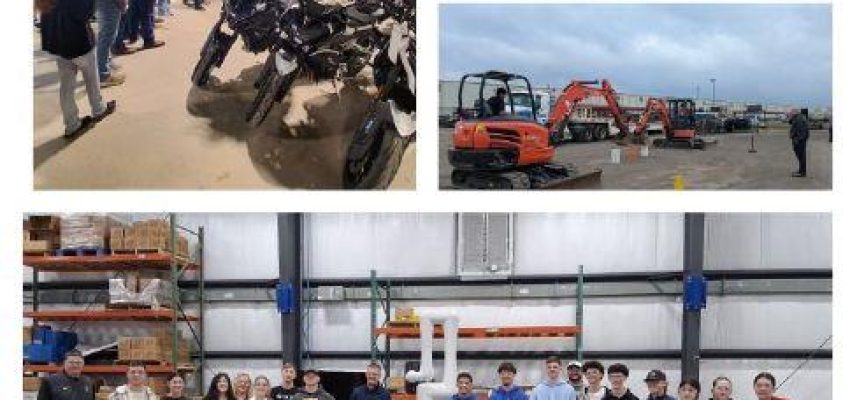
Echoing the spirit of impactful initiatives like local career camps that connect students with fields such as engineering and mechanics, there’s a growing imperative to extend this early exposure to the burgeoning world of AI. It’s no longer enough to wait for higher education to introduce these concepts; the foundational understanding and curiosity must be nurtured much earlier. Just as a camp might offer a hands-on experience with an engine or a blueprint, we now need innovative programs that allow young minds to tinker with algorithms, explore data sets, or design ethical AI solutions. This proactive approach is essential not only to demystify complex technologies but also to ignite a passion for innovation and equip students with the critical thinking, problem-solving, and adaptability skills that will be indispensable for success in an AI-powered future. My aim here is to delve into how we can strategically empower our youth, ensuring they are not just observers of the AI revolution but active, skilled, and thoughtful participants.
Future Careers in AI: A New Horizon for Young Innovators
The notion of Future Careers in AI might conjure images of highly specialized data scientists or robotics engineers, roles that are indeed crucial. However, the true breadth of AI’s influence extends far beyond these core technical positions, infiltrating and transforming virtually every sector imaginable. From healthcare to entertainment, logistics to agriculture, AI is introducing efficiencies, enhancing capabilities, and creating novel opportunities. Consider the automotive industry, which has traditionally focused on mechanics and engineering. Today, these fields are deeply integrated with AI, encompassing everything from autonomous driving systems and predictive maintenance algorithms to AI-powered manufacturing robots. A ‘mechanic’ of tomorrow might spend as much time diagnosing software issues in an electric vehicle’s AI system as they do traditional engine repairs.
Statistics vividly illustrate this burgeoning landscape. Projections from various reputable sources, including the World Economic Forum and LinkedIn, consistently highlight AI and machine learning specialists as among the fastest-growing job categories globally. The global AI market, valued at over $150 billion in 2023, is expected to surge past $1.8 trillion by 2030, according to Statista. This exponential growth translates directly into a demand for a skilled workforce. We’re talking about roles like AI Engineer, Machine Learning Specialist, Data Scientist, Prompt Engineer, AI Ethicist, Robotics Engineer, and AI Product Manager. But crucially, it also includes hybrid roles where AI literacy augments existing professions: AI-enhanced architects designing smart buildings, AI-assisted artists creating digital masterpieces, or even AI-savvy legal professionals navigating new regulatory frameworks. The common thread among these roles is not just technical proficiency but a deep understanding of AI’s capabilities and limitations, coupled with critical thinking and ethical considerations.
Therefore, early exposure to the fundamentals of AI through dedicated programs, much like traditional career camps, is no longer a luxury but a necessity. These initiatives can go beyond mere theoretical introductions, offering hands-on experiences that allow students to experiment with basic machine learning models, understand algorithms, or even design simple AI applications. Such experiences demystify AI, transforming it from an intimidating concept into an accessible tool for problem-solving and creativity. By fostering an understanding of these technologies early, we’re not just preparing students for specific jobs; we’re cultivating a generation capable of adapting to, innovating with, and responsibly shaping the AI-driven world.
Bridging the Skills Gap: The Imperative of Early Exposure to AI
One of the most pressing challenges facing the modern workforce is the ever-widening skills gap. Traditional educational models, while foundational, often struggle to keep pace with the rapid technological advancements that define our era. This disparity is particularly pronounced in the realm of AI, where the demand for skilled professionals far outstrips the current supply. This is where the concept of ‘career camps’ – reimagined for the digital age – becomes incredibly potent. These specialized programs offer an invaluable opportunity for youth to gain practical, experiential learning in AI that formal curricula might not yet provide.
Imagine a series of workshops where students aren’t just learning about coding, but actively building a simple sentiment analysis tool, training a machine learning model to recognize images, or exploring the ethical implications of facial recognition technology. Such experiences are transformative. They move beyond abstract concepts to tangible applications, allowing young people to see the direct relevance of AI in their daily lives and understand its potential to solve real-world problems. For instance, a student interested in environmental science could participate in a project using AI to analyze climate data or monitor wildlife populations. A budding artist might explore generative AI tools for creative expression. These hands-on opportunities foster not only technical skills but also critical soft skills like problem-solving, collaboration, computational thinking, and adaptability—qualities that are universally valued in any profession, but especially vital for navigating the dynamic landscape of Future Careers in AI.
Furthermore, early exposure helps to dismantle preconceived notions about AI being an exclusive domain for ‘geniuses’ or a purely male-dominated field. By showcasing diverse role models and accessible entry points, these programs can inspire a broader spectrum of students, including girls and underrepresented minorities, to pursue pathways in technology. This inclusivity is crucial for building diverse teams that can develop AI solutions that are equitable, unbiased, and beneficial for all segments of society. The goal is to cultivate a generation that is not merely proficient in using AI tools but is also capable of critically evaluating them, understanding their societal impact, and contributing to their responsible development. By providing these foundational experiences, we empower young individuals to not only fill the existing skills gap but also to anticipate and shape future technological advancements.
Beyond Code: Exploring Diverse Pathways in the AI Ecosystem
When most people think of AI careers, their minds often jump straight to coding and complex algorithms. While these technical skills are undeniably crucial, it’s a significant misconception to believe that all Future Careers in AI are confined to the realm of pure computer science. The reality is far more diverse and interdisciplinary, opening doors for individuals with a wide array of talents and interests. The AI ecosystem thrives on a confluence of technical expertise, creative thinking, ethical reasoning, and domain-specific knowledge.
Consider the expansive opportunities that arise when AI intersects with other fields. In healthcare, for example, roles like AI-driven medical imaging specialists, bioinformatics analysts, and even AI-powered diagnostic tool designers are emerging. These positions require not only an understanding of machine learning but also deep knowledge of biology, medicine, and patient care. Similarly, the creative industries are being revolutionized by AI. Artists, musicians, and writers can leverage generative AI tools to explore new forms of expression, creating demand for roles such as AI-assisted content creators, ethical AI art curators, or AI-powered game designers. These roles blend artistic sensibility with technical understanding, demonstrating that innovation often occurs at the intersection of disciplines.
Moreover, as AI becomes more pervasive, the demand for professionals focused on its societal implications grows. AI ethicists, policy analysts, legal experts specializing in AI regulations, and user experience (UX) designers for AI interfaces are becoming indispensable. These roles require strong analytical skills, empathy, a deep understanding of human psychology, and the ability to navigate complex ethical dilemmas. They ensure that AI systems are developed responsibly, mitigate bias, protect privacy, and serve humanity’s best interests. Programs that expose students to these broader applications can reveal career paths they might never have considered, emphasizing that a career in AI doesn’t solely mean being an engineer, but could also mean being a storyteller, a lawyer, a doctor, or an artist, all empowered and enhanced by artificial intelligence.
Cultivating this holistic perspective early on is vital. It encourages students to think critically about how AI can be integrated across various sectors, fostering a generation of innovators who can apply AI solutions to a myriad of real-world challenges, from optimizing urban planning to improving sustainable agriculture. By showcasing these diverse pathways, we empower young individuals to leverage their unique strengths and passions within the dynamic and ever-expanding AI ecosystem, truly shaping their own Future Careers in AI.
Cultivating a Lifelong Learning Mindset for the AI Age
One of the most fundamental shifts brought about by the rapid advancement of AI is the undeniable necessity of continuous, lifelong learning. The skills and knowledge considered cutting-edge today might become foundational, or even obsolete, in a few short years. This relentless pace of change means that the education system cannot simply equip students with a static set of facts or a rigid vocational skill; instead, it must instill a proactive, adaptive mindset that embraces constant learning and relearning. This is perhaps the most enduring value that early career exploration in AI can offer.
Programs designed to expose youth to AI go beyond teaching specific coding languages or algorithms; they cultivate curiosity, resilience, and a problem-solving ethos. When students are encouraged to experiment with AI, build small projects, and understand the iterative nature of technological development, they implicitly learn the importance of experimentation and adapting to new information. They learn that failure is often a stepping stone to success, and that complex problems often require creative, multidisciplinary solutions. This mindset is invaluable, not just for those pursuing specific Future Careers in AI, but for anyone navigating a world increasingly shaped by technology. It prepares them for a professional life where upskilling and reskilling will be regular occurrences, and where the ability to critically evaluate new information and integrate new tools will be paramount.
Moreover, these initiatives often foster a sense of community and mentorship. Connecting young learners with industry professionals, university researchers, or even older students who are further along in their AI journey provides crucial guidance and inspiration. Such mentorship can demystify career paths, offer practical advice, and help build a network that will be vital for future professional development. Creating environments where young people feel supported in exploring complex topics, asking difficult questions about AI’s societal impact, and collaborating on projects empowers them to become not just consumers of technology, but informed, ethical, and active contributors to the AI revolution. The ultimate goal is to nurture individuals who are not only ready for the jobs of tomorrow but are also equipped with the intellectual agility and ethical grounding to shape a more intelligent and equitable future.
The imperative to prepare our youth for the rapidly evolving world of artificial intelligence cannot be overstated. Just as traditional career camps have historically provided invaluable hands-on experiences in fields like engineering and mechanics, we now need to champion similar, yet technologically advanced, initiatives that bridge the gap between academic learning and the practical realities of the AI-driven professional landscape. By offering early, accessible, and engaging exposure to AI, we empower young individuals to move beyond mere consumption of technology to become active creators, innovators, and responsible stewards of this transformative force. The benefits extend far beyond securing specific jobs; they cultivate a generation equipped with critical thinking, adaptability, and an ethical compass essential for navigating any future career path.
As André Lacerda, I firmly believe that by investing in such forward-thinking educational programs and fostering a lifelong learning mindset, we are not just preparing students for a future that AI will shape, but we are enabling them to actively shape that future themselves. The opportunities within Future Careers in AI are immense and varied, spanning every conceivable discipline. Our collective responsibility is to ensure that every young mind has the chance to explore these horizons, to ignite their curiosity, and to acquire the skills necessary to innovate, lead, and thrive in an increasingly intelligent world. Let us empower them to not merely adapt to tomorrow’s challenges, but to define tomorrow’s successes.