
The rhythmic dance of waves against a ship’s hull, the vast expanse of the open sea, and the intricate global network of trade have long captivated human imagination. Maritime industries, the backbone of global commerce, are currently undergoing a monumental transformation, driven not just by the call of the ocean but by the relentless march of technology. As an AI specialist, writer, and tech enthusiast, I’ve always been fascinated by how artificial intelligence breathes new life into even the most time-honored sectors.
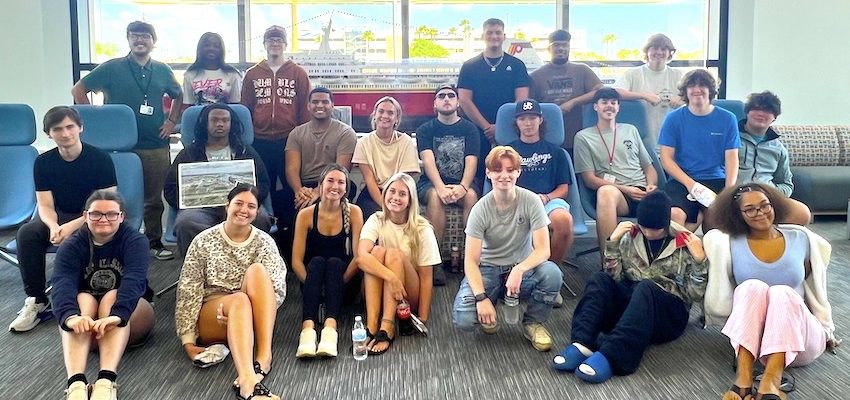
Recently, an inspiring initiative unfolded at Port Canaveral, offering a glimpse into this evolving future. Students from Rockledge High School’s Helping Educate Leaders in Maritime (H.E.L.M.) program embarked on a firsthand exploration of careers on the water. This wasn’t merely a field trip; it was an immersion into a world where tradition meets innovation, a world increasingly shaped by algorithms, data, and intelligent systems. For these burgeoning mariners, the experience at Port Canaveral served as a vital bridge, connecting their academic aspirations with the practical realities and thrilling possibilities of a tech-infused maritime landscape. This journey of discovery underscores a critical truth: the next generation of maritime professionals won’t just be navigating ships; they’ll be navigating data streams, managing autonomous systems, and leveraging cutting-edge AI to ensure safety, efficiency, and sustainability across the world’s oceans.
AI in maritime careers: Navigating the Tides of Innovation
The visit by Rockledge High School’s H.E.L.M. students to Port Canaveral is far more than a local educational event; it represents a microcosm of a global paradigm shift. Port Canaveral itself is a dynamic hub, a multifaceted gateway for cargo, cruise liners, naval vessels, and even space-related logistics. Its strategic location on Florida’s Space Coast makes it a nexus where diverse industries intersect, often pioneering technological advancements. For students seeking careers in this vibrant sector, understanding the profound impact of artificial intelligence is no longer optional; it is fundamental.
Traditionally, maritime roles evoked images of navigators charting courses with sextants, engineers tending to powerful engines, and deckhands managing ropes and cargo. While these foundational skills remain crucial, the modern maritime professional operates within an increasingly sophisticated technological ecosystem. Global trade relies on the efficient movement of an astonishing volume of goods – over 80% of which travels by sea. Ensuring this vast network operates smoothly, securely, and sustainably demands innovation, and this is precisely where AI steps in. From optimizing shipping routes to predicting equipment failures, the integration of AI is reshaping every facet of the industry, creating new career pathways and requiring a fresh set of competencies.
Consider the sheer complexity of port operations alone. A major port like Canaveral manages thousands of vessel movements annually, millions of tons of cargo, and thousands of jobs. Coordinating this symphony of activity, often under tight deadlines and variable conditions, is a monumental task. This is where AI-driven solutions are proving invaluable. Machine learning algorithms can analyze real-time data from weather patterns, vessel traffic, tidal conditions, and even terminal congestion to recommend optimal docking schedules and cargo handling procedures. Such intelligent systems reduce delays, minimize fuel consumption, and significantly enhance operational efficiency, directly impacting the profitability and environmental footprint of the entire supply chain. This is the new reality of **AI in maritime careers**, and programs like H.E.L.M. are instrumental in exposing young minds to this fascinating evolution.
Beyond the Horizon: How AI is Reshaping Maritime Operations
The scope of AI’s influence extends far beyond port optimization. It’s revolutionizing the very nature of maritime operations, from autonomous shipping to advanced environmental monitoring. For students aspiring to be part of this future, understanding these technological frontiers is key to unlocking new professional opportunities.
**Autonomous Vessels:** Perhaps one of the most talked-about advancements, autonomous ships are moving from concept to reality. Vessels capable of navigating oceans with minimal human intervention promise increased safety by reducing human error, enhanced efficiency through optimized speeds and routes, and lower operational costs. While fully crewless ships are still in early development and face significant regulatory and ethical hurdles, remotely operated and semi-autonomous vessels are already being trialed. This shift doesn’t necessarily eliminate human jobs; instead, it redefines them. Future mariners might find themselves operating control centers on shore, monitoring fleets of autonomous vessels, troubleshooting issues using advanced diagnostics, and managing complex mission parameters. This requires a profound understanding of robotics, sensor technology, and artificial intelligence.
**Logistics and Supply Chain Optimization:** The global supply chain is a labyrinth of interconnected nodes, and any disruption can have cascading effects. AI excels at processing vast datasets to identify patterns, predict potential bottlenecks, and optimize resource allocation. From predictive analytics for cargo demand to dynamic routing that avoids adverse weather or geopolitical hotspots, AI-powered platforms ensure that goods move efficiently from origin to destination. This involves everything from smart warehousing at ports to AI-driven customs clearance, streamlining complex international trade processes. Professionals in this domain will need strong analytical skills, an understanding of data science, and the ability to integrate diverse technological systems.
**Predictive Maintenance and Safety:** The harsh marine environment takes a toll on machinery. Traditional maintenance schedules are often reactive or time-based, leading to either unnecessary interventions or, worse, unexpected failures at sea. AI, particularly machine learning, is transforming this. Sensors on critical equipment (engines, propulsion systems, navigation gear) collect real-time data which AI algorithms analyze to predict potential malfunctions *before* they occur. This allows for proactive maintenance, significantly reducing downtime, extending equipment lifespan, and most importantly, enhancing safety for crews and cargo. Future maritime engineers and technicians will be diagnosing problems using AI-powered tools, interpreting data visualizations, and implementing precise, data-driven maintenance strategies.
**Environmental Monitoring and Sustainability:** As global awareness of climate change and ocean health grows, the maritime industry faces increasing pressure to operate more sustainably. AI is proving to be a powerful ally in this endeavor. AI models can optimize fuel consumption by identifying the most energy-efficient routes and speeds, significantly reducing greenhouse gas emissions. They can also analyze satellite imagery and sensor data to monitor marine ecosystems, detect illegal fishing activities, track oil spills, and contribute to marine conservation efforts. This opens up new pathways for environmental scientists, data analysts, and policy developers within the maritime sector who can leverage AI to safeguard our oceans. The evolving role of **AI in maritime careers** is intrinsically linked to global sustainability efforts.
The New Skillset for Tomorrow’s Mariners
For the students from Rockledge High School’s H.E.L.M. program, their firsthand look at Port Canaveral was more than just an educational outing; it was an introduction to a future demanding a hybrid skillset. The traditional roles are not disappearing entirely, but they are undeniably evolving, merging classic maritime expertise with profound technological fluency. The next generation of maritime leaders will need to be equally adept with nautical charts and neural networks.
The emphasis is shifting from purely manual operations to supervisory, analytical, and strategic roles. Imagine a future captain who, in addition to mastering seamanship, must interpret complex data visualizations from an AI-powered bridge, making critical decisions based on predictive analytics and real-time sensor information. Or a port manager who utilizes AI algorithms to optimize logistics, predict bottlenecks, and ensure the seamless flow of goods through an automated terminal. These are not distant sci-fi scenarios but rather the imminent reality for aspiring professionals.
Key skills for future mariners will include data literacy, a foundational understanding of AI and machine learning principles, cybersecurity awareness (as connected vessels become potential targets), and proficiency in operating advanced automation systems. Problem-solving will pivot from mechanical troubleshooting to analytical deduction, often with the assistance of intelligent diagnostics. Collaboration with AI systems will become a core competency, where human intuition and creativity complement the analytical prowess of machines.
Programs like H.E.L.M. are critical because they provide an early exposure to this evolving landscape, allowing students to see how their interests in maritime can intersect with cutting-edge technology. They can explore roles like maritime data scientists, autonomous vessel technicians, AI systems integrators for ports, and even ethical AI advisors for marine operations. The goal is to cultivate a workforce that is not only prepared for current maritime challenges but also equipped to innovate and lead in an increasingly sophisticated, interconnected, and AI-driven industry. The pathways into **AI in maritime careers** are numerous and diverse, spanning engineering, logistics, environmental science, and even regulatory compliance.
Charting a Course for a Smart Maritime Future
The integration of artificial intelligence into the maritime industry is not merely an incremental upgrade; it is a fundamental redefinition of how we interact with the oceans, manage global trade, and prepare our future workforce. From the bustling docks of Port Canaveral to the farthest reaches of the open sea, AI is already demonstrating its transformative power, making operations safer, more efficient, and more sustainable. Initiatives like Rockledge High School’s H.E.L.M. program are vital in this epochal shift, serving as incubators for the talent that will drive this evolution. By exposing students to the technological forefront of the industry, we empower them to become not just participants but innovators in this exciting new era.
The future of maritime is bright, dynamic, and undeniably intelligent. As an AI specialist, I believe that nurturing this fusion of traditional expertise with advanced technological insight is paramount. The journey taken by the H.E.L.M. students is a powerful reminder that the most exciting careers often lie at the intersection of established fields and emerging technologies. By embracing AI, the maritime world is charting a course towards unprecedented levels of efficiency, safety, and environmental stewardship, ensuring that the call of the sea continues to inspire and sustain us for generations to come.