
The landscape of education and employment is undergoing a profound transformation. What was once a relatively predictable path from classroom to career has become a dynamic, often uncertain journey, shaped by rapid technological advancements, global shifts, and the pervasive rise of artificial intelligence. In this new paradigm, simply acquiring academic knowledge is no longer sufficient. To truly thrive, young individuals need a unique blend of soft skills, practical experience, and an adaptable mindset. This is precisely where pioneering initiatives like OC Pathways’ Student Leadership Day step in, offering a glimpse into a proactive, student-led approach to equipping the next generation.
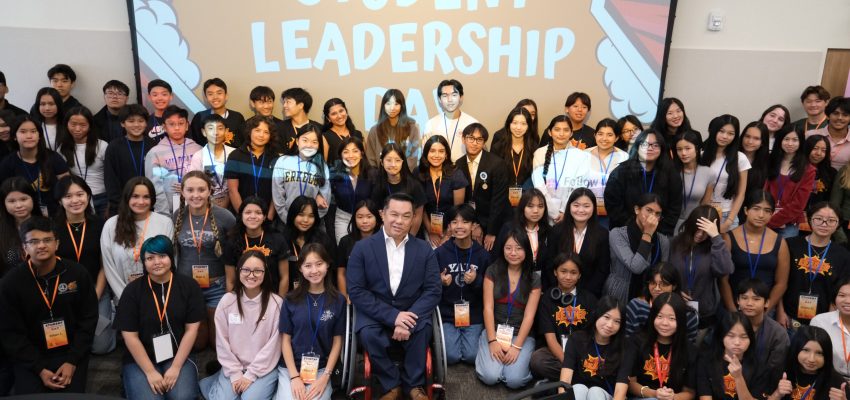
At its heart, Student Leadership Day is more than just an event; it’s a testament to the power of peer-to-peer learning and the foresight required to prepare students for an increasingly complex world. High school students, stepping into the roles of mentors and guides, led workshops spanning topics from the nuances of apprenticeships to the art of professional networking. This remarkable gathering brought together student ambassadors from fifteen different districts, united by a common goal: to share their invaluable experiences and forge connections that would serve as foundational building blocks for their future careers. As an AI specialist and advocate for human potential, I find such initiatives profoundly inspiring, recognizing that the skills honed in these environments are precisely what will set individuals apart in an AI-augmented future.
Career Readiness: The Cornerstone of Tomorrow’s Workforce
In a world where algorithms are increasingly optimizing processes and automating tasks, the concept of **career readiness** has evolved beyond mere vocational training. It now encompasses a holistic suite of attributes that enable individuals to not only secure a job but to adapt, innovate, and lead throughout their professional lives. The OC Pathways Student Leadership Day exemplifies this forward-thinking approach, recognizing that the best way to prepare students is to empower them. Rather than being passive recipients of information, these students became active facilitators, guiding their peers through crucial developmental workshops.
Consider the traditional educational model: often linear, focused on individual achievement, and heavily reliant on standardized testing. While foundational knowledge remains vital, the modern job market demands something more fluid. Employers consistently cite a critical gap in soft skills among new graduates – areas such as critical thinking, complex problem-solving, collaboration, and communication. These are the very competencies that thrive in environments like Student Leadership Day, where students are pushed to articulate ideas, facilitate discussions, and respond to real-time questions from their peers. This experiential learning is far more effective than rote memorization for cultivating the adaptive intelligence necessary for sustained **career readiness**.
Moreover, the event’s focus on topics like apprenticeships and networking underscores a fundamental shift towards practical, applied learning. Apprenticeships, long a staple of vocational training, are experiencing a resurgence as industries recognize the value of on-the-job training combined with structured learning. They provide a direct pathway from education to employment, equipping students with sector-specific skills and invaluable industry connections. In an AI-driven economy, new forms of apprenticeships are even emerging, focusing on human-AI collaboration, data interpretation, or ethical AI deployment – roles that demand both technical acumen and the very interpersonal skills fostered at events like OC Pathways.
Networking, too, is no longer a luxury but a necessity. The ability to build and maintain professional relationships opens doors, provides mentorship opportunities, and facilitates knowledge exchange. While digital platforms and AI tools can certainly enhance networking capabilities by suggesting connections or automating outreach, the core human element – genuine connection, active listening, and empathetic communication – remains paramount. These are the interpersonal skills that robots cannot replicate, and they are critical for long-term **career readiness**.
Beyond Textbooks: Cultivating Essential Skills for a Dynamic Future
The workshops at OC Pathways’ Student Leadership Day illustrate a profound understanding of what truly constitutes future-proof skills. When high school students are teaching their peers about apprenticeships, they are not just sharing information; they are demonstrating leadership, fostering a sense of community, and validating non-traditional pathways to success. This peer-led model breaks down barriers and makes complex concepts more relatable and accessible, proving that effective learning can be decentralized and highly impactful. It’s an approach that fundamentally enhances a student’s overall professional preparedness.
Let’s delve deeper into some of these vital skills. **Problem-solving**, for instance, is no longer about finding the single correct answer but about navigating ambiguity, identifying root causes, and iterating through potential solutions. In an AI-accelerated world, many routine problem-solving tasks will be handled by machines. What remains for humans are the ‘unstructured’ problems – those requiring creativity, nuanced judgment, and an understanding of human context. Leading a workshop, troubleshooting a presentation, or responding to unexpected questions from peers all serve as practical exercises in this higher-order problem-solving.
**Communication**, both verbal and non-verbal, is another indispensable skill. The ability to articulate complex ideas clearly, to listen actively, and to convey empathy are fundamental to effective collaboration. Whether it’s presenting a concept, engaging in a networking conversation, or collaborating on a team project, strong communication skills are the bedrock upon which all other professional interactions are built. Students at Leadership Day honed these skills not in a theoretical exercise, but through the real-world challenge of educating and inspiring their peers.
Finally, the emphasis on **adaptability** is perhaps the most crucial. The pace of technological change, particularly with AI, means that job roles, required skills, and even entire industries can transform rapidly. A truly career-ready individual is not just skilled in one domain, but possesses the agility to learn new tools, embrace new methodologies, and pivot when necessary. The confidence gained from leading a workshop, from navigating an unfamiliar topic, or from connecting with new people instills this vital sense of resilience and openness to change. These are the qualities that transcend specific technologies, providing a robust foundation for continuous growth and evolution in any future professional landscape.
The AI Imperative: Equipping Students for an Augmented Future
As an AI specialist, I’m often asked about the future of work in an age dominated by artificial intelligence. My answer consistently emphasizes that AI will not merely replace human jobs; it will augment them, redefine them, and create entirely new opportunities. The key to thriving in this augmented future lies in understanding how to collaborate with AI, leverage its capabilities, and critically, to focus on the uniquely human skills that AI cannot replicate. This is where initiatives fostering comprehensive **career readiness** become paramount.
Consider the evolving demands. While AI can analyze vast datasets, generate content, or automate customer service, it still lacks true creativity, emotional intelligence, ethical reasoning, and the ability to form deep human connections. These are precisely the skills that Student Leadership Day cultivates. Students who learn to lead, network, and communicate effectively are not just preparing for *any* job; they are preparing for roles that leverage their distinctly human attributes in conjunction with AI tools. They become the strategic thinkers, the ethical overseers, the empathetic communicators, and the innovative problem-solvers that AI needs to operate effectively and responsibly.
Moreover, a foundational understanding of AI’s principles, its capabilities, and its limitations will be a non-negotiable aspect of future **career readiness**. This doesn’t necessarily mean every student needs to become an AI engineer, but rather that every professional should possess a degree of ‘AI literacy.’ They should understand how AI impacts their industry, how to use AI tools responsibly, and how to identify potential biases or ethical dilemmas associated with AI. Events that encourage students to explore diverse career paths also implicitly encourage them to consider how AI might intersect with those paths, fostering a proactive and informed perspective.
The OC Pathways program, by empowering students to teach and lead, is inadvertently preparing them to be lifelong learners and critical thinkers – two attributes essential for navigating the rapid advancements in AI. They learn to break down complex topics, a skill invaluable when trying to understand new AI paradigms. They build confidence in their ability to share knowledge, which will be crucial as they upskill and reskill throughout their careers, often leveraging AI-powered learning platforms. Ultimately, the emphasis on human agency and leadership in these student-led initiatives provides an indispensable human counterpoint to the technological surge, ensuring that our future workforce remains anchored in ethical considerations, empathy, and innovation.
In conclusion, the Student Leadership Day organized by OC Pathways is a powerful exemplar of how modern education must evolve to meet the challenges and opportunities of the 21st century. By shifting the focus from passive learning to active leadership, and by emphasizing practical skills like networking and apprenticeship insights, these initiatives are cultivating truly remarkable young professionals. They are fostering the soft skills – leadership, communication, critical thinking, adaptability – that are not only essential for thriving in any professional environment but are also the very attributes that will differentiate human value in an increasingly AI-driven world. It’s a testament to the belief that the future of work isn’t just about what machines can do, but what humans, empowered and prepared, can achieve alongside them.
As we look ahead, the importance of fostering comprehensive **career readiness** cannot be overstated. Programs like OC Pathways are not merely supplementary; they are foundational. They underscore the critical role that experiential learning, peer mentorship, and strategic skill development play in shaping a generation capable of navigating unprecedented change. For André Lacerda, an AI specialist who believes deeply in human potential, seeing young people take the reins of their own development and that of their peers is not just encouraging—it’s a clear vision for a future where technology amplifies human ingenuity, rather than diminishing it. The journey towards a fulfilling and impactful career in the AI era begins with precisely these kinds of proactive, human-centered foundations.