

In an era defined by rapid technological advancement, few forces are as disruptive and transformative as artificial intelligence. From automating routine tasks to powering complex decision-making, AI’s influence is pervasive, touching every facet of our lives. As an AI specialist and tech enthusiast, I’ve had the privilege of witnessing this evolution firsthand, and it’s clear that its most profound impact is yet to unfold, particularly within the professional landscape. We stand at the precipice of a new industrial revolution, one driven not by steam or electricity, but by intelligent algorithms and data. This shift demands a fresh perspective on how we approach careers, education, and lifelong learning, challenging us to adapt and innovate in unprecedented ways. The very definition of a ‘career’ is being rewritten, and understanding this evolving narrative is crucial for anyone looking to thrive in the decades to come.
The pace of change can feel dizzying, but beneath the headlines about job displacement lies a more nuanced truth: AI is not merely replacing human labor; it is fundamentally reshaping it, augmenting our capabilities, and creating entirely new avenues for human ingenuity. This blog post delves into the core of this transformation, exploring how individuals, industries, and educational institutions can best prepare for the future. We’ll examine the specific ways AI is permeating various sectors, the critical skills necessary to flourish, and the ethical considerations that must guide our progress. Join me as we navigate the complex, exciting, and sometimes challenging journey of understanding the profound shifts brought about by artificial intelligence in the modern professional world.
AI in the Workforce: Redefining Roles and Opportunities
The concept of AI in the workforce is no longer a futuristic speculation; it is a present reality that is redefining the very fabric of our professional lives. Historically, technological revolutions have always reshaped labor markets, from the agricultural revolution giving way to industrialization, to the digital age automating information processing. AI represents the latest, and arguably most impactful, iteration of this trend. It’s not just about robots on assembly lines anymore; it’s about sophisticated algorithms influencing everything from customer service chatbots to medical diagnostics, financial trading, and even creative content generation. This pervasive integration means that few, if any, industries will remain untouched. Research from the World Economic Forum, for instance, consistently highlights a dual effect: while AI is projected to displace certain routine jobs, it is simultaneously expected to create millions of new ones, particularly in areas requiring advanced technological skills, data analysis, and human-centric roles that leverage AI’s strengths.
Consider the healthcare sector. AI-powered diagnostic tools can analyze medical images with accuracy comparable to, or even exceeding, human experts, assisting radiologists in detecting anomalies earlier. In finance, AI algorithms perform complex risk assessments, fraud detection, and high-frequency trading, tasks that would be impossible for humans to execute at the same scale and speed. Even in traditionally human-centric fields like marketing, AI helps personalize campaigns, predict consumer behavior, and optimize ad spend. This isn’t about replacing doctors, financiers, or marketers entirely, but rather about transforming their roles. Professionals in these fields are increasingly becoming orchestrators of AI systems, interpreting their outputs, making ethical decisions, and focusing on tasks that require uniquely human attributes like empathy, complex problem-solving, and creative strategy. The challenge, and indeed the opportunity, lies in understanding how to collaborate effectively with these intelligent systems.
The shift also necessitates a fundamental rethinking of educational frameworks. Traditional curricula, often designed to prepare students for well-defined, static career paths, are becoming obsolete. The modern professional landscape demands agility, critical thinking, and a continuous learning mindset. For example, a recent IBM study revealed that about 120 million workers in the world’s 12 largest economies may need to be retrained or reskilled as a result of AI and automation. This points to a massive educational imperative. Institutions must focus on fostering not just technical skills, but also the ‘soft’ skills that AI struggles with – creativity, emotional intelligence, leadership, and ethical reasoning. The goal is to equip the next generation, from their formative years, with the adaptability to navigate a future where their chosen career path today might look drastically different in a decade, thanks to the continuous evolution of AI in the workforce.
The Symbiotic Future: AI as Collaborator, Not Competitor
One of the most persistent anxieties surrounding AI is the fear of widespread job displacement, picturing a future where machines take over every human task. While some routine, automatable jobs are indeed vulnerable, a more accurate and hopeful vision emphasizes a symbiotic relationship between humans and AI. Instead of pure competition, we are seeing the emergence of human-AI collaboration, where each brings unique strengths to the table. AI excels at processing vast datasets, identifying patterns, performing repetitive tasks with precision, and executing calculations at superhuman speeds. Humans, on the other hand, possess creativity, emotional intelligence, critical judgment, strategic foresight, and the ability to handle ambiguity and ethical dilemmas. When these capabilities are combined, the potential for innovation and productivity skyrockets.
Consider the realm of creative industries. While generative AI can produce compelling art, music, or text, it often lacks the nuanced understanding of human emotion, cultural context, or the spark of true originality that defines groundbreaking human creativity. Artists, writers, and designers are increasingly using AI as a powerful tool – a digital assistant that can generate initial concepts, automate tedious editing, or explore variations, freeing up the human creator to focus on the higher-level conceptualization and emotional resonance. Similarly, in fields like engineering and scientific research, AI can accelerate discovery by simulating complex scenarios, analyzing experimental data, and even suggesting novel hypotheses, allowing human researchers to pursue more ambitious and impactful inquiries. This collaborative paradigm is reshaping how work gets done, moving beyond simple automation to genuine augmentation of human potential.
This evolving dynamic of AI in the workforce means that future success hinges on developing ‘AI literacy’ – not necessarily becoming an AI programmer, but understanding what AI can do, how to interact with it effectively, and how to critically evaluate its outputs. It involves mastering the art of ‘prompt engineering’ for generative AI, learning to interpret AI-driven analytics, and understanding the ethical implications of AI tools. Businesses are also adapting, creating hybrid roles that explicitly require human-AI teamwork. For example, a data scientist might work alongside an AI model to refine predictive algorithms, or a marketing professional might leverage AI for customer segmentation while designing the overarching campaign strategy. This focus on augmentation rather than pure automation is key to unlocking new levels of human achievement and ensuring a more resilient and dynamic job market for all.
Preparing for Tomorrow’s Professions: Skills, Education, and Lifelong Learning
The profound impact of AI in the workforce necessitates a paradigm shift in how we approach education and career development. The traditional model of front-loading education in youth, followed by a fixed career path, is rapidly becoming a relic of the past. In an AI-driven economy, lifelong learning is not merely an advantage; it is an absolute necessity. The skills that guarantee success today may be obsolete tomorrow, while new, currently unforeseen, competencies will emerge. Therefore, preparing for tomorrow’s professions involves a multi-faceted approach, focusing on foundational capabilities that transcend specific technologies.
One of the most critical skill sets is often referred to as ’21st-century skills.’ These include critical thinking, complex problem-solving, creativity, collaboration, and communication. These are areas where human intelligence still vastly outperforms even the most advanced AI. As AI handles more routine and analytical tasks, the demand for individuals who can conceptualize novel solutions, innovate across disciplines, and effectively lead diverse teams will only intensify. For instance, while AI can analyze market trends, a human with strong critical thinking skills is needed to interpret those trends in a broader socio-economic context and devise a truly innovative business strategy. Similarly, empathy and emotional intelligence become paramount in roles involving customer interaction, team management, and ethical decision-making, as AI currently lacks the capacity for genuine human connection.
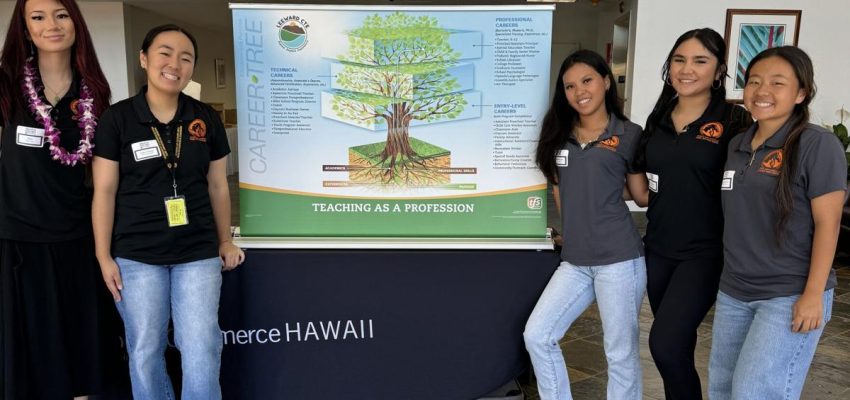
Beyond these foundational skills, specific areas of expertise are also becoming increasingly vital. Data literacy, for example, is no longer just for data scientists; professionals across all fields need to understand how to interpret data, identify biases, and make data-driven decisions. AI literacy, as mentioned, is another cornerstone, enabling individuals to effectively use and manage AI tools. Furthermore, fields like ethical AI development, AI governance, and human-AI interaction design are burgeoning, creating entirely new career paths that combine technical acumen with a deep understanding of societal impact. Educational institutions, from K-12 to universities and vocational schools, must rapidly adapt their curricula to reflect these changing demands. This means integrating AI concepts into various subjects, fostering project-based learning, and emphasizing interdisciplinary approaches. Events focused on career exploration, much like those that help students understand evolving career paths, are crucial in guiding the next generation towards these emerging opportunities.
Moreover, the responsibility for skill development doesn’t solely rest on educational institutions. Individuals must cultivate a proactive mindset towards continuous learning. This could involve online courses, certifications, workshops, or even self-directed learning through open-source resources. Companies also play a vital role in upskilling and reskilling their existing workforce, providing opportunities for employees to learn new AI-related tools and methodologies. Governments, too, have a part to play in creating policies that support lifelong learning initiatives and foster an ecosystem conducive to innovation and adaptation. The future workforce will be a dynamic one, characterized by constant evolution, and those who embrace learning as an ongoing journey will be best positioned to thrive amidst the profound and continuous shifts brought about by AI in the workforce.
The journey of artificial intelligence from niche academic pursuit to a pervasive force reshaping our world is truly extraordinary. As André Lacerda, an AI specialist, I believe that understanding and proactively engaging with the profound shifts brought by AI in the workforce is not just an academic exercise but a practical imperative for individuals, businesses, and entire economies. We’ve explored how AI is redefining roles, fostering new forms of human-AI collaboration, and necessitating a fundamental re-evaluation of the skills deemed essential for future success. This transformation is not a singular event but an ongoing process, demanding continuous adaptation and a commitment to lifelong learning. The future of work will undoubtedly be more dynamic, complex, and potentially more rewarding for those equipped to navigate its currents.
As we look ahead, the narrative of AI should be one of empowerment and thoughtful evolution, rather than apprehension. By embracing AI as a powerful tool for augmentation, focusing on the uniquely human attributes that complement machine intelligence, and investing in continuous skill development, we can collectively build a future where technological progress elevates humanity. The opportunities are immense, from pioneering new industries to solving some of the world’s most pressing challenges. It is up to us, as individuals and as a society, to proactively shape this future, ensuring that the integration of artificial intelligence leads to a more innovative, equitable, and fulfilling professional landscape for everyone.










