
The world stands on the precipice of an unprecedented era of technological transformation. Every day, headlines trumpet breakthroughs in artificial intelligence, quantum computing, and biotechnology, painting a future that seems both thrillingly advanced and profoundly uncertain. For educators, parents, and policymakers alike, this rapid evolution presents a critical challenge: how do we prepare the next generation for a professional landscape that is, in many ways, yet to be written?
It’s a sentiment perfectly encapsulated by a concise yet powerful observation from a recent article: “It really is an integral part of educating a child in 2026.” This isn’t merely a statement about keeping pace; it’s a profound recognition that the very foundation of learning must adapt to empower children not just for the present, but for a future we can only begin to imagine. As an AI specialist and tech enthusiast, I believe the answer lies squarely in the principles and practices of **STEM education** – an approach that is proving to be the most vital framework for cultivating the innovators, problem-solvers, and ethical leaders of tomorrow.
### STEM Education: Cultivating Tomorrow’s Innovators in an Evolving World
The acronym STEM, standing for Science, Technology, Engineering, and Mathematics, is far more than a collection of academic subjects. It represents a dynamic, interdisciplinary approach to learning that equips students with the critical thinking skills, knowledge, and mindset necessary to navigate a world increasingly shaped by technology and complex challenges. The idea that we are preparing students for careers that don’t yet exist is not a futuristic fantasy; it’s our present reality. Consider the explosion of roles in fields like prompt engineering for generative AI, ethical AI specialists, quantum algorithm developers, or synthetic biology engineers – jobs that were barely conceptualized a decade ago.
The Fourth Industrial Revolution, characterized by the convergence of digital, physical, and biological spheres, is accelerating this change. Artificial intelligence, in particular, is not just a tool; it’s a foundational technology reshaping industries from healthcare to finance, manufacturing to entertainment. Understanding, developing, and ethically deploying AI requires a robust grounding in science for data interpretation, technology for algorithmic design, engineering for system building, and mathematics for foundational logic and modeling. This is precisely where **STEM education** shines. It moves beyond rote memorization, encouraging students to ask ‘why,’ to experiment, to build, and to innovate. It fosters a deep understanding of scientific principles, develops technological literacy, cultivates engineering design thinking, and reinforces the logical reasoning inherent in mathematics – all indispensable components for thriving in an AI-driven world. Historically, societies have always adapted their educational systems to meet the demands of emerging eras, from the agrarian age to the industrial revolution. Today, as we transition into what many call the Age of AI, the imperative for a responsive, forward-looking educational model has never been more urgent.
### Beyond Rote Learning: The Practical Imperative of STEM Skills
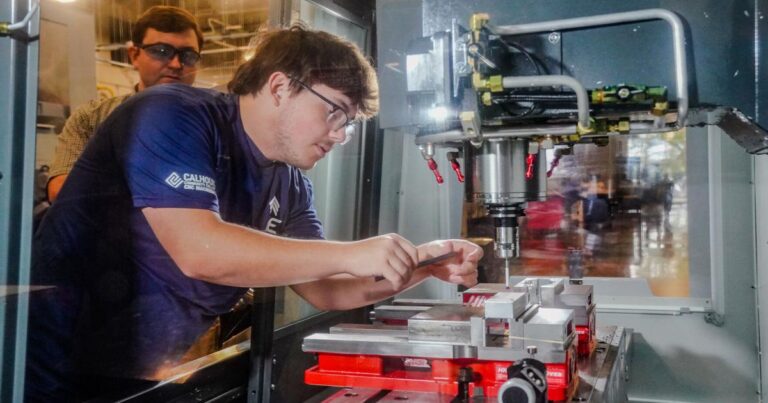
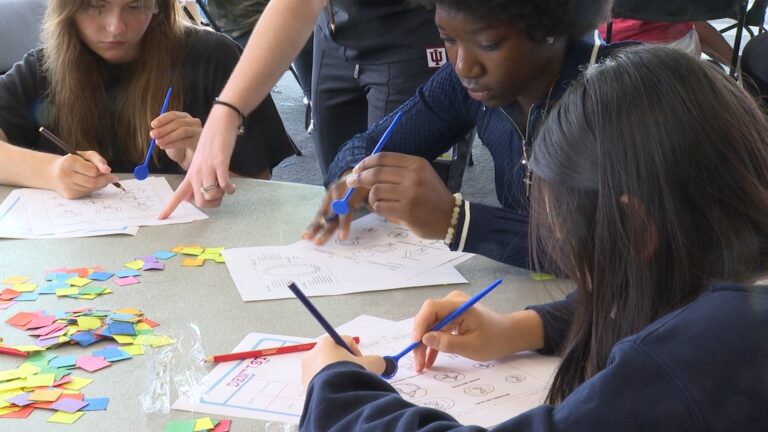
One of the defining characteristics of effective **STEM education** is its emphasis on hands-on, project-based learning. It’s not enough to learn about scientific theories; students must conduct experiments. It’s not enough to hear about technology; they must build and code with it. It’s not enough to study engineering principles; they must design and prototype solutions to real-world problems. This experiential learning fosters a range of invaluable skills often referred to as ’21st-century skills,’ but which are increasingly essential ‘AI-era skills.’ These include complex problem-solving, critical thinking, creativity, collaboration, and communication – competencies that complement, rather than compete with, the capabilities of artificial intelligence.
For instance, consider the rising demand for data scientists. These professionals merge mathematical modeling with computational skills to extract insights from vast datasets, often leveraging machine learning algorithms. Their work is a direct application of STEM principles. Similarly, the growing field of cybersecurity requires a blend of technological proficiency, mathematical logic to understand encryption, and an engineering mindset to design resilient systems. The U.S. Bureau of Labor Statistics projects a significant 10.8% growth in STEM occupations from 2021 to 2031, substantially outpacing the 4.9% projected growth for non-STEM occupations, underscoring the escalating demand for these specialized skills. Furthermore, the median annual wage for STEM occupations is often significantly higher than for non-STEM occupations, highlighting the economic opportunities these fields present. Beyond these statistics, STEM nurtures computational thinking – the ability to break down complex problems into smaller, manageable steps that can be solved with technological tools. This is the very essence of how we interact with, design, and optimize AI systems. Whether it’s developing sustainable energy solutions, designing advanced medical devices, or creating the next generation of intelligent software, the practical application of science, technology, engineering, and mathematics is foundational.
### Nurturing Innovation and Ethical Leadership in the AI Age
While technical prowess is undeniably crucial, a comprehensive **STEM education** must also cultivate the uniquely human attributes that AI cannot replicate: empathy, ethical reasoning, artistic imagination, and philosophical inquiry. As AI systems become more autonomous and influential, the ethical considerations surrounding their development and deployment become paramount. Who programs the values into an AI? How do we ensure fairness and mitigate bias? What are the societal implications of widespread automation? These are not purely technical questions; they are deeply human and ethical dilemmas that demand thoughtful leadership. Graduates equipped with a strong STEM foundation, coupled with a broad understanding of humanities and social sciences, will be best positioned to navigate these complex moral and societal landscapes.
Cultivating diversity and inclusion within STEM fields is also critical. A homogenous group of developers risks embedding their own biases into the AI systems they create, leading to discriminatory outcomes. By encouraging individuals from all backgrounds – including women, minorities, and underrepresented communities – to pursue STEM, we ensure a wider range of perspectives informs the creation of our technological future, fostering more equitable and robust solutions. Educators play a pivotal role here, shifting from being mere transmitters of information to facilitators of discovery, guiding students to inquire, experiment, collaborate, and critically evaluate information. Furthermore, given the exponential pace of technological change, the concept of lifelong learning becomes central. A degree in any STEM field is no longer a terminal qualification; it’s a launchpad for continuous adaptation and skill acquisition. The adaptability and foundational understanding fostered by STEM learning instills the agility required to embrace new tools, understand emerging paradigms, and reskill for unforeseen roles throughout one’s career.
In conclusion, the statement that **STEM education** is an integral part of educating a child in 2026 is not an exaggeration but a profound truth. It’s a recognition that the traditional educational model, while valuable, must evolve to meet the demands of a world where AI and advanced technology are not just tools, but fundamental drivers of change. STEM is more than just an academic track; it’s a mindset, a toolkit, and a philosophy that empowers young minds to become curious explorers, tenacious problem-solvers, and ethical innovators.
By prioritizing robust STEM programs, encouraging interdisciplinary learning, and fostering both technical acumen and essential human skills, we are not simply preparing students for the jobs of tomorrow, but for the profound responsibility of shaping that future. The path ahead is uncharted, filled with both challenges and immense opportunities. With a strong foundation in **STEM education**, the next generation will be well-equipped to not just adapt to the AI revolution, but to lead it, harnessing its power for the betterment of humanity.