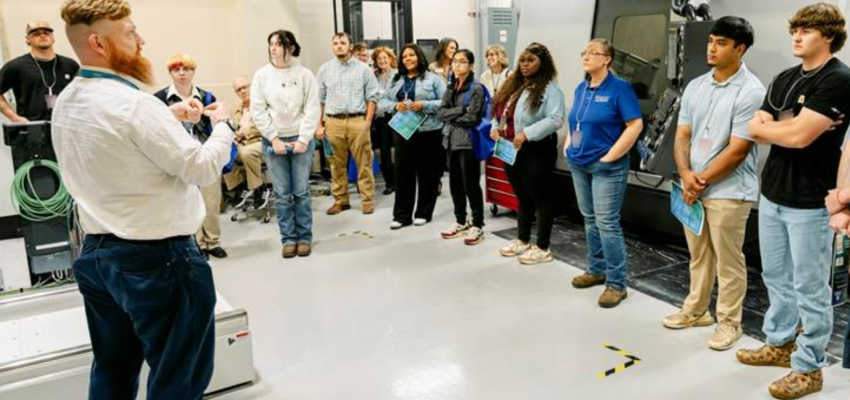

In an era defined by rapid technological advancement, even industries rooted in foundational science are being reshaped by innovation. Recently, a group of twelve grant recipients from the Workforce Opportunities in Regional Careers (WORC) program embarked on an illuminating tour of the Savannah River Site (SRS), a cornerstone of national security and environmental stewardship in the United States. Their visit wasn’t merely a glimpse into a critical facility; it was an immersive experience into the diverse and highly specialized career opportunities that exist within the nuclear sector—a sector increasingly intertwined with cutting-edge technologies like artificial intelligence.
As an AI specialist and a keen observer of technological trends, I find such initiatives incredibly compelling. They highlight a crucial intersection: the enduring need for skilled human talent in vital industries and the accelerating integration of advanced AI to enhance safety, efficiency, and operational capabilities. The narrative often suggests a dichotomy between traditional industries and the tech world, but the reality is a symphony of collaboration, where the next generation of professionals will thrive by bridging these domains.
The Savannah River Site, with its storied history dating back to the Manhattan Project and its ongoing mission in nuclear materials management, environmental cleanup, and national defense, serves as a powerful microcosm of this transformation. It requires not just engineers and scientists, but also a growing cadre of data analysts, cybersecurity experts, and AI practitioners. This tour, facilitated by WORC, underscores a forward-thinking approach to talent development, preparing individuals for roles that are both foundational and future-proof.
Workforce Evolution: Bridging Traditional Industries with Emerging Technologies
The concept of Workforce Evolution is not merely an academic theory; it’s a dynamic process unfolding in real-time across industries, and perhaps nowhere is this more evident than in sectors critical to national infrastructure, such as nuclear energy. The Savannah River Site (SRS) in South Carolina stands as a testament to this, operating since 1951 as a sprawling complex dedicated to nuclear materials management and environmental cleanup. Its significance extends beyond its geographical footprint, playing a vital role in national defense, research, and energy security. Historically, SRS has been a hub for highly specialized roles, demanding expertise in nuclear physics, chemical engineering, and environmental science. However, the modern SRS, much like other high-stakes industrial environments, is increasingly looking towards a future where human ingenuity is amplified by artificial intelligence.
The WORC program, designed to foster regional talent and create pathways to sustainable careers, is an excellent example of proactive engagement in this evolving landscape. By exposing grant recipients to facilities like SRS, it cultivates interest and prepares a new generation for careers that blend traditional skills with emerging technological competencies. This isn’t just about filling vacancies; it’s about strategically developing human capital capable of navigating complex systems that integrate advanced automation and data-driven decision-making. The traditional image of a nuclear facility might conjure images of analog control rooms and manual processes, but the reality is rapidly shifting. According to a report by Accenture, AI has the potential to boost profitability by an average of 38% and lead to an economic uplift of $14 trillion across 16 industries by 2035. While the nuclear sector has unique regulatory and safety considerations, it is not immune to these transformative forces.
The blend of legacy infrastructure and advanced digital systems creates a unique challenge and opportunity. Workers at SRS, whether involved in waste remediation, materials processing, or facility maintenance, will increasingly interact with AI-driven tools. This demands a versatile skill set: a deep understanding of core scientific and engineering principles combined with proficiency in data analytics, machine learning fundamentals, and human-computer interaction. The WORC recipients’ tour serves as an early but crucial step in understanding this nuanced demand, preparing them for roles that are critical not just today, but for decades to come as the facility continues its vital operations.
AI’s Transformative Impact on Critical Infrastructure and Safety
The application of artificial intelligence within critical infrastructure, particularly in high-consequence environments like nuclear facilities, offers profound benefits, primarily in enhancing safety, operational efficiency, and predictive capabilities. For a site like SRS, where the management of hazardous materials and complex processes is paramount, AI is not a luxury but an emerging necessity.
One of the most impactful areas is **predictive maintenance**. In a nuclear facility, equipment failure is not merely an inconvenience; it can pose significant safety risks and lead to costly downtime. AI algorithms can analyze vast amounts of sensor data—temperature, pressure, vibration, flow rates—from various components in real-time. By identifying subtle anomalies and patterns that human operators might miss, these systems can predict potential equipment failures long before they occur. This proactive approach allows for scheduled maintenance, reducing the likelihood of unexpected shutdowns, minimizing human exposure to hazardous conditions, and significantly extending the lifespan of critical infrastructure. Industry studies suggest that AI-powered predictive maintenance can reduce maintenance costs by 20-30% and unplanned downtime by as much as 50%, translating directly into enhanced safety and cost-effectiveness at sites like SRS.
**Enhanced safety protocols** are another critical domain. AI-driven monitoring systems can provide continuous, real-time surveillance of operational parameters, security perimeters, and environmental conditions. Machine learning models can be trained to detect deviations from normal operations, identify potential security breaches, or even analyze meteorological data to predict environmental impacts. Digital twin technology, for instance, creates virtual replicas of physical assets and systems, allowing operators to simulate various scenarios, test operational changes, and predict outcomes in a risk-free environment. This not only bolsters safety but also optimizes emergency response planning and training. For example, AI can rapidly process data from hundreds of sensors across a site, immediately flagging an unusual reading in a radiation detector or an unexpected pressure drop in a storage tank, enabling human responders to act decisively and quickly.
**Process optimization** is also being revolutionized by AI. Complex chemical processes, waste treatment procedures, and energy consumption at SRS can be optimized using AI and machine learning algorithms. These systems can identify optimal parameters for various operations, minimizing waste generation, reducing energy expenditure, and maximizing efficiency in nuclear material handling and cleanup efforts. Furthermore, AI plays a crucial role in **environmental monitoring and compliance**, processing data from air and water quality sensors to ensure adherence to strict regulatory standards and to mitigate any potential environmental impact.
Finally, **robotics and autonomous systems**, often powered by advanced AI, are increasingly deployed in hazardous environments. These robots can perform inspections, handle radioactive materials, and conduct remote operations, protecting human workers from exposure. This integration creates demand for engineers who can design, program, and maintain these intelligent machines, ensuring their safe and effective deployment within the strict confines of nuclear safety regulations.
Cultivating the Next Generation: AI in Training and Career Pathways
The profound integration of AI into critical sectors like nuclear energy necessitates a re-evaluation of how we prepare the next generation of professionals. This is where initiatives like the WORC program become particularly vital, acting as a bridge between educational institutions, industry needs, and technological advancements. The traditional learning models are evolving, and AI is playing a significant role in shaping the training and career pathways for the modern workforce.
**AI-powered training and simulation** are transforming how complex skills are acquired. For high-risk, high-precision roles at a facility like SRS, hands-on experience is invaluable but often constrained by safety protocols and the sheer scale of operations. Virtual Reality (VR) and Augmented Reality (AR) simulations, underpinned by AI, offer immersive and realistic training environments. Trainees can practice intricate procedures, respond to simulated emergencies, and troubleshoot complex systems in a risk-free digital twin of the actual facility. AI can personalize these simulations, adapting scenarios based on a trainee’s performance, providing real-time feedback, and identifying areas for improvement, thus accelerating skill development and ensuring a higher level of competency before deployment in real-world situations. This adaptive learning approach ensures that each individual masters critical skills at their own pace, leading to a more proficient and confident workforce.
Moreover, the influx of AI creates an entirely new spectrum of job roles within the nuclear industry. Beyond the traditional nuclear engineers, chemists, and health physicists, there’s a growing demand for **AI engineers, data scientists, machine learning specialists, robotics engineers, and cybersecurity analysts**. These roles are crucial for developing, implementing, and securing the AI systems that manage operations, predict maintenance needs, and safeguard critical data. For example, a data scientist at SRS might analyze sensor data to optimize waste processing algorithms, while an AI engineer could be developing autonomous systems for routine inspections in hazardous zones. Cybersecurity analysts, on the other hand, become the guardians of these interconnected digital systems, protecting them from sophisticated cyber threats.
The concept of Workforce Evolution also encompasses the continuous upskilling and reskilling of the existing workforce. As AI tools become more prevalent, current employees need to adapt, learning how to collaborate effectively with intelligent systems, interpret AI-generated insights, and manage new technologies. Programs like WORC, therefore, play a pivotal role not only in introducing new talent but also in advocating for continuous learning pathways that integrate AI literacy. This blend of traditional engineering acumen with modern data science and AI skills creates a more resilient, adaptable, and innovative workforce capable of tackling the challenges of tomorrow.
The economic impact of investing in an AI-savvy workforce for critical infrastructure extends far beyond the facility gates. It fosters regional economic growth by creating high-value, sustainable careers that attract top talent and stimulate innovation in related industries. By engaging with local educational institutions and workforce development programs, facilities like SRS can create a virtuous cycle of talent cultivation, ensuring a steady pipeline of skilled professionals ready to contribute to both national security and technological advancement. The future of these vital operations depends not just on the technology itself, but on the human capacity to wield it wisely and effectively.
The visit by the WORC grant recipients to the Savannah River Site is more than just a field trip; it’s a profound statement about the future of critical industries. It underscores the undeniable truth that the nuclear sector, far from being static, is a vibrant landscape of innovation, continuously integrating advanced technologies like artificial intelligence to enhance safety, optimize operations, and ensure long-term sustainability. The journey of these twelve individuals symbolizes a broader trend: the deliberate cultivation of a diverse and technologically adept workforce ready to tackle the complex challenges of tomorrow.
As we look ahead, the synergy between human expertise and AI will define success in these high-stakes environments. Programs like WORC are instrumental in preparing individuals for this reality, fostering a generation of professionals who are not only proficient in traditional disciplines but also fluent in the language of data and artificial intelligence. This harmonious blend of skills will drive the next phase of Workforce Evolution, ensuring that critical facilities like the Savannah River Site continue to operate safely, efficiently, and at the forefront of technological advancement, securing our nation’s future in an increasingly complex world.