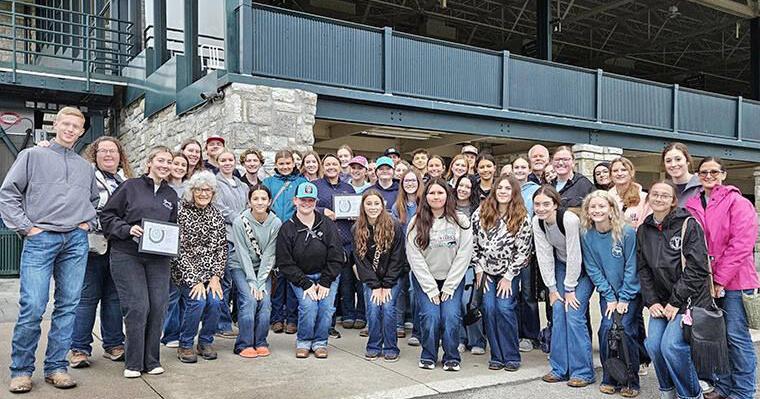

In an era defined by rapid technological advancements and evolving societal needs, the question of how best to prepare the next generation for impactful careers becomes more pertinent than ever. For many young people, the path to a fulfilling profession often feels nebulous, a distant horizon obscured by academic generalities. However, some visionary educational initiatives are bridging this gap, offering tangible skills and clear trajectories even before students graduate high school. These innovative approaches provide not just theoretical knowledge but also practical expertise, certification, and a profound sense of purpose. It’s about transforming aspirations into actionable career blueprints. One such pioneering example is unfolding in Stuart, Florida, at Martin County High School, where a unique Career and Technical Education (CTE) program is setting a new standard for early career preparation, particularly in the vital sector of public safety and legal professions.
Criminal Justice Program: Shaping Tomorrow’s Protectors and Advocates
At the heart of Martin County High School’s forward-thinking curriculum is its exceptional **Criminal Justice program**. Led by the experienced CJUS Instructor Ben Lawrynas, this initiative is more than just a series of classes; it is a comprehensive ecosystem designed to immerse teenagers in the intricate world of law enforcement, legal practices, and corrections. From its inception just a few years ago, the program has rapidly evolved into a cornerstone of the school’s CTE offerings, providing students with invaluable hands-on skills that transcend traditional textbook learning. Imagine high school students not just reading about legal procedures but actively participating in mock crime scene investigations, understanding the nuances of evidence collection, or debating the complexities of case law. This isn’t merely academic exercise; it’s a profound dive into real-world scenarios that build critical thinking, problem-solving abilities, and ethical reasoning—skills that are indispensable in any career, but especially in fields where public trust and safety are paramount.
The scope of this **Criminal Justice program** is impressively broad, addressing the diverse needs of the justice system. Students gain exposure to the foundational principles governing law enforcement, learning about police procedures, community relations, and the hierarchical structure of various agencies. For those inclined towards legal professions, the curriculum delves into courtroom dynamics, legal terminology, and the roles of paralegals, legal assistants, and court administrators. Simultaneously, the program sheds light on the intricacies of corrections, from understanding the penal system to exploring rehabilitation strategies and the challenges faced by correctional officers. This multifaceted approach ensures that graduates emerge not only with a robust theoretical understanding but also with a practical toolkit, ready to contribute meaningfully from day one. In an era where specialized skills are increasingly valued, such a targeted educational pathway offers a significant competitive edge, allowing students to explore various facets of the justice system before committing to a specific higher education or career path.
Furthermore, a significant hallmark of this **Criminal Justice program** is its emphasis on state certifications. These certifications are not merely recognition of completed coursework; they are industry-recognized credentials that validate a student’s proficiency in specific areas, often directly qualifying them for entry-level positions or providing a substantial advantage in further educational pursuits. For example, students might earn certifications in areas like public safety telecommunications, emergency dispatch, or even specific modules of law enforcement training, which can be invaluable for roles in 911 centers or support staff positions within police departments. This direct link between classroom learning and professional qualification is a powerful motivator, transforming abstract career aspirations into concrete, achievable goals. It bridges the gap between educational attainment and workforce readiness, making students highly attractive candidates for employers seeking individuals who can hit the ground running. The foresight to integrate such practical, certifiable skills within a high school curriculum is a testament to the program’s commitment to genuine career preparation, aligning educational outcomes with the tangible demands of the professional world.
Beyond the Classroom: The Power of Hands-On Learning and Certification
The true brilliance of a comprehensive program like the one at Martin County High School lies in its departure from purely theoretical instruction. While traditional classroom learning provides an essential framework, it often struggles to convey the immediate, practical demands of professions like law enforcement or legal support. This **Criminal Justice program**, however, excels in creating an immersive learning environment that simulates real-world challenges and responsibilities. Students might participate in mock trials, where they learn to present evidence, cross-examine witnesses, and understand judicial processes firsthand. They could engage in simulated traffic stops, gaining practical experience in communication, de-escalation, and protocol adherence. These aren’t just role-playing exercises; they are carefully designed scenarios that build muscle memory for decision-making under pressure, refine interpersonal communication, and instill a deep respect for procedural integrity. Instructor Ben Lawrynas and his team meticulously craft experiences that mirror the complexities and ethical dilemmas faced by professionals daily, providing a safe yet challenging space for students to develop and hone their skills.
This commitment to hands-on pedagogy extends to opportunities for interaction with seasoned professionals. Guest speakers from various branches of law enforcement, the legal community, and correctional facilities regularly visit the program, sharing their experiences, insights, and career advice. These interactions are invaluable, offering students direct access to mentors and potential future colleagues. Field trips to police stations, courthouses, detention centers, and forensic labs further solidify their understanding, allowing them to observe the daily operations of these critical institutions. Imagine a student witnessing a court proceeding, or touring a police dispatch center, seeing the principles learned in class come to life. These exposures demystify the professions, make career paths tangible, and ignite a passion for public service. Such opportunities often lead to invaluable networking connections, and sometimes even internship possibilities, providing a significant advantage as students transition from high school to higher education or the workforce.
The emphasis on obtaining state certifications within the **Criminal Justice program** is a strategic move that pays dividends for students. These aren’t just “certificates of completion” but often recognized credentials that can significantly accelerate career entry or academic progression. For instance, a certification in first aid and CPR, or in specific legal office software, provides immediate, transferable skills. Students might also pursue certifications in areas such as crime scene analysis basics, emergency communications, or even specialized security operations. These qualifications mean that graduates are not simply applying for jobs; they are applying with demonstrable, independently verified competencies. This significantly boosts their employability, reducing the need for extensive on-the-job training in foundational areas and making them more attractive to employers. For students considering a direct entry into the workforce after high school, these certifications can be a game-changer, opening doors to entry-level positions that might otherwise require a college degree or years of experience. For those planning to attend college, these foundational skills and credentials can provide a solid base for advanced studies, sometimes even granting college credit, thus streamlining their academic journey. The investment in such practical validation ensures that the program’s output is not just well-educated individuals, but highly capable, credentialed professionals in the making.
Future-Proofing Careers: Adapting to a Tech-Driven World of Law and Order
As an AI specialist and tech enthusiast, I often reflect on how rapidly technology is reshaping every industry, and the realms of law enforcement, legal services, and corrections are certainly no exception. The traditional image of a police officer or a lawyer is continually being augmented by digital tools, data analytics, and artificial intelligence. This evolution presents both incredible opportunities and complex challenges, underscoring the vital need for foundational programs like the **Criminal Justice program** at Martin County High School to not only teach established practices but also to cultivate adaptability and a forward-thinking mindset. Consider the role of data science in modern policing, where predictive analytics can assist in resource allocation and crime prevention, albeit with significant ethical considerations regarding bias and privacy. Or the rapid expansion of digital forensics, where specialists analyze vast amounts of electronic data to uncover evidence in complex cybercrimes, a far cry from traditional fingerprinting alone.
The legal field is similarly undergoing a significant transformation. AI-powered tools are revolutionizing legal research, allowing lawyers to sift through millions of documents and precedents in fractions of the time it would take human researchers. E-discovery platforms automate the process of finding relevant information in litigation, while algorithms are even being developed to assist in drafting legal documents or predicting case outcomes. These technologies are not replacing human intelligence but rather augmenting it, freeing up legal professionals to focus on higher-level strategic thinking, client interaction, and nuanced interpretation. Therefore, a comprehensive **Criminal Justice program** must subtly, yet effectively, integrate an understanding of these technological shifts. While the core curriculum might focus on legal procedures or police ethics, the underlying message should be one of continuous learning and technological literacy. Students need to grasp that their future careers will involve interacting with sophisticated software, analyzing data, and navigating the ethical quandaries presented by emerging technologies.
Furthermore, the rise of cybersecurity threats means that criminal justice professionals must increasingly understand digital security and forensic investigation techniques. From responding to ransomware attacks that cripple municipal systems to investigating online fraud and identity theft, the demand for individuals with a blend of traditional law enforcement skills and digital expertise is skyrocketing. Programs that expose students to these concepts, even at a foundational level, prepare them to be the adaptable problem-solvers of tomorrow. They need to understand not just *how* to collect physical evidence, but *how* to preserve digital evidence, *how* to understand chain of custody in a virtual environment, and *how* to collaborate with specialized tech teams. The Martin County High School’s **Criminal Justice program** provides a robust ethical and procedural grounding that is crucial for navigating these technological advancements responsibly. It teaches students the immutable principles of justice, fairness, and due process—principles that must guide the application of any technology, especially powerful ones like AI, in the sensitive domains of law and order. By instilling these core values alongside practical skills, the program ensures its graduates are not just ready for today’s jobs, but are also equipped to lead and innovate in the evolving landscape of criminal justice for decades to come, ensuring that technological progress serves justice rather than undermining it.
The proactive approach exemplified by Martin County High School’s **Criminal Justice program** serves as a powerful blueprint for preparing young individuals for the complex and ever-evolving demands of public service and legal professions. In an increasingly competitive world, where the shelf-life of skills can feel surprisingly short, offering students hands-on experience, direct professional certifications, and a keen understanding of career pathways before they even graduate high school is not just beneficial; it’s transformative. These programs don’t merely educate; they empower, instilling confidence, practical capabilities, and a deep appreciation for the critical roles played by law enforcement, legal professionals, and correctional officers in maintaining a safe and just society. By fostering early specialization within a supportive educational framework, institutions like Martin County High are cultivating a new generation of dedicated, skilled, and ethically grounded professionals ready to make an immediate and lasting impact on their communities.
Ultimately, the success of such initiatives extends far beyond individual student achievements. It represents a vital investment in the future workforce and the resilience of our societal structures. As technology continues its relentless march forward, integrating artificial intelligence and advanced data analytics into nearly every facet of our lives, the core human elements of critical thinking, ethical judgment, and effective communication will remain irreplaceable. Programs that provide a strong foundation in these human-centric skills, while simultaneously acknowledging and preparing students for technological integration, are truly future-proofing their participants. The Martin County High School **Criminal Justice program** stands as a shining example of how innovative education can not only launch successful careers but also ensure that the future of law and order is in the hands of those who are both highly competent and deeply committed to upholding justice in an ever-changing world.