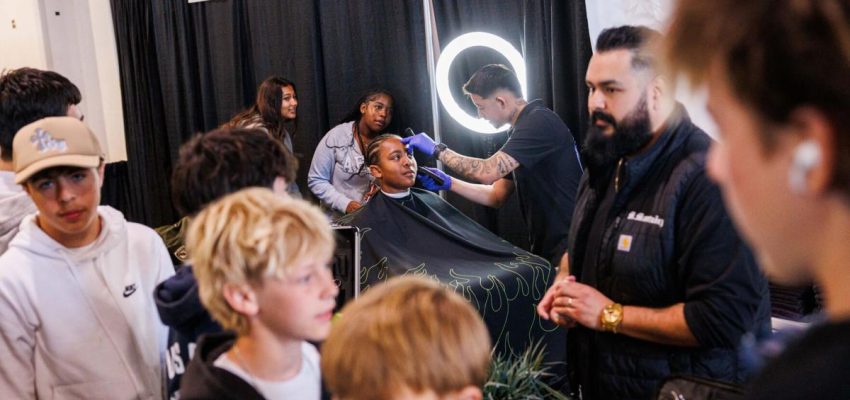

“What do you want to be when you grow up?” This timeless question echoes through school hallways, prompting dreams of astronauts, doctors, and artists. For the eighth-graders of Napa County, this question recently transcended the realm of imagination and entered a vibrant landscape of tangible possibilities. At a recent career expo, these young minds didn’t just dream; they interacted, questioned, and envisioned their places in a world rapidly reshaped by innovation. From the intricacies of healthcare to the nuanced world of hospitality, the legal framework, and even the esteemed wine industry, students gained invaluable insights into diverse professional fields. As an AI specialist and tech enthusiast, I find these events profoundly inspiring, for they represent the crucial first steps in preparing the next generation for a future that is as exciting as it is complex – a future undeniably intertwined with artificial intelligence. This hands-on exploration isn’t merely about choosing a path; it’s about understanding the evolving landscape of work and the critical skills needed to thrive within it, especially as AI continues to redefine job roles and create entirely new ones.
Future Careers for Students: Navigating an Evolving Landscape
The Napa career fair offered a glimpse into a multitude of sectors, mirroring the broad spectrum of choices available to young individuals today. However, what makes this generation’s career exploration unique is the accelerating pace of technological advancement, primarily driven by artificial intelligence. The jobs these students will eventually pursue are unlikely to be static; many will evolve, and some may not even exist yet. According to a 2023 report by the World Economic Forum, AI and automation are projected to create 69 million new jobs globally, even as they displace 83 million, indicating a significant transformation rather than a simple reduction in roles. This dynamic requires a new approach to understanding and preparing for future careers for students.
Consider the fields the Napa students explored:
-
Healthcare: AI is revolutionizing diagnostics, from analyzing medical images like X-rays and MRIs with greater accuracy than human experts to accelerating drug discovery timelines. AI-powered tools assist in personalized treatment plans, predict disease outbreaks, and streamline hospital operations. Future healthcare professionals will increasingly work alongside intelligent systems, requiring not just medical knowledge but also data literacy and a grasp of AI ethics. Roles like ‘AI Ethicist in Healthcare’ or ‘Medical Data Scientist’ are emerging as vital.
-
Hospitality: Beyond simple chatbots for customer service, AI is enhancing guest experiences through personalized recommendations, optimizing room allocation, and even managing energy consumption in hotels. Robotic concierges and automated cleaning systems are becoming more common. Professionals in this sector will need to master customer service alongside technology management, focusing on how AI can augment human interaction to create truly memorable experiences. The ‘AI Hospitality Manager’ will need to balance efficiency with human warmth.
-
Law: The legal profession, often seen as traditional, is undergoing a profound shift. AI platforms can sift through millions of legal documents for e-discovery in minutes, perform contract review with unprecedented speed, and even predict litigation outcomes based on historical data. While AI won’t replace lawyers’ critical thinking or courtroom presence, it will automate mundane tasks, freeing legal professionals to focus on complex strategizing and client relations. ‘Legal Tech Specialists’ and ‘AI-Assisted Legal Analysts’ are becoming indispensable.
-
Wine Industry: Even a heritage industry like winemaking is embracing AI. Precision agriculture utilizes drones and sensors, coupled with AI analytics, to monitor soil conditions, vine health, and predict optimal harvest times. AI also aids in supply chain optimization, quality control, and even in identifying consumer preferences to tailor wine production and marketing. The ‘Agri-tech Specialist in Viticulture’ will blend traditional expertise with cutting-edge data science to ensure the future of winemaking.
These examples underscore a crucial point: AI is not merely replacing jobs; it is fundamentally altering their nature. The emphasis shifts from repetitive tasks to roles that demand uniquely human attributes, making the exploration of future careers for students a journey into adaptability and innovation.
Skills for Tomorrow: Beyond Traditional Curricula
Given this evolving landscape, what truly prepares students like those in Napa for success? It’s no longer solely about memorizing facts or mastering a single vocational skill. The competencies required for the future are dynamic and cross-disciplinary. Educational initiatives, from career fairs to advanced STEM programs, must focus on cultivating these essential attributes:
-
Critical Thinking and Problem-Solving: As AI handles more routine analytical tasks, the ability to tackle novel, ill-defined problems and think critically about complex situations becomes paramount. This involves dissecting information, identifying biases, and formulating innovative solutions.
-
Creativity and Innovation: With generative AI capable of producing text, images, and even code, human creativity takes on new importance. The ability to conceive original ideas, ask compelling questions, and apply imaginative solutions will distinguish human professionals. This is not about competing with AI but collaborating with it to push creative boundaries.
-
Digital Literacy and Data Fluency: Understanding how to interact with digital tools, interpret data, and even basic coding concepts are becoming foundational skills, regardless of the career path. It’s about being comfortable in a data-rich environment and leveraging technology effectively.
-
Emotional Intelligence and Collaboration: AI excels at logical processes, but human interactions require empathy, understanding, and the ability to work effectively in teams. These ‘soft skills’ become increasingly valuable in managing diverse teams, negotiating, and building client relationships in an AI-augmented workplace.
-
Adaptability and Lifelong Learning: The constant flux of technology demands a growth mindset. Students must be prepared to continuously learn new tools, embrace changing methodologies, and even pivot their career paths multiple times. The concept of a single, static career is giving way to a continuous journey of skill acquisition.
-
Ethical Reasoning: As AI becomes more integrated into decision-making, understanding its implications, biases, and ethical boundaries is crucial. Professionals across all sectors will be tasked with ensuring AI is developed and deployed responsibly.
These are the core competencies that truly prepare young individuals for the challenging and rewarding journey of defining their future careers for students. Events like the Napa career fair are pivotal because they initiate this thinking early, exposing students not just to jobs, but to the underlying skills that make those jobs possible and sustainable in a technological age. They bridge the gap between abstract academic learning and the practical demands of the professional world, fostering a holistic view of career readiness.
The AI-Human Synergy: Crafting New Opportunities
The narrative around AI often swings between utopian visions and dystopian fears. However, the most realistic and productive perspective is one of synergy: AI as an amplifier of human potential. Rather than fearing AI, we should view it as a powerful tool that, when wielded effectively, can unlock unprecedented opportunities and redefine what is possible in various industries. This synergistic approach is key to understanding the landscape of future careers for students.
This collaboration is already giving rise to entirely new professional roles. Consider the ‘Prompt Engineer,’ a role focused on crafting effective instructions for generative AI models, demanding creativity, linguistic precision, and an understanding of AI’s capabilities. Or the ‘AI Ethicist,’ who ensures that AI systems are fair, transparent, and aligned with human values. ‘AI UX Designers’ focus on making AI interfaces intuitive and user-friendly, blending technology with human-centered design principles. These positions highlight how AI doesn’t just automate existing jobs but acts as a catalyst for new forms of human endeavor.
Furthermore, AI can augment human capabilities in profound ways. In creative fields, AI can act as a co-creator, generating drafts or exploring variations that spark new ideas. In research, it can process vast datasets far beyond human capacity, allowing scientists to focus on hypothesis generation and experimentation. For educators, AI can personalize learning experiences, freeing teachers to focus on mentorship and socio-emotional development. This augmentation model transforms the professional landscape, moving beyond simple task automation to a more sophisticated partnership where human intellect, creativity, and empathy are enhanced by AI’s processing power.
A recent IBM study indicated that while 40% of the global workforce will need to reskill due to AI adoption in the next three years, this transformation is often about enhancing existing roles rather than outright replacement. The challenge for today’s students, and indeed for all professionals, is to understand how to effectively partner with AI. It’s about learning to ask the right questions, interpret AI outputs critically, and apply human judgment where algorithms cannot. This continuous evolution means that the job market will remain dynamic, consistently rewarding those who embrace learning and adaptation. Equipping students with this mindset from an early age, through initiatives like career expos, ensures they are not just ready for the future, but active participants in shaping it.
The journey of career exploration, as witnessed with the Napa eighth-graders, is more crucial today than ever before. It’s an opportunity not just to dream, but to understand the intricate weave of tradition and innovation that defines our modern professional world. By providing early exposure to diverse fields and emphasizing the transformative role of AI, we empower students to envision themselves not merely as job-seekers, but as architects of their own destinies in an increasingly intelligent world. These hands-on experiences, coupled with a forward-looking educational framework, are instrumental in fostering the resilience, creativity, and critical thinking necessary for navigating uncharted professional territories.
As André Lacerda, I firmly believe that the future is bright for those who embrace the potential of AI and technology. The goal is not to predict every job of tomorrow, but to equip the next generation with the foundational skills and adaptable mindset to thrive in any iteration of the job market. By fostering curiosity, encouraging continuous learning, and providing opportunities for practical engagement, we ensure that students are not just prepared for the jobs that exist today, but are also ready to innovate and create the jobs of tomorrow. This proactive approach to career development is the most valuable investment we can make in the human capital of the future.