
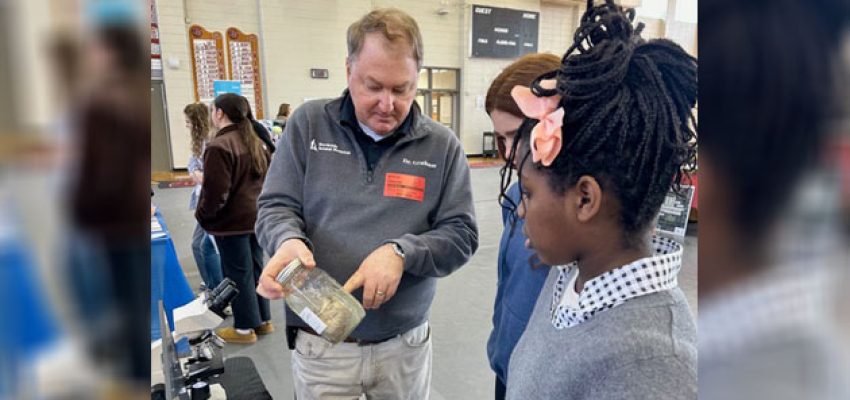

The landscape of future careers is shifting at an unprecedented pace, driven largely by rapid advancements in science, technology, engineering, and mathematics – collectively known as STEM. For today’s students, particularly those navigating the formative middle school years, understanding these dynamics isn’t just beneficial; it’s essential for shaping their academic paths and professional aspirations. It is within this exciting context that events like the recent STEM Career Day at Pine Grove Middle School in Valdosta stand out as critical touchpoints, offering young minds a glimpse into a world of endless possibilities. Far from being just another school event, these career days are powerful catalysts, designed to spark curiosity, demystify complex fields, and connect abstract classroom learning with tangible, real-world applications. As an AI specialist, writer, and tech enthusiast, I’ve observed firsthand how crucial early exposure to these fields can be, especially as artificial intelligence continues to redefine nearly every industry. These events are more than just showcases; they are invitations to imagine, to explore, and to become the innovators of tomorrow. They provide a unique opportunity for students to interact directly with professionals, ask burning questions, and begin to envision themselves as integral parts of a future driven by discovery and ingenuity.
### STEM Career Day: Igniting Curiosity and Fostering Future Innovators
Imagine a bustling school gymnasium, usually reserved for sports, transformed into a vibrant marketplace of ideas, where curious middle schoolers engage with engineers, scientists, technologists, and mathematicians. This is the essence of a STEM Career Day – an immersive experience designed to bridge the gap between classroom theory and real-world application. For students at Pine Grove Middle School, this meant stepping into a world where abstract concepts from textbooks suddenly took on tangible forms. Why is this exposure so vital, especially during middle school? This developmental stage, typically spanning ages 11 to 14, is a pivotal period for identity formation and the shaping of interests. It’s when students begin to develop a clearer sense of who they are and what they might want to become. Early exposure to diverse STEM fields can be a powerful antidote to preconceived notions or stereotypes about what a ‘scientist’ or ‘engineer’ looks like or does. It helps dismantle the idea that these careers are only for a select few, opening doors to a broader spectrum of students.
Beyond simply showcasing different job titles, a well-structured career day emphasizes the practical, hands-on aspects of STEM. Students might have the chance to program a small robot, analyze a mock forensic sample, design a simple app interface, or explore the inner workings of an electrical circuit. These interactive experiences are crucial because they move beyond passive listening, engaging students actively in problem-solving and critical thinking – skills that are foundational to any STEM profession. According to a report by the U.S. Bureau of Labor Statistics, STEM occupations are projected to grow by 10.8% from 2021 to 2031, significantly faster than the 4.9% projected growth for all occupations. This translates to an estimated 1.1 million new jobs, highlighting the urgent need to cultivate a robust pipeline of future STEM talent. Events like a STEM Career Day are not just about showing students what jobs exist; they are about inspiring them to pursue the rigorous academic paths necessary to fill these critical roles. By witnessing professionals in action and hearing their personal journeys, students can begin to connect their current studies in math and science to exciting future prospects, making their learning more relevant and engaging. This early intervention can be a game-changer, fostering a lifelong love for inquiry and innovation that might otherwise remain dormant.
### Bridging the Gap: Mentorship and Demystifying STEM Fields
One of the most profound impacts of a STEM Career Day lies in its ability to facilitate direct interaction between students and professionals. Imagine a young girl, fascinated by computers, having a conversation with a female software engineer about her daily challenges and triumphs. Or a student who loves to build things getting advice from a civil engineer about how bridges are designed and constructed. These interactions are invaluable. They humanize STEM professions, breaking down barriers and making these complex fields seem more accessible and attainable. Mentorship, even in a brief interaction, can plant a seed of ambition that grows over years. Professionals sharing their journeys—the failures, the successes, the moments of discovery—provide authentic role models that can inspire students far beyond the classroom setting.
These events also play a critical role in demystifying STEM. Many students, and often their parents, might have a narrow understanding of what STEM encompasses. They might think of a ‘scientist’ as someone in a lab coat with test tubes or an ‘engineer’ as someone who builds bridges. While these are certainly valid, the reality of STEM is far broader and more interdisciplinary. A comprehensive STEM Career Day showcases the incredible diversity within these fields: from marine biologists studying ocean ecosystems and aerospace engineers designing spacecraft, to data scientists uncovering patterns in vast datasets and environmental scientists working on sustainable energy solutions. It helps students understand that STEM skills are applicable across a myriad of sectors, including healthcare, entertainment, finance, and even art and design (STEAM initiatives). This broader perspective is crucial for students to find a niche that genuinely excites them. Furthermore, these events are vital for promoting diversity and inclusion in STEM. Historically, certain demographic groups have been underrepresented in these fields. By featuring a diverse array of professionals—men and women, people from various ethnic backgrounds, and individuals with different academic and professional journeys—a career day can send a powerful message: STEM is for everyone. It encourages students from all walks of life to see themselves reflected in these roles, fostering a sense of belonging and capability. The collaborative nature of many STEM projects also highlights the importance of ‘soft skills’ such as teamwork, communication, problem-solving, and critical thinking. While technical proficiency is paramount, the ability to collaborate effectively, present ideas clearly, and adapt to new challenges are equally valued in today’s dynamic professional environments. These are precisely the skills that can be subtly reinforced through interactive career day activities, preparing students not just for a job, but for a successful career in an ever-evolving world.
### The AI Revolution: Preparing for Future STEM Careers
As we look toward the future, the integration of artificial intelligence across all sectors is perhaps the most defining technological shift of our time. This revolutionary force is not just creating new jobs; it’s transforming existing ones and fundamentally altering the skill sets required for success. For middle school students, events like a STEM Career Day are more important than ever in preparing them for an AI-driven future. AI is no longer confined to specialized labs; it’s powering our smartphones, guiding autonomous vehicles, diagnosing diseases, and even creating art. This pervasive influence means that foundational STEM knowledge is no longer just about understanding scientific principles; it’s about developing computational thinking, data literacy, and an ethical framework for navigating an AI-enhanced world. Consider the emerging roles: AI ethicists who ensure fairness and transparency in algorithms, prompt engineers who master the art of communicating with large language models, machine learning engineers developing intelligent systems, and even creative professionals using AI as a co-pilot for innovation. These roles didn’t exist a decade ago, illustrating the rapid evolution of the job market.
A robust STEM education, starting with early exposure facilitated by a STEM Career Day, provides students with the critical building blocks to thrive in this new era. Understanding mathematics isn’t just about equations; it’s about the logic underpinning algorithms. Science isn’t just about experiments; it’s about understanding the biological and physical systems that AI seeks to model or augment. Engineering is about applying scientific principles to design and build, now often with AI assistance. Technology is the infrastructure upon which AI flourishes. Students need to grasp these interconnected disciplines to not only use AI tools but to create them responsibly and innovate with them effectively. Furthermore, the ethical implications of AI are profound. Issues surrounding data privacy, algorithmic bias, and the societal impact of automation require a workforce that is not only technically proficient but also possesses a strong moral compass and an understanding of diverse human experiences. This underscores the need for a diverse and inclusive STEM pipeline, where individuals from all backgrounds contribute to shaping the future of AI. By engaging with professionals who are already working at the cutting edge of AI, students can gain a deeper appreciation for the challenges and opportunities that lie ahead, inspiring them to become responsible architects of our technological future. The goal is not just to produce coders, but critical thinkers, problem-solvers, and ethically-minded innovators who can harness the power of AI for the betterment of humanity.
The STEM Career Day at Pine Grove Middle School serves as a vivid reminder of the profound impact that focused educational initiatives can have on young minds. By providing an immersive, interactive, and inspiring experience, these events do more than just introduce students to potential career paths; they ignite a passion for discovery and equip them with the foundational understanding necessary to navigate an increasingly complex and technologically advanced world. In an era where artificial intelligence is rapidly reshaping industries and creating entirely new paradigms, fostering early engagement in science, technology, engineering, and mathematics is not merely a pedagogical goal but a societal imperative.
Such initiatives empower the next generation, transforming passive learners into proactive explorers and future leaders. They highlight the interconnectedness of various disciplines and underscore the critical role that a well-rounded STEM education plays in fostering innovation, critical thinking, and problem-solving skills. As we continue to advance into an AI-driven future, nurturing this early interest will be paramount to ensuring that our societies are equipped with the diverse talent needed to harness technology responsibly and ethically, driving progress that benefits all humanity. The seeds planted today through a thoughtfully organized STEM Career Day will undoubtedly blossom into the groundbreaking discoveries and impactful innovations of tomorrow.










