
In an era where digital transformation sweeps across every industry, it’s easy to assume some fields might remain untouched by the relentless march of innovation. The building and construction trades, often perceived through the lens of traditional craftsmanship and manual labor, are frequently among them. Yet, this perception couldn’t be further from the truth. As high school students nationwide, much like those recently engaged in career expos, explore pathways into these vital professions, they are stepping into an industry undergoing a profound metamorphosis – one heavily influenced by artificial intelligence and advanced technological integration. As André Lacerda, an AI specialist and tech enthusiast, I find this convergence fascinating and critically important for the next generation of workers.
Gone are the days when a career in construction simply meant mastering a hammer and nail or operating heavy machinery. While these fundamental skills remain invaluable, they are now complemented, enhanced, and in some cases, redefined by digital tools, automation, and intelligent systems. For young minds considering their vocation, understanding this evolving landscape isn’t just an advantage; it’s a necessity. The career expos of today must do more than showcase existing roles; they must illuminate the exciting, tech-driven possibilities that are shaping the Future of Construction Careers.
Future of Construction Careers: Navigating a Tech-Driven Landscape
The global construction industry, a behemoth valued at over $13 trillion annually, is notoriously complex, characterized by tight margins, intricate project management, and significant safety challenges. For decades, productivity growth lagged behind other sectors, often struggling with fragmented workflows and manual processes. However, a seismic shift is underway, largely driven by the adoption of cutting-edge technologies. Building Information Modeling (BIM), for instance, has moved from a niche tool to an industry standard, creating detailed 3D models that streamline design, planning, and execution. But BIM is just the beginning.
Today, the discussion extends to sophisticated prefabrication and modular construction techniques, where components are built off-site in controlled factory environments, enhancing quality, reducing waste, and accelerating project timelines. This approach not only requires advanced manufacturing skills but also digital coordination expertise, often leveraging AI-powered algorithms to optimize material flow and assembly schedules. Consider the remarkable rise of automated bricklaying robots, like Hadrian X, which can lay hundreds of bricks per hour with unparalleled precision, far exceeding human capabilities in speed and consistency. These aren’t isolated experiments; they are tangible examples of how robotics are becoming integrated into the very fabric of construction. The demand for technicians who can operate, maintain, and even program these sophisticated machines is rapidly growing, creating entirely new job categories that didn’t exist a decade ago. The skilled tradesperson of tomorrow isn’t just an artisan; they are also a technologist.
Moreover, the concept of a ‘smart job site’ is quickly gaining traction. Imagine sites equipped with a network of Internet of Things (IoT) sensors monitoring everything from structural integrity and environmental conditions to tool location and worker safety. Data harvested from these sensors, when processed by AI, can provide real-time insights, predict potential hazards, optimize resource allocation, and even forecast maintenance needs for equipment. This paradigm shift requires a workforce comfortable with data analytics, network infrastructure, and digital security – skills traditionally associated with IT, not hard hats. The emphasis is no longer solely on physical prowess but on a blend of hands-on expertise and digital acumen, making the Future of Construction Careers an exciting frontier for those eager to embrace innovation.
AI and Automation: Reshaping the Job Site
The transformative power of artificial intelligence is nowhere more evident than in its practical applications on construction sites. AI algorithms are proving invaluable in optimizing complex logistical challenges inherent in large-scale projects. For example, AI-powered project management software can analyze vast datasets, including historical project performance, weather patterns, material supply chains, and labor availability, to create highly accurate schedules and identify potential bottlenecks before they occur. This proactive approach significantly reduces delays and cost overruns, which have historically plagued the industry.
Safety, a paramount concern in construction, is also being revolutionized by AI. Computer vision systems, often integrated with site cameras and drones, can autonomously monitor sites for safety violations, detect workers without proper PPE (Personal Protective Equipment), or identify unsafe movements near heavy machinery. This real-time oversight provides an extra layer of protection, complementing human safety officers and drastically reducing accident rates. Predictive maintenance, another powerful application, uses AI to analyze sensor data from heavy equipment (e.g., excavators, cranes) to forecast when parts are likely to fail. This allows for proactive servicing, minimizing unexpected breakdowns, extending equipment lifespan, and preventing costly downtime. Such intelligent systems are not just about efficiency; they’re about creating safer, more reliable working environments for everyone involved in the building process.
Furthermore, the integration of drones equipped with high-resolution cameras and LiDAR technology has become standard practice for site surveying, progress monitoring, and even volumetric measurements. AI processes the colossal amounts of data collected by these drones, generating precise 3D models, calculating earthwork volumes, and comparing actual progress against BIM models. This dramatically reduces the time and cost associated with traditional surveying methods, while providing an unprecedented level of detail and accuracy. Beyond surveying, robotics are becoming increasingly sophisticated, from autonomous vehicles transporting materials around a site to robotic arms capable of intricate welding or painting tasks. These technologies free human workers from repetitive, dangerous, or physically demanding jobs, allowing them to focus on higher-value tasks that require critical thinking, problem-solving, and intricate coordination. Embracing these tools is crucial for anyone looking to build a robust and relevant skillset for the Future of Construction Careers.
Empowering the Next Generation: Education for Evolving Trades
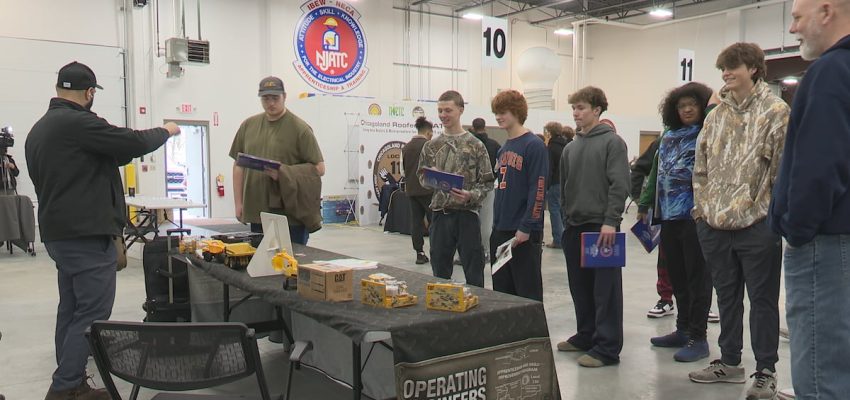
The rapid technological evolution within the building and construction sectors places an imperative on educational institutions and industry partners to adapt their curricula and training programs. High school career expos, like the one that inspired this reflection, are critical touchpoints. They are no longer just about demonstrating traditional skills but about showcasing the dynamic interplay between craftsmanship and cutting-edge technology. Students need to see firsthand how augmented reality (AR) and virtual reality (VR) are used for project visualization, training simulations, and even on-site guidance, overlaying digital information onto the physical world.
The curriculum for aspiring trade professionals must expand beyond traditional carpentry, electrical, or plumbing courses. It needs to incorporate foundational digital literacy, including an understanding of data analysis, basic programming concepts (especially for automation), CAD/BIM software proficiency, and an introduction to AI principles. Partnerships between vocational schools, community colleges, and construction companies are essential to ensure that training remains relevant and aligned with industry needs. Apprenticeship programs, long a cornerstone of trade education, should now integrate modules on drone operation, robotic maintenance, and smart building system installation. This ensures that the next generation isn’t just learning how to build, but how to build smartly and sustainably.
Moreover, fostering ‘soft skills’ like adaptability, critical thinking, and collaborative problem-solving is more important than ever. As AI takes on more routine tasks, the human element in construction shifts towards overseeing intelligent systems, troubleshooting complex technical issues, and innovating new solutions. These are the skills that will enable young professionals to thrive in an ever-changing environment, preparing them not just for their first job, but for a lifetime of evolving opportunities. The proactive embrace of technology in education today will determine the strength and innovation of the workforce shaping the Future of Construction Careers tomorrow.
The journey into the building and construction trades is no longer a linear path but a dynamic and exhilarating exploration at the intersection of tradition and technology. For high school students standing at the threshold of their careers, this transformation presents not a threat, but an immense opportunity. The jobs of tomorrow in construction will demand a blend of time-honored craftsmanship and sophisticated digital expertise. From operating autonomous heavy machinery to programming smart building systems, the roles are diversifying and becoming increasingly intellectually stimulating.
As we look ahead, the continued integration of AI, robotics, and smart technologies will only accelerate, making the construction industry a hotbed of innovation. Encouraging young people to explore these evolving pathways, providing them with the necessary digital and practical skills, and fostering a mindset of continuous learning will be paramount. The future of our cities, infrastructure, and built environment rests on the shoulders of this next generation of tech-savvy builders and innovators, ready to leverage AI to construct a world that is safer, more efficient, and truly intelligent.