
In an era defined by rapid technological advancement, particularly in artificial intelligence, the landscape of work is undergoing a profound transformation. What does this mean for the youngest generation, those still navigating the foundational stages of their education? How do we prepare them for jobs that may not even exist yet? These are the questions that drive my passion for AI and human development, and they are questions I often ponder when I hear about initiatives that foster early curiosity and vocational understanding.
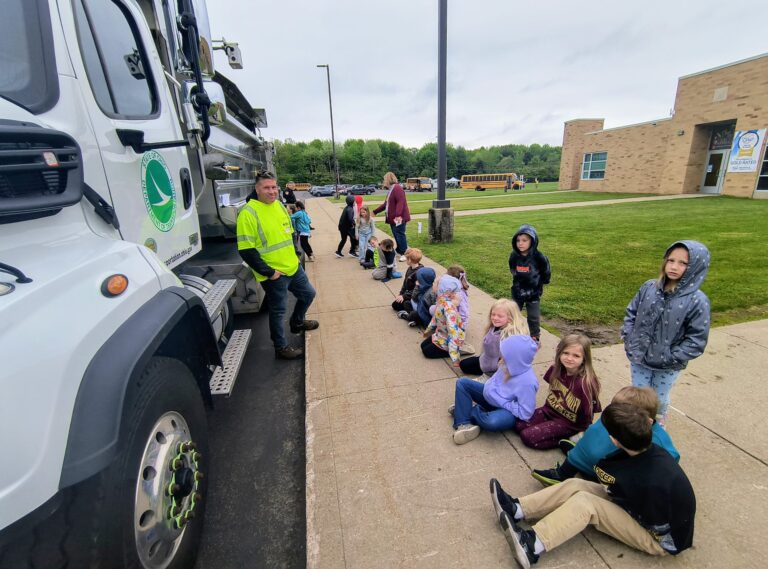
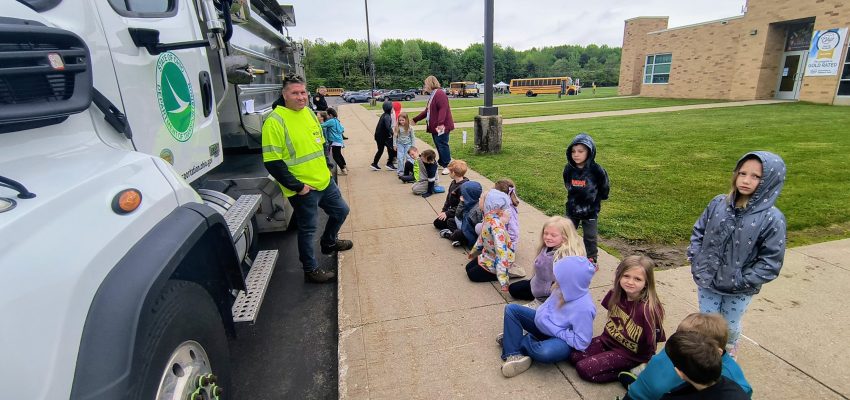
It was with great interest that I learned about the Career Day held at Pymatuning Valley Primary School in Andover. On Wednesday, May 20th, young students were given a unique opportunity to peek behind the curtain of various professions, hearing directly from individuals who embody a diverse range of roles in our society. While seemingly a simple event, its implications for shaping young minds, sparking nascent interests, and laying the groundwork for understanding the complex world of work are immeasurable. In an age where digital transformation accelerates with each passing year, offering children a tangible connection to the world beyond their classrooms is more vital than ever.
Future Careers: Cultivating Tomorrow’s Innovators Today
The concept of a ‘Career Day’ might seem a quaint tradition in our fast-paced, tech-centric world. Yet, its fundamental value remains undiminished, especially for primary school students. At Pymatuning Valley, like countless schools across the globe, these events serve as crucial early touchpoints, bridging the abstract notion of ‘what I want to be when I grow up’ with concrete examples. For children aged typically between five and ten, their understanding of the professional world is often limited to what they see in their immediate environment or on television. A Career Day broadens this horizon, introducing them to roles they might never have considered, from first responders and healthcare professionals to artists, engineers, and entrepreneurs.
Think about the spark ignited when a child meets a firefighter in their full gear, learns about the tools a veterinarian uses, or hears an artist explain the process of creation. These moments are more than just entertainment; they are seeds of inspiration. Research in developmental psychology indicates that early exposure to diverse career paths can significantly impact a child’s aspirations, self-efficacy, and even academic performance. When children understand the purpose and value of different professions, they can begin to connect their own emerging skills and interests to potential future roles. It helps them build a framework for understanding society, the interconnectedness of different jobs, and the concept of contributing to a larger whole.
Furthermore, early career exploration is essential for breaking down stereotypes. Children, often unconsciously, absorb societal biases about who can pursue certain careers. By showcasing a wide array of professionals from diverse backgrounds, schools like Pymatuning Valley Primary are subtly, yet powerfully, communicating that talent and passion know no boundaries. It’s about showing them that anyone, regardless of background, can aspire to any role they choose, provided they commit to learning and effort. This foundational understanding is critical for fostering inclusive environments and empowering children to dream without limitations.
In fact, this early exposure plays a vital role in developing what’s often referred to as ‘career adaptability.’ While children aren’t making definitive choices, they are building a mental toolkit that allows them to be curious, flexible, and open to various possibilities. In a world where the average person is expected to change careers multiple times, this adaptability will be a cornerstone of success. Helping children identify their interests and strengths early on, even in a playful context, empowers them to make more informed decisions as they mature, guiding them towards educational and vocational paths that truly resonate with their innate capabilities and passions. These invaluable insights into **Future Careers** set the stage for a lifetime of exploration.
Navigating the AI Horizon: How Technology Reshapes Professional Paths
As an AI specialist, I view these early career explorations through a unique lens: the inevitable impact of artificial intelligence on the job market. The professionals visiting Pymatuning Valley today are working in fields that are already being reshaped by AI, and by the time these primary students enter the workforce, the transformation will be even more profound. Consider a doctor, for instance; future physicians will likely utilize AI for diagnostics, personalized treatment plans, and predictive analytics. Engineers will design systems with AI components, and artists may leverage AI tools for creative generation and optimization. Even traditionally ‘hands-on’ professions will see their workflows augmented by intelligent systems.
The World Economic Forum’s Future of Jobs Report consistently highlights this trend, forecasting significant job displacement in some areas and dramatic growth in others, all driven by automation and AI. Roles requiring routine, repetitive tasks are most susceptible, while those demanding creativity, critical thinking, complex problem-solving, emotional intelligence, and interpersonal skills are becoming increasingly valuable. This isn’t a dystopian vision; it’s an evolutionary step for human work, requiring us to think differently about what skills we prioritize and how we educate our children.
This reality underscores why events like Career Day are more pertinent than ever. While a child might be fascinated by a specific profession today, the underlying skills and values that job embodies – problem-solving, empathy, communication, innovation – are what truly matter. For example, a child inspired by a software developer isn’t just seeing someone who codes; they’re seeing someone who solves complex problems with logic and creativity. These are precisely the skills that will enable them to thrive in an AI-augmented future, whether they become prompt engineers, AI ethicists, data scientists, or indeed, continue in transformed versions of existing roles.
Moreover, AI itself is creating entirely new professional categories. Just a decade ago, roles like ‘AI Trainer’ or ‘Machine Learning Engineer’ were niche; today, they are burgeoning fields. This rapid evolution means that adaptability and a lifelong learning mindset are non-negotiable. Exposing children to diverse career options early on, and emphasizing the transferable skills inherent in each, is arguably the best way to prepare them for this unpredictable, yet exciting, future. They need to understand that a ‘career’ is not a static endpoint but a dynamic journey, often requiring reinvention and continuous skill acquisition. The discussions at Career Day, even at an introductory level, sow these essential seeds for understanding the evolving nature of **Future Careers**.
Beyond the Classroom: Equipping Children with Future-Proof Skills
So, beyond the inspiration of meeting professionals, what tangible takeaways can primary students gain that will truly prepare them for the challenges and opportunities of an AI-driven workforce? It’s not just about knowing what jobs exist, but understanding the underlying competencies that transcend specific roles. The emphasis needs to shift from rote memorization to cultivating core human attributes that AI currently struggles to replicate.
Firstly, **critical thinking and problem-solving** are paramount. In a world awash with information (and misinformation), the ability to analyze, evaluate, and synthesize data will be invaluable. Children need to be encouraged to ask ‘why,’ to question assumptions, and to approach challenges with a solutions-oriented mindset. Simple classroom activities, like building with blocks or solving puzzles, contribute to this development. Career Day itself, by allowing children to inquire about various roles, fosters this investigative spirit.
Secondly, **creativity and innovation** are increasingly crucial. While AI can generate novel ideas based on existing data, truly original thought, artistic expression, and imaginative problem-solving remain uniquely human strengths. Encouraging children in the arts, open-ended play, and projects that allow for divergent thinking helps build this muscle. An architect, a graphic designer, or a chef presenting at Career Day are all showcasing their creative acumen, offering powerful examples for young learners.
Thirdly, **emotional intelligence and collaboration** cannot be overstated. As AI handles more technical tasks, human interaction, empathy, negotiation, and teamwork become even more central to organizational success. Careers are inherently social constructs, and the ability to understand and work effectively with others will differentiate human professionals in an AI-augmented world. Even the simple act of sharing during playtime or working on a group project develops these vital social-emotional skills.
Finally, and perhaps most importantly for my domain, **digital literacy and computational thinking** are foundational. This doesn’t mean every child needs to become a programmer, but understanding how technology works, how to interact with it responsibly, and how to use it as a tool for problem-solving is essential. From understanding basic algorithms to recognizing the ethical implications of AI, a general fluency with the digital world is a prerequisite for virtually all **Future Careers**. Events like Career Day, by showcasing professions that increasingly rely on technology, subtly reinforce this necessity, inspiring a generation to explore the tools that will define their professional lives.
The impact of a single Career Day, like the one at Pymatuning Valley Primary School, might seem small when viewed in isolation. However, these seemingly minor interventions compound over time, building a foundation of curiosity, ambition, and adaptability. They remind us that education isn’t just about imparting knowledge; it’s about igniting possibilities and equipping the next generation with the courage and capacity to shape their own professional destinies, even amidst unprecedented technological change.
As we look towards a future increasingly intertwined with artificial intelligence, the human element remains at its core. It is the human curiosity, the human drive to create, and the human capacity for empathy that will ultimately guide our technological evolution. By exposing primary students to a rich tapestry of professions and the skills they require, we are doing more than just informing them about existing jobs; we are inspiring them to invent the jobs of tomorrow and to bring their unique human intelligence to bear on the challenges and opportunities that lie ahead. The journey towards defining **Future Careers** begins now, in classrooms and career days like these.