

The sky is no longer the limit; it’s merely the beginning of an expansive frontier. From the groundbreaking innovations in sustainable aviation to the audacious missions pushing humanity deeper into the cosmos, the aerospace industry is experiencing an unprecedented period of transformation. This dynamic evolution isn’t just about advanced engineering or the marvels of flight; it’s profoundly about the human talent that conceives, designs, builds, and maintains these futuristic visions. As an AI specialist and a keen observer of technological shifts, I’ve long understood that the bedrock of progress lies in education and practical experience. That’s precisely where institutions fostering specialized learning environments, particularly those focused on aerospace, become indispensable. They are the crucibles where raw curiosity is forged into highly specialized skills, preparing a workforce ready to tackle challenges that once belonged solely to the realm of science fiction.
Today, the demand for professionals with expertise in fields like aerospace engineering, avionics, materials science, and even artificial intelligence applied to flight systems, far outstrips supply. We are on the cusp of an urban air mobility revolution, a new era of space tourism, and a global push for greener skies, all of which necessitate a diverse and highly skilled workforce. It’s no longer enough for students to merely grasp theoretical concepts; they need hands-on experience, a deep understanding of complex systems, and the ability to innovate under pressure. This pressing need is being met head-on by advanced educational facilities that go beyond traditional classrooms, offering students unparalleled opportunities to engage directly with the technologies that define our future. These environments are not just learning spaces; they are incubators for the next generation of pioneers.
### Aerospace Lab: Launching Careers into the Stratosphere
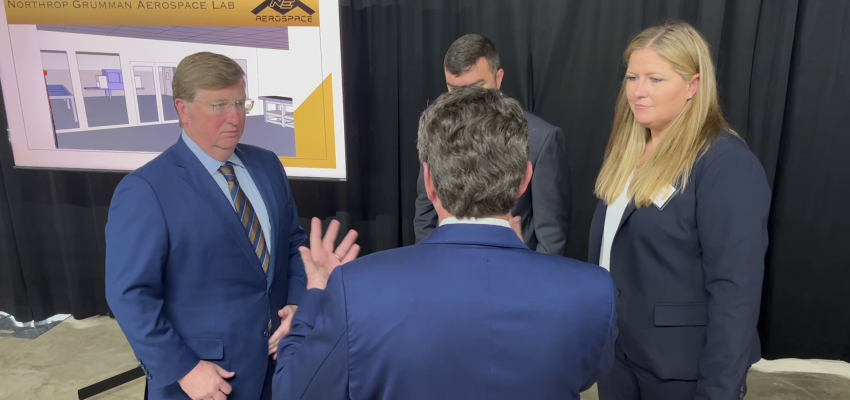
At the heart of this educational paradigm shift lies the **Aerospace Lab**. Far from being mere workshops, these sophisticated facilities are microcosms of the industry itself, designed to replicate real-world challenges and environments. Imagine a student not just reading about fluid dynamics, but actively designing and testing a wing prototype in a wind tunnel; not just studying propulsion systems, but disassembling and analyzing jet engines; not just learning about satellite communication, but programming and launching high-altitude balloons equipped with telemetry gear. This immersive approach is what sets an **Aerospace Lab** apart, transforming passive learners into active contributors and problem-solvers.
These labs are typically outfitted with cutting-edge equipment that mirrors what’s found in leading aerospace companies and research institutions. This can include advanced CAD/CAM software for design and manufacturing, flight simulators that provide realistic piloting and mission control experience, robotics for automated assembly and inspection, 3D printers for rapid prototyping of complex components, and specialized testing apparatus for materials and structures. Crucially, they also integrate the latest in data analytics tools and artificial intelligence platforms, allowing students to explore how AI can optimize aircraft design, predict maintenance needs, enhance autonomous flight systems, and process vast amounts of telemetry data for mission success.
The skills cultivated in such an environment are incredibly diverse and highly sought after. Beyond the core engineering principles, students develop critical thinking, problem-solving abilities, teamwork, project management, and an acute attention to detail. They learn to troubleshoot, to iterate, and to innovate. For instance, working on a drone design project might involve not just mechanical engineering but also electrical engineering for power systems, computer science for flight control algorithms, and even regulatory knowledge for safe operation. This interdisciplinary approach is vital, as modern aerospace challenges rarely fall neatly into a single academic silo. The hands-on experience gained here builds confidence and a practical understanding that theoretical lessons alone cannot provide, creating a bridge between academic knowledge and industrial application.
### Cultivating Tomorrow’s Aerospace Innovators
The impact of robust aerospace training facilities on career readiness cannot be overstated. Students emerging from programs enhanced by a dedicated **Aerospace Lab** are not just graduates; they are immediately valuable assets to the industry. They’ve already had practical exposure to the tools and methodologies that define the modern aerospace landscape. This translates directly into a wide array of high-tech career paths. We’re talking about the next generation of aerospace engineers specializing in propulsion, aerodynamics, or structural design, but also avionics technicians who understand complex navigation and communication systems, and experts in advanced manufacturing techniques, including additive manufacturing for lightweight, high-performance parts. Furthermore, with the proliferation of unmanned aerial systems (UAS), or drones, there’s a growing need for specialists in drone design, operation, and data analysis.
Beyond traditional roles, these labs are also nurturing talent for emerging sectors. Consider the commercial space industry, which is booming with private ventures launching satellites, developing reusable rockets, and even planning lunar and Martian missions. Graduates are finding roles as space systems engineers, satellite payload specialists, and mission architects. The burgeoning field of urban air mobility (UAM), promising a future of air taxis and delivery drones, requires expertise in autonomous flight systems, air traffic management, and electric propulsion. Professionals trained in these labs are uniquely positioned to step into roles focused on AI and machine learning for predictive maintenance of aircraft, optimization of flight paths, and the development of intelligent onboard systems. Data scientists who can interpret the massive datasets generated by modern aircraft and spacecraft are also in high demand, turning raw information into actionable insights.
Moreover, the networking opportunities within these specialized environments are invaluable. Often, these labs forge strong partnerships with industry leaders, offering students internships, mentorships, and direct exposure to potential employers. Such collaborations ensure that the curriculum remains relevant and responsive to industry needs, providing a clear pathway from academia to a rewarding career. It’s about building a professional ecosystem where students learn not just from their instructors, but also from guest lecturers, industry mentors, and even their peers, fostering a collaborative spirit essential for complex engineering projects.
### The Future Takes Flight: AI, Automation, and Beyond
Looking ahead, the role of the **Aerospace Lab** will only become more pronounced as technology continues its relentless march forward. The integration of advanced computational methods, particularly artificial intelligence and machine learning, is no longer supplementary; it is central to the future of aerospace. From AI-driven design tools that can optimize aircraft shapes for maximum efficiency to autonomous flight systems that navigate complex airspace without human intervention, AI is reshaping every facet of the industry. Students in these labs are not just learning to use these tools; they are learning to develop and refine them, becoming pioneers in a new era of intelligent aerospace systems.
Beyond AI, other transformative technologies are also being explored. Quantum computing, while still in its nascent stages, holds the promise of solving complex optimization problems far beyond the capabilities of current supercomputers, potentially revolutionizing areas like logistics and materials science. Advanced materials, such as self-healing composites and smart alloys, are enabling lighter, stronger, and more durable aircraft and spacecraft. Additive manufacturing, or 3D printing, allows for the creation of intricate, custom parts on demand, reducing waste and accelerating development cycles. A modern **Aerospace Lab** must therefore be a hub for research and experimentation in all these fields, preparing students not just for current industry demands but for those that are still on the horizon.
Sustainability is another critical dimension. The aerospace industry is under increasing pressure to reduce its environmental footprint. This means a focus on electric and hybrid-electric propulsion systems, the development and adoption of sustainable aviation fuels (SAFs), and the design of more aerodynamically efficient aircraft. Labs are becoming testing grounds for these green technologies, allowing students to contribute directly to solutions for climate change. This commitment to innovation, coupled with a deep sense of responsibility, ensures that the future of aerospace is not just technologically advanced but also environmentally conscious, leading towards a more sustainable and exciting future for global transportation and space exploration.
The global competitive landscape further underscores the importance of these specialized training grounds. Nations and corporations worldwide are vying for leadership in aerospace innovation. By investing in state-of-the-art facilities and fostering a robust talent pipeline, educational institutions play a crucial role in maintaining and advancing a nation’s competitive edge. The skills and knowledge imparted in an **Aerospace Lab** are thus not just about individual career success; they are about contributing to national progress and shaping humanity’s collective future among the stars.
In conclusion, the modern **Aerospace Lab** is much more than a collection of equipment; it is a dynamic ecosystem designed to cultivate the next generation of innovators, engineers, and scientists. By offering an unparalleled blend of theoretical knowledge and hands-on practical experience, these facilities are empowering students to master complex technologies, fostering critical thinking, and instilling the problem-solving mindset essential for tackling the industry’s most pressing challenges. As an AI specialist, I firmly believe that this fusion of traditional engineering principles with cutting-edge digital and physical tools is precisely what’s needed to navigate the exciting, yet demanding, future of flight and space exploration.
The journey from classroom to cosmos is no longer an abstract concept but a tangible path made accessible through these invaluable learning environments. As we gaze towards a future filled with autonomous aircraft, sustainable space travel, and breakthroughs yet unimagined, it is clear that the continued investment in and evolution of these specialized labs will be paramount. They are not merely preparing students for high-tech careers; they are equipping them to define, design, and ultimately build the future of aerospace, pushing the boundaries of what is possible and inspiring humanity to reach ever higher.










