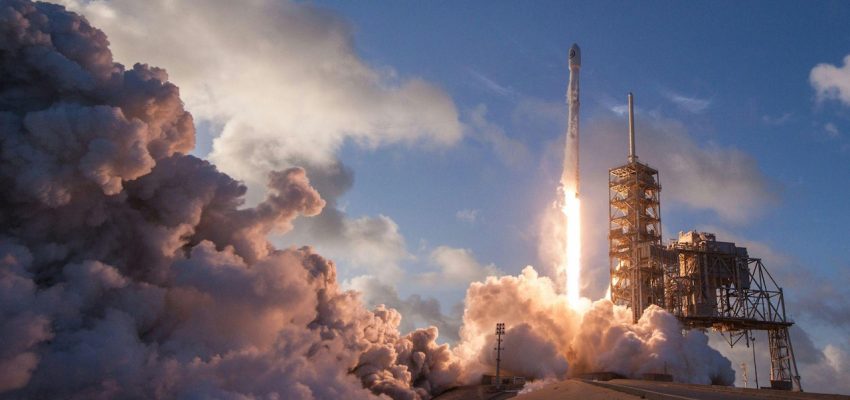

Humanity’s gaze has always been drawn skyward, a testament to our innate curiosity and ambition. From the first rockets that pierced the stratosphere to the groundbreaking missions exploring distant planets, the allure of space has consistently fueled innovation. Today, we stand at the precipice of a new era of cosmic exploration, one not merely defined by rockets and satellites, but fundamentally propelled by a force far more subtle yet infinitely powerful: Artificial Intelligence. As an AI specialist and enthusiast, I’ve witnessed firsthand how this transformative technology is not just optimizing existing processes but entirely reimagining what’s possible, especially in the most challenging frontier of all. For students looking towards the future, understanding the intricate dance between AI and the burgeoning opportunities beyond Earth is paramount. This isn’t just about a job; it’s about pioneering the future of civilization in the stars, driven by intelligent systems.
### Space Careers: Navigating the New Frontier with AI
The traditional image of a space professional often conjures images of astronauts, rocket scientists, or mission controllers. While these iconic roles remain vital, the reality of working in the space sector today is far more diverse, interdisciplinary, and, crucially, deeply interwoven with advanced technologies like AI, machine learning, and data science. The global space economy is projected to exceed $1 trillion by 2040, according to estimates from Morgan Stanley and Bank of America, indicating a massive expansion of roles and opportunities. This growth isn’t just in government agencies like NASA or ESA; it’s fueled by a vibrant private sector, from SpaceX and Blue Origin to countless startups innovating across satellite technology, space tourism, and asteroid mining. For those considering a future in the cosmos, knowing where to focus your energies, especially in an AI-driven landscape, is key to carving out a truly impactful path. Let’s delve into some of the most exciting and transformative space careers, highlighting how AI is not merely an auxiliary tool, but often the very engine driving progress.
### Aerospace Engineering in the AI Age: Designing the Future
Aerospace engineering has long been the bedrock of space exploration, responsible for designing, developing, testing, and maintaining spacecraft, rockets, satellites, and other systems. Historically, this has been an incredibly complex and iterative process, relying on exhaustive simulations and painstaking physical prototypes. With the advent of AI, this field is undergoing a profound transformation. Generative design, for instance, allows AI algorithms to explore thousands, even millions, of design permutations that human engineers might never conceive, optimizing for weight, strength, and manufacturing ease simultaneously. Companies like Airbus are already leveraging AI to design components that are lighter and stronger, drastically reducing fuel consumption for aircraft and, by extension, rocket payloads.
Furthermore, AI is revolutionizing predictive maintenance for space vehicles. Instead of scheduled overhauls, machine learning models can analyze telemetry data from engines, sensors, and structural components in real-time, predicting potential failures long before they occur. This is crucial for long-duration missions where repair options are nonexistent. Imagine an AI system on a Mars mission analyzing a thruster’s performance data, identifying a subtle anomaly, and recommending pre-emptive adjustments, potentially saving the mission. Students aiming for space careers in aerospace engineering must now master not only classical physics and materials science but also programming languages like Python, machine learning frameworks, and robust data analytics skills to interface with these intelligent design and diagnostic systems. Understanding AI-driven optimization techniques, computational fluid dynamics, and advanced simulation tools is no longer a niche skill but a core competency.
### Mission Operations & Autonomous Control: From Earth to Orbit
The control room, with its banks of screens and intense focus, is the nerve center of any space mission. Mission operations specialists plan, execute, and monitor every phase of a spacecraft’s journey, from launch to orbit insertion, and through complex scientific operations. Traditionally, this involved human operators constantly monitoring data streams, making critical decisions, and sending commands. However, as missions become more complex, go further into deep space, and involve vast constellations of satellites, the sheer volume of data and the latency of communication make human-centric control increasingly challenging.
This is where AI takes the helm. Autonomous mission planning systems, powered by machine learning, can dynamically adjust flight paths, optimize communication windows, and even reschedule scientific observations based on real-time data and unexpected events, far faster than human teams. For instance, NASA’s Deep Space Network uses AI to optimize scheduling for its massive antennas, ensuring maximum data return from multiple probes simultaneously. Furthermore, AI-driven anomaly detection systems can sift through terabytes of telemetry data, identifying subtle deviations that indicate potential problems, alerting human operators with actionable insights rather than raw data dumps. The Mars rovers, like Perseverance, already boast sophisticated autonomous navigation capabilities, allowing them to traverse complex terrain and make tactical decisions without constant human intervention, a critical feature given the communication delay. Aspiring professionals in space careers focused on mission operations will need strong backgrounds in systems engineering, robust programming skills (especially in C++ and Python for real-time systems), and a deep understanding of AI ethics in autonomous decision-making to ensure safety and reliability.
### Satellite Data Science & AI-Driven Insights: Unlocking the Universe’s Secrets
With thousands of satellites orbiting Earth, and more launching every month, we are collecting an unprecedented torrent of data about our planet and the wider cosmos. This includes everything from high-resolution imagery for climate monitoring and urban planning to atmospheric data for weather forecasting, and astronomical observations for discovering new celestial bodies. The challenge isn’t collecting the data; it’s making sense of it. This is precisely where satellite data science, amplified by AI, becomes indispensable.
AI and machine learning algorithms are transforming raw satellite data into actionable intelligence. For example, deep learning models can automatically identify patterns of deforestation, track changes in polar ice caps, or monitor agricultural yields with astonishing precision. In Earth observation, AI can detect subtle geological shifts that might precede earthquakes or predict the trajectory of wildfires. Beyond our planet, AI aids astronomers in sifting through vast datasets from telescopes, identifying exoplanets, mapping dark matter, or discovering new galaxies. The European Space Agency’s Gaia mission, for instance, uses advanced algorithms to process petabytes of astrometric data, creating the most precise 3D map of our galaxy to date. Professionals pursuing these cutting-edge space careers require expertise in big data analytics, geospatial information systems (GIS), remote sensing, and a mastery of deep learning frameworks such as TensorFlow and PyTorch. Their work directly informs environmental policy, disaster response, scientific discovery, and even national security.
### Space Law & Governance in an AI-Enhanced Cosmos: Crafting the Rules for Beyond
As humanity’s footprint in space expands, so too does the complexity of governing it. Space law, traditionally focused on international treaties like the Outer Space Treaty of 1967, is evolving rapidly to address new challenges posed by private space ventures, resource utilization, space debris, and now, the increasing deployment of autonomous AI systems. Who is liable when an AI-driven satellite malfunctions? What are the ethical implications of AI making decisions about resource allocation in a lunar colony? How do we regulate intellectual property for designs generated by an AI engineer for a space mission?
These are not hypothetical questions but pressing concerns that legal experts in the space sector are grappling with today. AI is also becoming a tool within this field, assisting lawyers with complex legal research, analyzing vast archives of international treaties, and even drafting preliminary legal documents related to space ventures. Moreover, the governance of AI itself in space, particularly concerning autonomous systems, necessitates the development of new legal and ethical frameworks. Organizations like the United Nations Committee on the Peaceful Uses of Outer Space (UNCOPUOS) are actively discussing these topics. Those interested in these critical space careers will need a strong foundation in international law, a keen understanding of technology and AI ethics, and the ability to navigate complex geopolitical landscapes. It’s about ensuring humanity’s expansion into space is peaceful, sustainable, and equitable, with AI acting both as a subject of regulation and a tool for enforcement.
### Space Robotics & AI Engineering: The Autonomous Explorers
While often intertwined with aerospace engineering and mission operations, the specialized field of Space Robotics and AI Engineering merits its own recognition. This discipline focuses specifically on designing, building, and programming intelligent robotic systems capable of operating autonomously in harsh extraterrestrial environments. From lunar landers equipped with AI for precise terrain mapping and hazard avoidance to Martian rovers conducting scientific experiments with minimal human oversight, robots are our vanguard in exploration.
The next generation of space robotics, heavily infused with AI, will go far beyond current capabilities. We’re talking about cognitive robotics for complex construction tasks on the Moon or Mars, swarm intelligence for collaborative exploration and resource prospecting, and advanced dexterous manipulators for in-orbit servicing and assembly. Imagine AI-powered robots autonomously identifying and extracting water ice on the lunar poles, or building habitats with minimal human intervention. This field also encompasses the development of AI for autonomous rendezvous and docking, crucial for future space stations and deep-space missions. These highly specialized space careers demand a unique blend of robotics, AI/machine learning, control systems engineering, computer vision, and even materials science. Professionals in this area will be at the forefront of enabling sustained human presence beyond Earth, turning science fiction into operational reality through intelligent machines.
### The Interdisciplinary Future: Skills for the AI-Powered Space Age
As is evident, the future of space careers is profoundly interdisciplinary. The lines between traditional engineering, data science, and even humanities are blurring. What unites these diverse paths is the increasing reliance on digital fluency and an understanding of artificial intelligence. For students aspiring to make their mark in this exciting domain, cultivating a broad skill set is crucial.
Beyond specialized knowledge in fields like physics, engineering, or law, core competencies include strong analytical and problem-solving skills, adaptability to rapidly evolving technologies, and an unwavering commitment to ethical considerations, especially when dealing with powerful AI systems. Proficiency in programming languages such as Python, C++, and Java, coupled with an understanding of machine learning principles, data visualization, and cloud computing, will be invaluable across almost all sectors of the space industry. Furthermore, “soft skills” like critical thinking, communication, and collaboration are more important than ever. The ability to work in diverse, cross-functional teams, often remotely and across continents, is a given. Practical steps for students include pursuing STEM degrees, engaging in extracurricular activities related to robotics or coding, seeking internships at space agencies or private companies, participating in hackathons, and exploring online courses on AI, data science, and aerospace fundamentals. Building a portfolio of projects, even personal ones, can demonstrate passion and capability. Networking with professionals in the field, attending webinars, and staying abreast of the latest developments in AI and space technology will open doors to unseen opportunities.
The cosmos, once the exclusive domain of governments and a select few, is rapidly democratizing, propelled by innovation and the relentless march of artificial intelligence. The next generation of explorers, engineers, scientists, and even legal minds will not merely work *in* space; they will work *with* AI to redefine what space means for humanity. From intelligent spacecraft designing themselves to autonomous systems operating deep in the solar system, AI is not just a tool; it is a co-pilot, a research assistant, and an architect of our future among the stars.
For students standing on the cusp of their careers, the message is clear: the most exciting space careers lie at the intersection of traditional expertise and cutting-edge artificial intelligence. Embrace this convergence, cultivate an interdisciplinary mindset, and prepare to contribute to an era of exploration that will undoubtedly be remembered as one of humanity’s most ambitious and intelligent endeavors. The future of space is AI-powered, and the opportunities for those ready to shape it are truly limitless.