
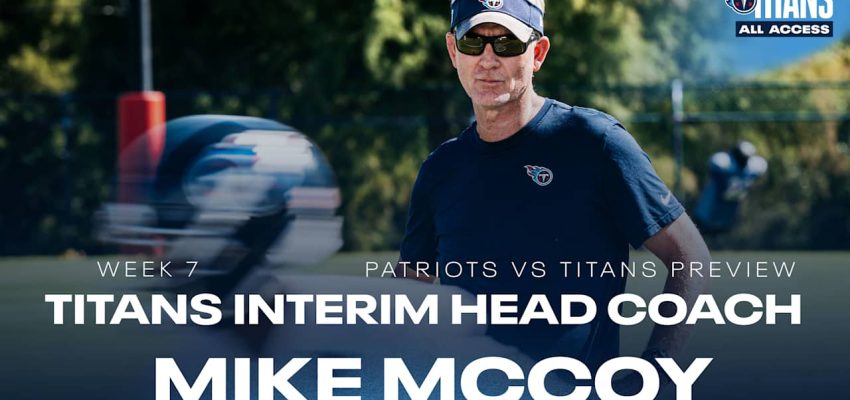

In the high-stakes world of the National Football League, careers are often characterized by relentless competition, demanding schedules, and an unyielding pursuit of excellence. For every star player, there are countless dedicated coaches, strategists, and mentors whose contributions, while less visible, are equally critical to a team’s success. André Lacerda, an AI specialist and tech enthusiast, delves into the fascinating and multifaceted journey of one such figure: Mike McCoy, whose decades-long involvement in the NFL has seen him transition from a collegiate quarterback to an influential offensive mind, leaving an indelible mark on numerous franchises and players.
McCoy’s path through professional football is a testament to adaptability, resilience, and a deep understanding of offensive strategy. It’s a story that spans multiple teams, diverse offensive schemes, and the intense pressures of head coaching. From developing unconventional quarterback talents to orchestrating high-flying offenses for future Hall of Famers, his extensive background provides a unique lens through which to examine the evolution of offensive football and the intricate dance between strategy and execution at the highest level of the sport.
Mike McCoy’s Career: From Collegiate Quarterback to NFL Strategist
Before carving out a reputation as a shrewd offensive coordinator and an NFL head coach, Mike McCoy first experienced the game from under center. His playing career began at Long Beach City College before transferring to the University of Utah, where he showcased his talents as a quarterback. Though he wasn’t drafted into the NFL, McCoy signed with the Denver Broncos as an undrafted free agent in 1995, embarking on a brief but insightful playing stint that included time with the Green Bay Packers and San Francisco 49ers. While his NFL playing days were short-lived, the experience of being in professional locker rooms and learning from established systems would undoubtedly lay the groundwork for his future coaching aspirations. His playing career extended into the Canadian Football League (CFL) with the Calgary Stampeders, where he even earned a Grey Cup ring in 1998 as a backup quarterback, an experience that exposed him to different facets of professional football and diverse offensive philosophies.
It was in 2000 that McCoy officially transitioned to the coaching ranks, joining the Carolina Panthers as an offensive assistant. This marked the true beginning of Mike McCoy’s career as an NFL strategist. He steadily climbed the ladder, holding various roles including quality control coach, wide receivers coach (2003-2004), and quarterbacks coach (2005-2006). These early years were crucial for developing a comprehensive understanding of offensive schemes, player development, and the operational demands of an NFL coaching staff. Working with quarterbacks like Jake Delhomme, McCoy began to hone his skills in game planning and player instruction. By 2007, his dedication and acumen were recognized, leading to his promotion to offensive coordinator for the Panthers, a role he held for two seasons. During this period, he was instrumental in developing a strong offensive identity for Carolina, which relied heavily on a powerful run game and an efficient passing attack, showcasing his early ability to tailor schemes to personnel.
The Maestro of Adaptation: McCoy’s Offensive Prowess with the Broncos
The turning point in Mike McCoy’s career as an offensive innovator arguably came during his first stint with the Denver Broncos, spanning from 2009 to 2012. Initially joining as offensive coordinator under head coach Josh McDaniels, McCoy was tasked with revitalizing an offense. However, it was during his second phase with the Broncos, under head coach John Fox, that his adaptability truly shone. In 2011, McCoy faced a unique challenge: developing a system around quarterback Tim Tebow, whose unconventional style, characterized by strong running ability and a penchant for dramatic late-game comebacks, defied traditional NFL offensive paradigms. Instead of forcing Tebow into a pro-style pocket passer mold, McCoy masterfully crafted a run-heavy, option-oriented offense that played to Tebow’s strengths. This innovative approach, often referred to as ‘Tebow Time,’ led the Broncos to an improbable AFC West title and a thrilling playoff victory against the Pittsburgh Steelers, demonstrating McCoy’s willingness to be creative and his ability to maximize the talent at hand, no matter how unorthodox.
The following season, 2012, brought an even greater challenge and opportunity: the arrival of future Hall of Fame quarterback Peyton Manning. Manning, known for his unparalleled football intellect and preference for an up-tempo, no-huddle offense, required a complete overhaul of the previous year’s system. McCoy, with remarkable agility, seamlessly adapted his playbook to suit Manning’s legendary style. The result was an offensive masterpiece. The Broncos soared to a 13-3 record, boasting the league’s fourth-ranked offense and Manning’s resurgent MVP-caliber season. McCoy’s ability to transition from a run-heavy, option-based scheme for Tebow to a sophisticated, pass-oriented attack for Manning in the span of a single offseason solidified his reputation as one of the most versatile and brilliant offensive minds in the NFL. This period was undoubtedly a peak for Mike McCoy’s career as an offensive coordinator, showcasing his strategic depth and capacity to work with vastly different quarterback archetypes, from the raw athleticism of Tebow to the cerebral mastery of Manning.
The Head Coaching Challenge and Subsequent Returns
McCoy’s impressive work in Denver earned him a promotion, and in 2013, he was hired as the head coach of the San Diego Chargers. This was a significant milestone in Mike McCoy’s career, a validation of his strategic expertise and leadership potential. In his first season, he orchestrated a remarkable turnaround, leading the Chargers to a 9-7 record and a playoff berth, their first since 2009. Quarterback Philip Rivers, who had struggled the previous year, enjoyed a resurgent season under McCoy’s guidance, throwing for over 4,400 yards and 32 touchdowns, a testament to McCoy’s quarterback coaching prowess. The Chargers even secured a wild-card victory against the Cincinnati Bengals before falling to his former team, the Denver Broncos, in the divisional round. Hopes were high for sustained success, but the demanding nature of head coaching in the NFL presented its own set of formidable challenges.
The subsequent seasons saw the Chargers struggle to maintain consistency. While McCoy’s teams showed flashes of brilliance and continued to display an effective passing game, they often fell short in close contests, leading to accusations of clock management issues and an inability to close out games. After two consecutive 9-7 seasons that narrowly missed the playoffs, the Chargers regressed to 4-12 in 2015 and started 2016 with a 5-11 record, ultimately leading to McCoy’s dismissal at the end of the 2016 season. The transition from offensive coordinator, where the focus is primarily on one side of the ball, to head coach, which demands oversight of the entire operation, along with intricate game management and team leadership, proved to be a challenging leap, even for a coach with McCoy’s offensive pedigree.
Following his tenure with the Chargers, McCoy returned to his roots as an offensive coordinator, rejoining the Denver Broncos in 2017. However, this second stint was less successful. Plagued by inconsistent quarterback play from Trevor Siemian, Brock Osweiler, and Paxton Lynch, the Broncos’ offense struggled significantly, leading to McCoy’s mid-season firing. He then moved to the Arizona Cardinals in 2018 as offensive coordinator under new head coach Steve Wilks. Unfortunately, the Cardinals offense, featuring veteran Sam Bradford and rookie Josh Rosen, became the league’s lowest-ranked unit, and McCoy was again dismissed mid-season. These experiences highlighted the immense difficulty of orchestrating a successful offense without a stable, high-performing quarterback, underscoring the critical importance of personnel in the NFL’s coaching landscape. They also offered a stark reminder that even the most skilled strategists are heavily reliant on the talent they have to work with.
McCoy continued his coaching journey, serving as an offensive assistant for the Philadelphia Eagles in 2019, where he contributed to their offensive strategy without the direct pressure of play-calling. His most recent NFL role was as the quarterbacks coach for the Jacksonville Jaguars in 2021, working with the highly touted rookie Trevor Lawrence under head coach Urban Meyer. This role allowed him to focus on his strengths: developing young quarterback talent and refining their mechanics and understanding of the game. Despite the tumultuous nature of Meyer’s brief tenure, McCoy’s presence offered invaluable guidance to Lawrence as he navigated his challenging rookie season in the NFL.
Reflecting on Mike McCoy’s career reveals a narrative common in the NFL: one of constant evolution, high expectations, and the relentless pursuit of opportunities. His journey from an undrafted player to an offensive guru who mentored some of the league’s most iconic quarterbacks, and then faced the ultimate challenge as a head coach, speaks volumes about his dedication to the sport. While his head coaching stint may not have yielded the long-term success he desired, his profound impact as an offensive coordinator and quarterback specialist remains undeniable. He is a coach who has seen the game from nearly every angle, adapting his strategies to fit the unique skills of his players, from the improvisational Tim Tebow to the surgical Peyton Manning and the promising Trevor Lawrence.
As the NFL continues to evolve, pushing the boundaries of offensive innovation, coaches like Mike McCoy serve as vital bridges between past philosophies and future strategies. His ability to craft high-performance offenses and his dedication to quarterback development have left an enduring legacy on several NFL franchises. While he may not be currently holding a prominent coaching role, the lessons learned and the contributions made throughout Mike McCoy’s career continue to resonate, offering valuable insights into the complex, challenging, and ever-fascinating world of professional football coaching.










