

In an era defined by unprecedented technological acceleration, artificial intelligence (AI) stands as a monumental force reshaping industries, economies, and societies worldwide. From revolutionizing healthcare diagnostics to personalizing consumer experiences and optimizing complex engineering systems, AI’s omnipresence is undeniable. As an AI specialist and enthusiast, I’ve observed firsthand how quickly this technology is moving from the realm of science fiction into our daily lives, transforming job roles and creating entirely new professional avenues. This rapid evolution, while exciting, brings with it a critical challenge: preparing the next generation to not only adapt to this AI-powered future but to actively build and steer it. The imperative for robust **AI workforce development** has never been more pressing, demanding a proactive, collaborative approach from educators, industries, and governments alike.
The conversation around the future of work often centers on automation and job displacement. While certain routine tasks are indeed being streamlined by AI, the larger narrative is one of augmentation and creation. AI empowers human workers, freeing them from mundane chores to focus on higher-value, creative, and strategic endeavors. It necessitates a shift in skill sets, moving beyond traditional competencies to embrace a blend of technical prowess, critical thinking, and ethical awareness. This article delves into how we can effectively cultivate an AI-ready workforce, drawing inspiration from the spirit of initiatives that prioritize hands-on learning and cross-sector collaboration to equip young minds for the demands of tomorrow.
AI Workforce Development: Building the Skills of Tomorrow
The digital revolution, spurred by AI, is fundamentally altering the landscape of virtually every sector. Consider the fields of health, engineering, marketing, and entrepreneurship—areas experiencing profound shifts. In healthcare, AI is driving advancements from predictive analytics for disease outbreaks to AI-assisted surgery and personalized treatment plans, demanding professionals who understand both medicine and machine learning. Engineering is being redefined by AI-driven design optimization, robotic process automation, and smart infrastructure, requiring engineers who can code and integrate AI into physical systems. Marketing has been transformed by AI’s ability to analyze vast consumer data, predict trends, and automate targeted campaigns, necessitating marketers with data science literacy. And entrepreneurship thrives on innovation, with AI enabling new business models, efficiencies, and product development cycles at an unprecedented pace, calling for founders with a keen eye for AI’s strategic applications.
To truly harness AI’s potential, we must identify and cultivate the skills essential for this new paradigm. An AI-ready professional is not just a programmer; they are a multi-faceted individual capable of problem-solving with AI. Key technical competencies include foundational understanding of machine learning algorithms, data analysis and interpretation, programming languages like Python and R, cloud AI platforms (e.g., AWS, Azure, Google Cloud), and familiarity with specialized AI tools and frameworks. However, technical skills alone are insufficient. The future workforce also needs robust ‘human skills’: critical thinking to formulate the right questions for AI to answer, creativity to innovate with AI, adaptability to keep pace with rapid technological change, and strong communication skills to translate complex AI insights into actionable strategies. Perhaps most importantly, an ethical compass is paramount. As AI becomes more powerful, understanding its societal implications, potential biases, and responsible deployment is not just a desirable trait but an absolute necessity for anyone involved in **AI workforce development**.
The scope of roles requiring AI proficiency is also expanding. Beyond the obvious data scientists and machine learning engineers, we see a growing need for AI ethicists, prompt engineers, AI product managers, AI-powered customer service specialists, and even AI integration consultants in traditional roles. This diversification highlights that AI is not a niche technology but a core competency that will increasingly underpin success across a vast array of professions. Therefore, proactive **AI workforce development** initiatives are not just about training a few specialists, but about broadly elevating digital literacy and AI understanding across the entire educational spectrum.
Rethinking Education for the AI Era
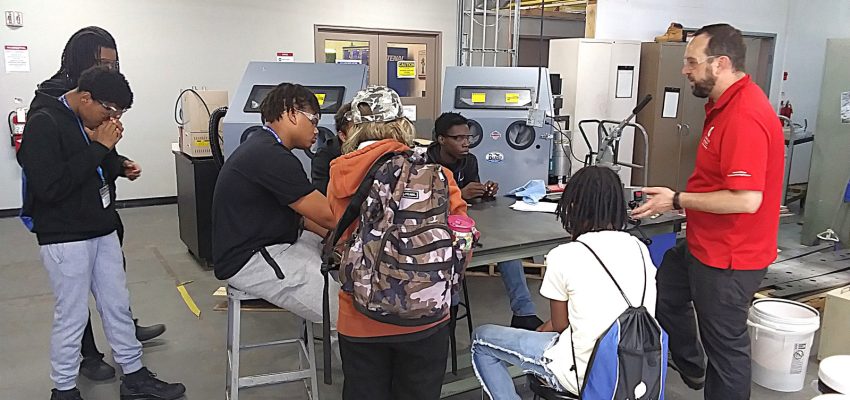
The traditional educational model, often characterized by rote memorization and standardized testing, is ill-equipped to prepare students for the dynamic demands of the AI age. Instead, we need a paradigm shift towards experiential, project-based learning that fosters curiosity, collaboration, and continuous skill development. Early exposure to AI concepts is crucial. Integrating computational thinking and basic coding into K-12 curricula can demystify technology and build foundational logical reasoning. Robotics clubs, AI ethics debates, and introductory data science projects can engage high school students, much like the hands-on introductions to careers that prepare students for various sectors today.
At the university level, this means not just offering specialized AI degrees but infusing AI literacy across all disciplines. An art history student might learn how AI can analyze stylistic patterns, while a business student might master AI tools for market forecasting. Interdisciplinary programs, such as ‘AI in Healthcare’ or ‘AI for Sustainable Engineering,’ can create graduates who are not only AI-savvy but also deeply knowledgeable in specific domains, enabling them to apply AI solutions effectively. Furthermore, universities must become hubs for lifelong learning, offering certificates, micro-credentials, and executive education programs to reskill and upskill existing professionals whose roles are evolving due to AI. Organizations like Coursera and edX have seen massive enrollment in AI-related courses, underscoring the demand for flexible, accessible learning pathways for individuals at all career stages. Investing in these varied educational avenues is a cornerstone of effective **AI workforce development**.
Beyond formal institutions, informal learning pathways are equally vital. Online communities, open-source projects, hackathons, and mentorship programs provide invaluable opportunities for skill acquisition and networking. Governments and non-profits also play a crucial role in funding these initiatives, ensuring equitable access to AI education regardless of socioeconomic background. This comprehensive approach ensures that learning isn’t confined to classrooms but is an ongoing process throughout an individual’s career, essential for staying relevant in a rapidly changing technological landscape.
The Power of Collaboration: Bridging Academia and Industry
No single entity can tackle the vast challenge of **AI workforce development** alone. The most effective strategies involve robust collaborations between academia, industry, and governmental bodies. Universities provide the theoretical foundation and research capabilities, while industry offers real-world problems, cutting-edge tools, and immediate job opportunities. Governments can facilitate these partnerships through funding, policy incentives, and establishing regulatory frameworks that foster innovation responsibly.
Think of the impact of university-industry partnerships that see businesses providing internships, co-op programs, and even sponsored research projects for students. These opportunities allow students to gain practical experience, apply theoretical knowledge, and understand industry best practices directly. For companies, it’s a pipeline for future talent and a chance to shape the curriculum to meet their specific needs. Battelle, for instance, a global science and technology enterprise, frequently partners with educational institutions, bringing its expertise to bear on developing future talent in STEM fields—a model highly relevant for AI. Such collaborations also foster a culture of innovation, where research breakthroughs can quickly transition into practical applications, benefiting both students and the broader economy.
Furthermore, these partnerships can address the critical need for diversity in AI. Historically, the tech sector has struggled with representation. Collaborative initiatives can actively promote AI education and career paths for underrepresented groups, ensuring that the future of AI is built by a workforce that reflects the rich diversity of society. This is not just about fairness; diverse teams are proven to be more innovative, bringing a wider range of perspectives to problem-solving and helping to mitigate biases in AI systems. The success of future **AI workforce development** hinges on creating inclusive pathways for everyone.
Ethical AI and Societal Responsibility in Workforce Training
As we advance in AI capabilities, the discussion naturally shifts from *what AI can do* to *what AI should do*. Training the next generation of AI professionals must extend beyond technical proficiency to encompass a deep understanding of ethical considerations and societal impact. This means embedding AI ethics, fairness, accountability, transparency, and privacy principles directly into educational curricula from an early stage. Students should learn not only how to build AI models but also how to identify and mitigate biases in data, understand the implications of algorithmic decision-making, and design AI systems that align with human values.
The goal is to cultivate a workforce that views AI development through a human-centric lens, prioritizing the well-being of individuals and communities. This includes understanding regulatory landscapes, engaging in interdisciplinary dialogues with ethicists, sociologists, and legal experts, and actively contributing to the development of responsible AI policies. Companies are increasingly recognizing the importance of ethical AI; a recent survey by McKinsey highlighted that organizations with strong ethical AI frameworks are more likely to see positive business outcomes. Therefore, equipping our workforce with these ethical considerations is not just about moral imperative but also about strategic advantage and ensuring public trust in AI technologies. This critical dimension must be at the heart of all **AI workforce development** strategies.
Cultivating a sense of societal responsibility in AI professionals empowers them to create technologies that are beneficial, equitable, and sustainable. It moves us beyond simply automating tasks towards truly augmenting human capabilities and solving some of the world’s most pressing challenges, from climate change to global health disparities. The future of AI relies on the integrity and foresight of those who build and deploy it.
The journey to build an AI-ready workforce is a complex yet exhilarating one. It demands continuous innovation in our educational systems, a spirit of collaboration across all sectors, and a steadfast commitment to ethical development. As an AI specialist, I am immensely optimistic about the transformative power of artificial intelligence, but this potential can only be fully realized if we collectively invest in preparing the human talent that will guide its evolution. By fostering a learning environment that emphasizes critical thinking, technical prowess, and a strong ethical foundation, we empower individuals to not just navigate the future but to actively shape it.
The challenges are significant, but so are the opportunities. As AI continues to integrate into every facet of our lives, the demand for skilled professionals who can responsibly innovate and apply this technology will only grow. It is incumbent upon all of us—educators, industry leaders, policymakers, and parents—to champion initiatives that lay the groundwork for a thriving, intelligent, and ethically conscious workforce. The investment we make today in **AI workforce development** is an investment in a more prosperous, equitable, and technologically advanced tomorrow, securing our collective future in the age of intelligence.










