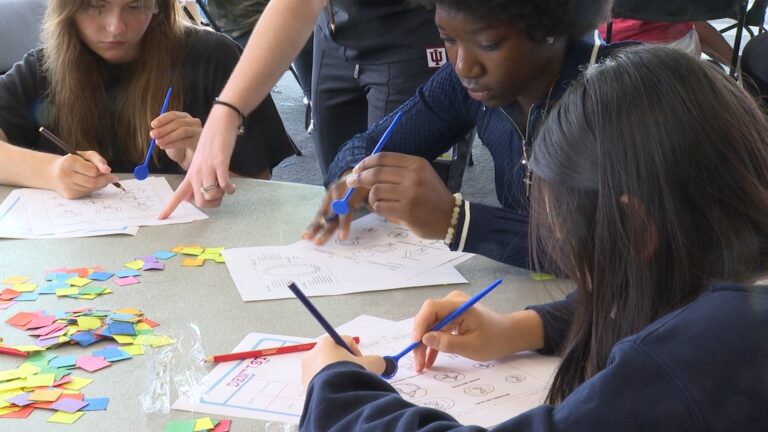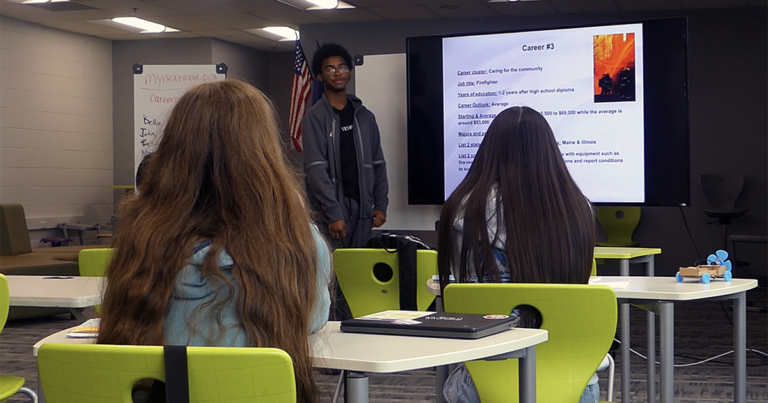

Every year, across schools like United Township High School, a new cohort of bright-eyed students makes a profound commitment: to shape the minds of future generations. These individuals, signing their letters of intent to teach, embark on a journey that is not merely a profession, but a calling. Their dedication echoes through the halls of history, a timeless testament to the human desire to learn and grow. Yet, as they step onto this path, they enter an educational landscape poised for its most significant transformation in decades, driven by the relentless advancement of artificial intelligence.
As an AI specialist, writer, and tech enthusiast, I, André Lacerda, believe this isn’t just about integrating new tools; it’s about redefining the very essence of what it means to teach and learn. The promise of AI is not to diminish the invaluable role of the human educator, but rather to augment it, to unlock unprecedented potential for personalized learning, administrative efficiency, and deeper student engagement. This article delves into how AI is set to empower the next generation of teachers, equipping them with capabilities that were once the realm of science fiction, and examining the critical skills they will need to thrive in this exciting new era.
### AI in Education: Empowering the Next Generation of Teachers
The traditional image of a teacher standing at the front of a classroom, delivering information to a uniform group of students, is rapidly evolving. Today’s educators face immense pressure: diverse learning styles, escalating administrative burdens, and the constant need to remain relevant in a fast-changing world. This is precisely where AI in education emerges not as a threat, but as a powerful ally, a force multiplier for human potential. Rather than replacing the irreplaceable human connection that defines excellent teaching, artificial intelligence offers sophisticated tools to enhance every facet of the pedagogical process, freeing educators to focus on what they do best: inspire, mentor, and guide.
One of the most profound impacts of intelligent learning systems is the ability to deliver truly personalized education at scale. For decades, educators have dreamed of tailoring lessons to each student’s unique pace, style, and prior knowledge. Adaptive learning platforms, powered by advanced algorithms, are making this a reality. Imagine a system that can identify a student’s specific struggle with a complex mathematical concept and provide targeted remedial exercises, while simultaneously presenting another student, who has mastered the topic, with advanced problem-solving challenges. This level of individualized attention, once a luxury available only in one-on-one tutoring, becomes scalable through AI. A 2023 report by HolonIQ, a leading education market intelligence firm, highlighted a significant surge in investment in AI-powered learning solutions, reflecting a global belief in its potential to democratize access to customized educational experiences for millions.
Beyond individual learning paths, AI promises to significantly streamline the myriad administrative burdens that often detract from a teacher’s core mission. Teachers frequently spend a substantial portion of their week on non-instructional tasks – grading papers, managing rosters, communicating with parents, and developing lesson plans from scratch. AI promises to alleviate much of this workload. AI-powered grading tools, for instance, can assess essays and assignments, providing instant feedback on grammar, syntax, and even content structure, freeing up teachers’ time for more qualitative analysis and deeper student interaction. Scheduling assistants can optimize classroom activities and resources, while sophisticated communication platforms can draft routine updates for parents, allowing educators to focus their energy on meaningful student engagement and creative lesson design. A study supported by the Bill & Melinda Gates Foundation indicated that teachers often dedicate between 7 to 10 hours per week to administrative duties; reclaiming even a fraction of this valuable time through AI automation could revolutionize their productivity and job satisfaction.
Furthermore, AI’s capability for data analysis offers unprecedented insights into student performance and pedagogical effectiveness. Learning analytics dashboards can process vast amounts of student data to reveal patterns in engagement, identify common misconceptions across a class, and even predict potential academic challenges before they become critical. This predictive capability allows teachers to intervene proactively, adjusting their teaching strategies to meet evolving needs with precision. For instance, an AI system might flag that a significant portion of the class is struggling with a particular science concept based on assessment data, prompting the teacher to revisit it with a different approach or supplementary materials. This data-informed pedagogy transforms teaching from an art to a science, grounded in empirical evidence and continuous improvement, making AI in education a cornerstone of modern teaching practices.
### Navigating the Evolving Landscape: Skills for the AI-Ready Educator
As the integration of AI in education becomes more pervasive, the role of the teacher is not diminished but rather elevated, requiring a new set of competencies. Future educators, like those young individuals committing to teaching careers today, will need to be adept at navigating this evolving technological landscape, becoming facilitators of learning in an increasingly intelligent environment. It’s no longer just about *what* to teach, but *how* to teach with and alongside AI, nurturing skills that complement, rather than compete with, artificial intelligence.
One crucial skill is digital fluency and, more specifically, prompt engineering. Understanding how to effectively interact with AI tools – crafting clear, precise, and pedagogically sound instructions for generative AI models – will be essential for creating personalized lesson plans, quizzes, or even adapting complex texts for different reading levels. This requires not just technical know-how but also a deep understanding of educational principles to guide the AI effectively, ensuring its output aligns with learning objectives and student needs. Teachers will essentially become expert curators and co-creators of educational content alongside AI.
Alongside creation comes the critical ability to evaluate AI output. While AI can generate vast amounts of information, it’s not infallible and can sometimes produce biased, inaccurate, or even nonsensical content. Educators must develop the discernment to assess the accuracy, relevance, and appropriateness of AI-generated materials. They will be responsible for fact-checking, refining, and contextualizing the output, ensuring it aligns with curriculum standards and ethical guidelines. This critical thinking extends to teaching students how to critically evaluate AI-generated content themselves, preparing them for a world saturated with intelligent algorithms and demanding digital literacy.
The ethical dimensions of using AI in classrooms also necessitate new competencies. Future teachers must be equipped to navigate complex questions regarding data privacy, algorithmic bias, and equitable access to AI tools. They will be at the forefront of implementing policies that ensure AI serves all students fairly, protects their personal data, and avoids perpetuating existing societal biases through technology. This requires ethical leadership and a commitment to responsible innovation, ensuring that educational AI truly serves the best interests of every learner.
Paradoxically, as AI handles more routine and analytical tasks, the uniquely human aspects of teaching become even more vital. Educators will have more time and opportunity to foster skills that AI cannot replicate: critical thinking, creativity, emotional intelligence, collaborative problem-solving, and ethical reasoning. The emphasis shifts from simply delivering information – which AI can now do efficiently – to developing higher-order cognitive and socio-emotional abilities that are indispensable for success in an AI-driven world. Teachers will evolve into mentors, coaches, and guides, focusing on nurturing the whole student.
### Beyond the Classroom Walls: AI’s Broader Impact on Learning Ecosystems
The influence of AI in education extends far beyond individual classroom dynamics, reshaping the entire learning ecosystem. From systemic curriculum development to democratizing access to quality instruction, AI is poised to drive profound, far-reaching changes that impact policy, administration, and community engagement. This broad impact underscores the transformative potential of artificial intelligence not just as a tool, but as a catalyst for systemic change.
Consider curriculum development and dynamic content generation. AI can analyze vast bodies of knowledge, pedagogical research, and real-world data to suggest improvements to existing curricula, identify gaps in learning objectives, and even generate dynamic, up-to-date learning materials in real-time. Imagine a science curriculum that can instantly incorporate the latest research findings or a history lesson that adapts to current geopolitical events, ensuring relevance and engagement that was previously unimaginable. This capability allows educational systems to remain agile and responsive to a rapidly changing world.
AI is also revolutionizing assessment and feedback mechanisms. Beyond simple automated grading, advanced AI can power more sophisticated forms of assessment, including performance-based tasks, simulations, and virtual labs that evaluate deeper understanding, problem-solving skills, and practical application, rather than just rote memorization. Crucially, AI can provide instant, highly granular feedback to students, explaining not just *what* they got wrong, but *why* and *how* to improve. This level of personalized, immediate feedback is challenging for even the most dedicated human teacher to provide consistently to every student, fostering a continuous cycle of learning and improvement.
One of AI’s most transformative potentials lies in its ability to bridge educational gaps and democratize access to quality education. For students in remote areas, those with special needs, or individuals lacking access to specialized instruction, AI-powered tutors, language learning applications, and adaptive platforms can offer high-quality, personalized learning experiences previously unavailable. This democratizing effect of technology can significantly contribute to global educational equity, aligning with the United Nations Sustainable Development Goal 4, which aims to ensure inclusive and equitable quality education and promote lifelong learning opportunities for all. The development of AI tools capable of translating educational content into numerous languages or adapting it for various accessibility needs further amplifies this potential, reaching learners across diverse backgrounds.
Finally, the rapid pace of technological change means that learning is no longer confined to specific age groups or institutional settings. AI facilitates lifelong learning by recommending relevant courses, curating personalized learning paths for professionals, and offering continuous professional development opportunities for educators themselves. Teachers can use AI tools to stay current with new pedagogical research, learn new skills, or connect with global communities of practice, ensuring their own growth mirrors that of their students. This perpetual cycle of learning, enabled by AI, positions educators at the forefront of innovation, continuously enhancing their expertise and effectiveness.
As we look towards a future where AI is inextricably woven into the fabric of daily life, the commitment of students to teaching careers becomes even more poignant and vital. These future educators are not just inheriting a profession; they are stepping into a dynamic, technologically augmented landscape where their role will be more critical, more human, and more impactful than ever before. AI in education is not a silver bullet, nor is it a replacement for the profound human connection that drives learning. Instead, it is an incredibly powerful set of tools that, when wielded ethically and thoughtfully, can amplify the reach, efficiency, and personalization of education to unprecedented levels.
The journey ahead for these aspiring teachers, and for all of us involved in education, will be one of continuous learning, adaptation, and innovation. It requires open minds, a willingness to experiment, and a steadfast commitment to leveraging technology to serve humanity’s oldest and most noble endeavor: the pursuit of knowledge and understanding. As André Lacerda, I am profoundly optimistic about this future – a future where AI empowers teachers to ignite curiosity, foster critical thinking, and prepare every student not just for jobs, but for meaningful lives in an ever-evolving world.