
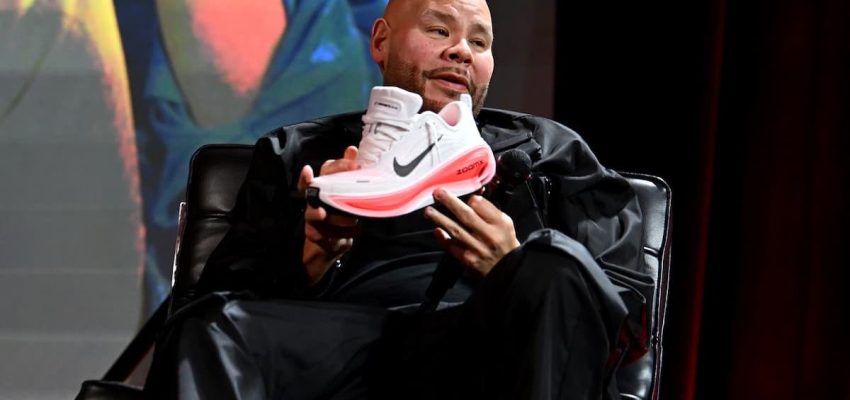

In an era increasingly defined by rapid technological advancements and the ever-evolving landscape of artificial intelligence, it might seem unusual for an AI specialist to delve into the realm of hip-hop and academia. However, as an enthusiast of profound insights and the intricate dynamics of human impact, I find immense value in observing how diverse fields intersect and shape our collective future. Such was the case with a recent, remarkable event that saw Bronx native and hip-hop icon Fat Joe take the stage at Harvard University, not to perform, but to deliver a lecture on the powerful intersection of culture and policy. This momentous occasion transcends a mere celebrity appearance; it signals a deeper recognition of hip-hop’s profound, often understated, **cultural influence** on society, politics, and the academic world itself. His declaration, “What I’m doing is generational,” resonates with an understanding of legacy and long-term impact that every innovator, whether in tech or the arts, strives for. It compels us to consider how the stories, rhythms, and voices from the streets have woven themselves into the fabric of global discourse, demonstrating an enduring **cultural influence** that demands our attention and analysis.
### Cultural Influence and the Ivory Tower: Fat Joe at Harvard
The image of Joseph Cartagena, known globally as Fat Joe, commanding attention from a podium at one of the world’s most prestigious academic institutions, is a potent symbol of shifting paradigms. For decades, hip-hop, often stereotyped and marginalized, fought for legitimacy. Its journey from block parties in the Bronx to lecture halls in Cambridge, Massachusetts, is a testament to its undeniable and pervasive **cultural influence**. Fat Joe’s presence at Harvard, engaging with students and faculty on topics as complex as policy and societal impact, speaks volumes about the academic world’s evolving understanding of what constitutes valuable knowledge and expertise.
Fat Joe’s story is, in itself, a microcosm of hip-hop’s journey. Born and raised in the South Bronx, he navigated a challenging environment, rising through sheer talent, resilience, and business acumen to become a multi-platinum recording artist, entrepreneur, and media personality. His career began in the early 1990s, an era when hip-hop was still finding its footing in mainstream America. From his gritty debut album, ‘Represent,’ to global hits like ‘Lean Back’ and ‘What’s Luv?’, he consistently reinvented himself while staying true to his roots. This adaptability and longevity are hallmarks of significant **cultural influence**. Beyond the music, Fat Joe has always been a vocal advocate for his community, using his platform to address social issues and inspire younger generations. His evolution from a street-savvy rapper to a respected cultural commentator showcases a depth that academia is increasingly keen to explore.
Harvard’s decision to host Fat Joe underscores a broader academic trend: the recognition of cultural figures, particularly those from underrepresented communities, as legitimate sources of insight on societal dynamics. Institutions like the Hutchins Center for African & African American Research at Harvard, which often hosts such groundbreaking discussions, understand that understanding contemporary culture, especially one with such a vast global reach as hip-hop, is crucial for comprehending modern policy challenges. The dialogue wasn’t just about music; it was about how the narratives, struggles, and triumphs articulated through hip-hop have real-world implications, shaping everything from economic opportunities to criminal justice reform and political participation. This is where the nexus of **cultural influence** and policy becomes undeniably clear. Artists, through their unfiltered expression, often articulate the lived experiences and aspirations of communities that are frequently overlooked by traditional policy-making bodies.
### Beyond the Beats: Hip-Hop as a Catalyst for Dialogue
Hip-hop is more than just a musical genre; it is a complex cultural phenomenon that encompasses art, fashion, language, and a distinct worldview. Its origins lie in the socio-economic conditions of the 1970s Bronx, emerging as a creative response to poverty, urban decay, and systemic disenfranchisement. From its inception, hip-hop has served as a powerful medium for storytelling, social commentary, and a form of collective identity. Over five decades, its **cultural influence** has spread globally, inspiring millions and becoming a multi-billion-dollar industry.
The academic world’s journey in embracing hip-hop has been gradual but significant. Initially dismissed as mere street noise or a passing fad, scholars began to recognize its intricate lyrical structures, its poetic complexity, its historical documentation, and its unparalleled capacity for social critique. Today, universities worldwide offer courses on hip-hop history, poetics, business, and its role in social movements. This academic legitimization of hip-hop reflects a growing understanding that culture is not merely entertainment but a powerful driver of social change and a crucial lens through which to understand human experience. Fat Joe’s lecture serves as a vibrant example of this academic evolution, bridging the gap between lived experience and theoretical frameworks, making the conversation about **cultural influence** richer and more grounded.
Artists like Fat Joe, with their firsthand experiences and enduring careers, bring an invaluable authenticity to these discussions. They are not merely observers but active participants in the cultural shifts they describe. Their “street smarts” — a deep understanding of human nature, economic realities, and community dynamics forged in challenging environments — provide a vital counterpoint and complement to “book smarts.” This synergy is essential for crafting effective policies that genuinely address the needs of diverse populations. The ability of hip-hop to transcend geographical and social boundaries, fostering a shared global understanding among disparate communities, is a testament to its profound **cultural influence**.
Consider the impact of hip-hop on language, for instance. Words and phrases originating from hip-hop culture have permeated global vernaculars, shaping how people communicate across continents. Beyond language, hip-hop has fueled movements for social justice, advocating for civil rights, challenging police brutality, and promoting voter engagement. Its powerful narratives have given voice to the voiceless, bringing marginalized experiences into the mainstream consciousness and exerting a significant **cultural influence** on public opinion and political discourse. These aspects highlight why hip-hop figures are increasingly seen as authoritative voices on the intricate relationship between community well-being and governmental frameworks.
### Forging Legacies: Bridging Practice and Pedagogy
Fat Joe’s declaration that his work is “generational” is not an act of hubris but an assertion of the enduring power of his artistic and personal journey. A generational impact means leaving a mark that transcends one’s immediate lifetime, influencing future generations and fundamentally altering perspectives or societal structures. In the realm of technology, we speak of generational advancements – innovations that redefine possibilities and set new baselines for progress. Similarly, in culture, generational artists are those whose work continues to resonate, inspire, and provoke thought long after its initial release, leaving an indelible **cultural influence**.
For Fat Joe, this legacy extends beyond his music. It encompasses his resilience in overcoming adversity, his business acumen in navigating a complex industry, and his unwavering commitment to his community. By sharing his journey and insights at an institution like Harvard, he is actively contributing to this generational impact. He is not just telling his story; he is offering a framework for understanding how grassroots movements and individual experiences can aggregate into powerful societal forces that exert **cultural influence** on a grand scale. This act of bridging the gap between practical experience and academic pedagogy is crucial for holistic learning and informed policy-making.
The implications for education are profound. Inviting figures like Fat Joe into academic spaces challenges traditional notions of expertise and intelligence. It broadens the scope of what is considered relevant knowledge, affirming that wisdom comes in many forms and from diverse lived experiences. This approach enriches the academic environment, preparing students to engage with a world that is inherently multi-faceted and driven by a complex interplay of forces. It encourages a more inclusive dialogue, acknowledging that insights into policy and social dynamics can come from unconventional sources, not just from established political scientists or economists. This holistic understanding is vital in an interconnected world where **cultural influence** can spread globally in an instant.
Furthermore, this exchange helps dismantle stereotypes and biases. When a figure from hip-hop, often associated with grit and defiance, stands on equal footing with esteemed professors, it sends a powerful message about mutual respect and the value of diverse perspectives. It reinforces the idea that true intellectual inquiry requires an openness to voices from all walks of life, recognizing their unique contributions to our understanding of the world. The dialogue initiated by such events fosters a deeper appreciation for the multifaceted nature of **cultural influence** and its tangible effects on shaping societal norms and policy decisions.
In essence, Fat Joe’s lecture at Harvard highlights a fundamental truth: the greatest insights often emerge at the intersection of seemingly disparate fields. Whether it’s the convergence of technology and ethics, or culture and policy, these points of contact are where true innovation and understanding blossom. His powerful assertion of creating a “generational” impact is a call to action for all of us – to consider the long-term reverberations of our work, to embrace the **cultural influence** we wield, and to continuously seek to bridge divides in pursuit of a more comprehensive and empathetic world.
Fat Joe’s lecture at Harvard represents far more than a single event; it symbolizes a crucial recognition of hip-hop’s enduring power and its critical role in shaping contemporary society. It underscores the invaluable contributions that cultural figures bring to intellectual discourse, offering firsthand perspectives on the intricate relationship between community, creativity, and policy. As we navigate an increasingly complex world, the wisdom shared from the unlikeliest of podiums reminds us that true understanding often comes from embracing diverse narratives and acknowledging the profound **cultural influence** that permeates every aspect of our lives.
This momentous occasion serves as an inspiration, particularly for those of us in the technology sector who constantly strive to create impactful and lasting change. Just as a piece of AI innovation can have generational implications for how we live and work, the insights shared by a cultural icon like Fat Joe have the power to reshape how we think about policy, community, and the very fabric of our society. It is a powerful reminder that the most significant transformations often stem from a deep understanding of human experience, articulated through compelling stories, and amplified by unwavering vision, cementing an undeniable **cultural influence** for generations to come.










