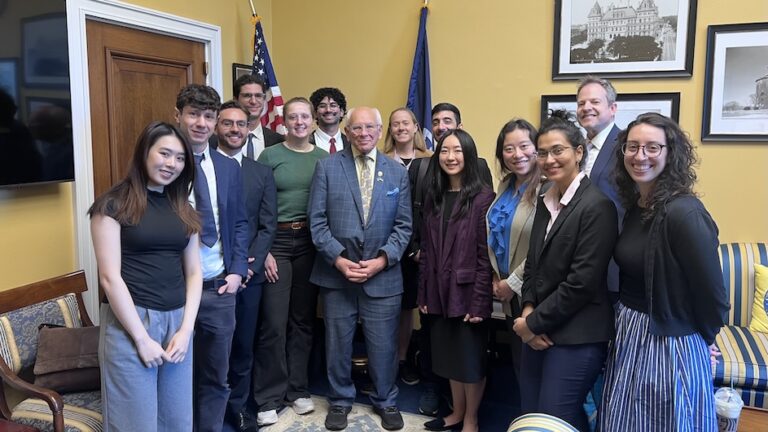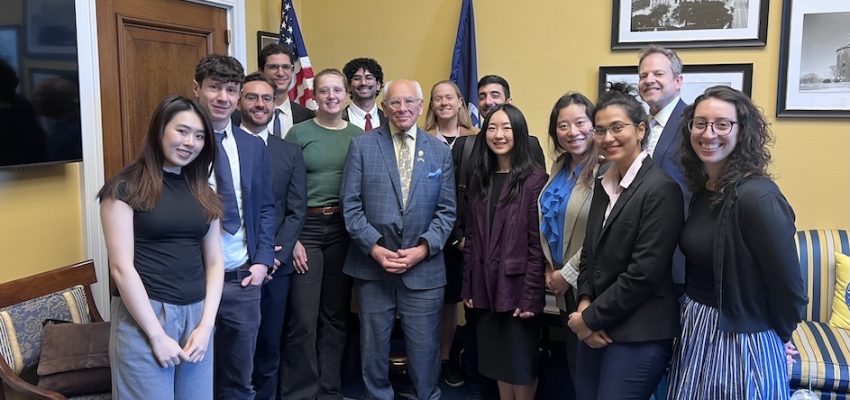

In the bustling corridors of power in Washington, D.C., where policy debates often overshadow the quiet work of science, a crucial dialogue unfolded recently. A delegation of early-career researchers from Columbia University embarked on a vital mission to Capitol Hill. Their purpose? To advocate passionately for sustained and increased federal research funding as Congress deliberates the allocation of its 2027 budget. While the news might seem niche, the implications of these discussions reverberate far beyond university labs and scientific journals, touching every facet of our collective future.
As an AI specialist and a fervent advocate for technological advancement, I’ve long understood that true innovation doesn’t happen in a vacuum. It is often the fruit of decades of foundational research, much of it supported by public investment. The researchers on Capitol Hill weren’t just asking for money; they were defending the very bedrock upon which our modern world is built – from the internet and GPS to life-saving vaccines and the AI algorithms now reshaping industries. Their visit underscores a timeless truth: government investment in science is not an expenditure, but an indispensable investment in humanity’s progress.
Federal Research Funding: A Cornerstone of Innovation
The journey of a scientific breakthrough often begins in university labs, fueled by the curiosity and dedication of brilliant minds. However, this journey frequently relies on robust government grants, particularly in its earliest, riskiest, and most fundamental stages. When Columbia University’s delegation traveled to Washington, D.C., their message was clear: maintaining a strong pipeline of federal research funding is paramount for the nation’s scientific vitality. Congress, at a critical juncture, is weighing priorities for the 2027 budget, and the stakes for the research community, and indeed the entire country, could not be higher.
Historically, significant leaps in human knowledge and technological capability have been directly tied to robust public investment in science. Think of the space race, spurred by ambitious government programs that not only put humans on the moon but also accelerated advancements in materials science, computing, and telecommunications. Or consider the internet itself, which originated from ARPANET, a project funded by the U.S. Department of Defense. These weren’t commercial ventures in their infancy; they were moonshot projects, too ambitious and uncertain for private capital alone. Basic research, by its very nature, explores the unknown without an immediate commercial application. It’s an arena where federal research funding truly shines, allowing scientists to pursue fundamental questions that, decades later, may unlock unforeseen industries and solutions.
Moreover, the advocacy by early-career researchers highlights a particularly vulnerable segment of the scientific community. These are the bright minds fresh out of their Ph.D.s, often with groundbreaking ideas but lacking the established track records that attract larger grants. Their initial projects, though potentially revolutionary, are frequently the first to face cuts during budget contractions. Without adequate support for these emerging talents, the scientific pipeline can dry up, leading to a ‘brain drain’ as promising scientists are forced to leave academia or even the country. Investing in early-career scientists is not just about fairness; it’s about nurturing the next generation of Nobel laureates and industry titans, ensuring a continuous flow of innovative thought and discovery for decades to come.
The Ripple Effect: How Public Investment Fuels Progress
The impact of federal research funding extends far beyond the confines of laboratories. It creates a powerful ripple effect that touches virtually every aspect of society, from economic growth to national security. When government agencies like the National Institutes of Health (NIH), the National Science Foundation (NSF), and the Department of Energy (DOE) allocate funds, they’re not just supporting individual projects; they’re investing in an ecosystem of innovation.
Consider the economic impact. A widely cited analysis by the American Association for the Advancement of Science (AAAS) and other organizations consistently demonstrates that every dollar invested in basic research can generate a return of several dollars in economic activity over time. This isn’t theoretical; it manifests in new industries, high-tech jobs, and increased global competitiveness. For example, advancements in semiconductors, born from early government-funded research, paved the way for the multi-trillion-dollar technology sector we know today. Similarly, breakthroughs in genomics, heavily supported by public grants, have spawned a booming biotech industry that continues to create jobs and attract private investment.
From my perspective as an AI specialist, the connection to federal research funding is particularly clear. Many of the foundational algorithms and theoretical frameworks that underpin modern artificial intelligence, machine learning, and quantum computing were initially explored through grants from agencies like DARPA (Defense Advanced Research Projects Agency) and NSF. These projects, often deemed too speculative for immediate commercialization, laid the groundwork for the AI revolution we are witnessing today. Without that initial government investment, the rapid acceleration of AI capabilities—from natural language processing to advanced robotics—might have been significantly delayed, or even unrealized in its current form.
Furthermore, robust government investment in science helps the United States maintain its global leadership in innovation. Nations like China, Germany, and South Korea are significantly increasing their R&D spending, understanding that scientific prowess translates directly into economic power and geopolitical influence. To remain competitive and continue attracting the world’s brightest minds, sustained and predictable national science grants are not merely desirable; they are essential. Cuts to research appropriations not only hinder progress but also risk ceding the lead in critical emerging technologies to other nations, potentially impacting everything from economic prosperity to national defense.
Beyond the Lab: The Societal Impact of Sustained Support
Ultimately, the arguments presented by researchers on Capitol Hill aren’t just about grants and budgets; they are about securing a healthier, safer, and more prosperous future for all citizens. The societal benefits derived from consistent federal research funding are profound and ubiquitous, often taken for granted until a crisis highlights their absence.
Take public health, for instance. Vaccines, revolutionary disease treatments, and advanced diagnostic tools are direct outcomes of decades of relentless medical research, much of it supported by the NIH. From conquering polio to managing HIV/AIDS, and more recently, the rapid development of COVID-19 vaccines, government investment has been the unwavering backbone of progress. Without this steady stream of public funding, our ability to respond to future pandemics or tackle persistent health challenges like cancer and Alzheimer’s would be severely compromised.
Similarly, environmental challenges demand sustained scientific inquiry. Climate change, renewable energy development, and sustainable resource management are complex problems that require long-term, interdisciplinary research. Agencies like the EPA and DOE fund crucial studies that inform policy, develop clean technologies, and protect our natural resources. The insights gained from these studies are vital for mitigating the impacts of climate change and building a resilient future for generations to come. The delegates from Columbia, representing a diverse range of disciplines, undoubtedly articulated how their specific fields – be it climate modeling, materials science, or public health – are directly contributing to solutions for these global grand challenges.
The act of advocacy itself by these early-career researchers is a testament to their dedication. Their journey to Washington D.C. involved more than just presenting statistics; it often included sharing personal stories, illustrating the tangible impact of their work, and humanizing the complex scientific process for policymakers. They explained how a specific grant for a novel cancer therapy could save lives, or how funding for AI ethics research could ensure future technologies serve humanity responsibly. This direct engagement is critical in ensuring that Congress understands that investments in science are not abstract line items but direct contributions to the well-being and security of the nation.
The decision Congress makes regarding the 2027 budget will determine the trajectory of scientific advancement in the U.S. for years. Will we continue to lead, innovate, and solve the pressing problems of our time? Or will we cede ground, risking our economic prosperity, health security, and global standing? The researchers’ advocacy serves as a powerful reminder that investing in science is investing in ourselves.
The discussions unfolding on Capitol Hill regarding the 2027 budget represent more than just financial allocations; they embody a fundamental choice about our collective future. The early-career researchers from Columbia, by stepping onto the national stage, amplified a crucial message: sustained and robust federal research funding is not a luxury, but an absolute necessity. It is the lifeblood of innovation, the engine of economic growth, and the unwavering beacon guiding us toward solutions for humanity’s most complex challenges.
As we navigate an increasingly complex world, marked by rapid technological change, climate crises, and global health threats, the need for scientific insight and groundbreaking discoveries has never been more acute. Cutting corners on public investment in science now would be to mortgage our future, sacrificing potential cures, transformative technologies, and critical knowledge for short-term fiscal expediency. It’s imperative that policymakers recognize the long-term dividends that spring from investing in the scientific community, ensuring that the next generation of innovators has the resources they need to continue building the world of tomorrow, today.