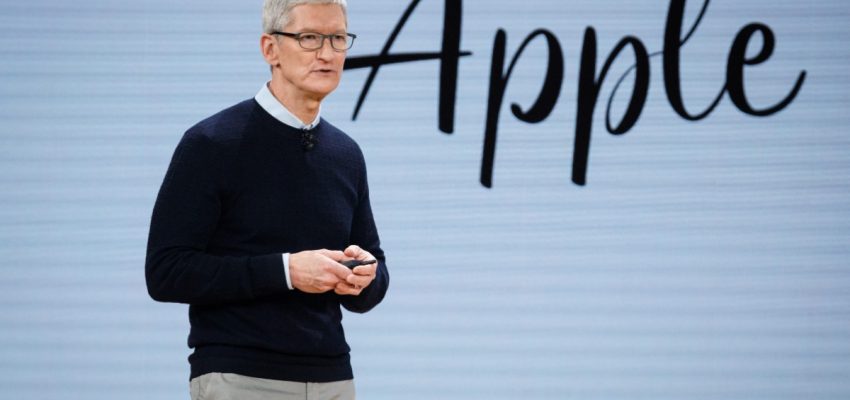

In the annals of corporate succession, few transitions have been watched with as much scrutiny and speculation as when Tim Cook took the helm of Apple in August 2011. Stepping into the colossal shadow of Steve Jobs, a visionary who had not only co-founded the company but also resurrected it from near bankruptcy and orchestrated its most revolutionary products, was an unenviable task. The world wondered: could anyone possibly fill those shoes? Would Apple lose its creative spark without its iconic showman? Yet, what many didn’t realize was that Jobs himself had offered his successor perhaps the most liberating and defining counsel, advice that would quietly, yet profoundly, rewire Apple’s future and forge the distinctive path of **Tim Cook’s leadership**.
The popular narrative often suggests Cook simply maintained Jobs’ vision, a steady hand guiding the ship Jobs had built. But this perspective overlooks a crucial, almost paradoxical, piece of wisdom imparted by the master to his apprentice. It was a directive that freed Cook not to imitate, but to innovate on his own terms; to stop being ‘Jobsian’ and instead, be authentically Tim Cook. This wasn’t just a passing comment; it was a foundational principle that empowered a transformation, allowing Apple to not only survive the loss of its charismatic leader but to thrive and reach unprecedented heights under a new kind of stewardship.
Tim Cook’s Leadership: The Paradox of Succession
To truly appreciate the weight of Steve Jobs’ advice, one must first understand the immense pressure on Tim Cook. Jobs wasn’t just a CEO; he was the embodiment of Apple. His return to the company in 1997, after a twelve-year exile, marked one of the greatest corporate comebacks in history. He revitalized Apple with a series of game-changing products: the iMac, iPod, iTunes, iPhone, and iPad, each accompanied by his legendary keynote presentations, often delivered with a theatrical flair that captivated audiences worldwide. Jobs’ leadership was characterized by an almost tyrannical pursuit of perfection, an uncompromising aesthetic vision, and an intuitive understanding of what consumers didn’t even know they wanted yet. He built an ecosystem, a culture, and a mythology around Apple that was deeply intertwined with his own personality. For many, Apple *was* Steve Jobs.
When Cook, a quietly brilliant operations executive, took over, the expectations were immense, often bordering on unfair. The immediate challenge wasn’t just about continuing innovation; it was about defining himself in the context of an irreplaceable legend. Many speculated he would merely be a caretaker, a temporary steward until a new visionary emerged. Critics and investors alike wondered if Apple could maintain its ‘insanely great’ product cadence without Jobs’ direct influence. The pressure to conform to the established Jobsian mold, to emulate his communication style, his product instincts, or his public persona, must have been overwhelming. Yet, it was precisely at this critical juncture that Jobs, with profound foresight, gave Cook the gift of permission: “Don’t ask what I would do,” he reportedly told Cook. “Just do what’s right.”
This simple sentence was a masterclass in leadership transition. It was an acknowledgment that true legacy isn’t about replication, but about evolution. It allowed Cook to shed the burden of imitation and instead, draw upon his own strengths, values, and strategic vision. It wasn’t an instruction to abandon Apple’s core principles, but to interpret and advance them through his own lens. This pivotal moment set the stage for a new era of **Tim Cook’s leadership**.
Cook’s background, in stark contrast to Jobs’ design and marketing genius, was rooted in operational excellence and supply chain mastery. He joined Apple in 1998 as Senior Vice President of Worldwide Operations, a role where he meticulously streamlined Apple’s manufacturing and distribution, turning a chaotic system into a lean, efficient machine. This expertise, once considered less glamorous than product design, became the bedrock of Apple’s global expansion under Cook. He ensured that Apple could scale its innovations, manufacturing millions of intricate devices with unprecedented precision and cost-effectiveness. This operational prowess, combined with a deep understanding of global markets, became a defining characteristic of his tenure.
Beyond Innovation: Cultivating a New Apple Ecosystem
Freed from the imperative to *be* Steve Jobs, Cook began to shape Apple in his own image, without sacrificing the company’s commitment to innovation. While the Jobs era was about groundbreaking devices that redefined categories, Cook’s **Tim Cook’s leadership** ushered in an era of ecosystem expansion, service diversification, and an amplified focus on corporate social responsibility. He understood that while hardware was Apple’s heart, services and wearables would be its future arteries.
Under Cook, Apple Watch and AirPods emerged as category-defining products, extending the Apple ecosystem beyond traditional computing devices and into personal health and audio. The growth of services – Apple Music, Apple TV+, Apple Arcade, iCloud, and the App Store – transformed Apple into a formidable player in the subscription economy, diversifying its revenue streams beyond cyclical hardware sales. This strategic shift has been instrumental in securing Apple’s financial stability and growth, making it the first company to reach multi-trillion-dollar valuations.
Beyond products and services, Cook brought a new set of values to the forefront of Apple’s corporate identity. Privacy, which Jobs had touched upon, became a core pillar of Cook’s philosophy, often articulated as a fundamental human right. Apple under Cook has consistently championed user data protection, even at the cost of clashes with government agencies and other tech giants. Environmental sustainability, too, rose to prominence, with Apple committing to 100% renewable energy for its operations globally and ambitious goals for carbon neutrality across its entire supply chain and product lifecycle. Accessibility features for users with disabilities also saw significant advancements, reflecting a more inclusive approach to technology.
These initiatives, while perhaps less flashy than a new iPhone launch, collectively forged a more resilient, ethical, and broadly appealing Apple. Cook understood that in an increasingly complex and interconnected world, corporate values would become as important as product features in earning customer loyalty. His calm, analytical demeanor, in contrast to Jobs’ mercurial intensity, allowed Apple to navigate tricky geopolitical waters, intense antitrust scrutiny, and evolving consumer expectations with a steady hand. He built strong relationships with suppliers, managed global logistics with an unparalleled degree of efficiency, and strategically expanded Apple’s presence in crucial emerging markets like India.
The Enduring Legacy of Strategic Evolution
Many of the innovations under **Tim Cook’s leadership** have been iterative and complementary, building upon the foundations laid by Jobs rather than always seeking radical reinvention. This has sometimes led to criticism that Apple has lost some of its ‘magic’ or its capacity for truly revolutionary products. However, such a view often fails to recognize the different demands of leading a mature, global behemoth compared to a nimble, insurgent startup. Jobs’ genius was in identifying paradigm shifts; Cook’s genius lies in executing on an immense scale, refining those paradigms, and preparing Apple for the next century of technological evolution.
Consider the development of Apple Silicon (M1, M2 chips), a monumental undertaking that brought core processor design in-house, offering unprecedented performance and power efficiency across its Mac lineup. This was a strategic gamble that required immense investment and long-term vision, a testament to Cook’s willingness to make bold, foundational changes that might not yield immediate headlines but would secure Apple’s future competitiveness. More recently, the unveiling of the Apple Vision Pro signals a new frontier in spatial computing, demonstrating that the spirit of ambitious innovation continues to thrive under his guidance, albeit with a different approach to product introduction and market cultivation.
Cook’s tenure also saw a significant shift in how Apple interacts with the world. Under Jobs, Apple often presented itself as an outsider, a rebellious challenger to the status quo. Under Cook, Apple has embraced its role as a global leader, engaging more openly (though still cautiously) on issues ranging from human rights to climate change. This evolution demonstrates a maturation, a recognition that with immense power comes immense responsibility, a principle deeply embedded in **Tim Cook’s leadership**.
In essence, Steve Jobs’ advice was a profound act of trust and mentorship. By telling Cook to ‘do what’s right’ rather than ‘what I would do,’ he not only liberated his successor but also ensured Apple’s long-term vitality. He recognized that for Apple to truly endure and flourish, it needed to adapt to a world that was constantly changing, and that adaptation required a leader who could bring his own authentic strengths to the table, rather than mimic a ghost.
Steve Jobs, known for his visionary insight, perhaps gave **Tim Cook’s leadership** the most crucial advice he could possibly offer: the permission to be himself. This singular piece of counsel not only freed Cook from the impossible burden of imitation but also quietly, yet fundamentally, reshaped Apple’s trajectory. Cook’s strategic brilliance in operations, his unwavering commitment to ethical values, and his foresight in expanding Apple’s ecosystem have not merely maintained the company’s legacy, but have propelled it to unprecedented levels of success and influence.
Today, Apple stands as a testament to the power of authentic leadership and the wisdom of a mentor who understood that true greatness isn’t replicated, but evolved. Tim Cook has carved out his own indelible mark, transforming Apple into a resilient, diversified, and value-driven global powerhouse, proving that the most profound advice often lies in the simplest words of empowerment, allowing a successor to forge their own destiny and, in doing so, secure an even brighter future for the organization they lead.