
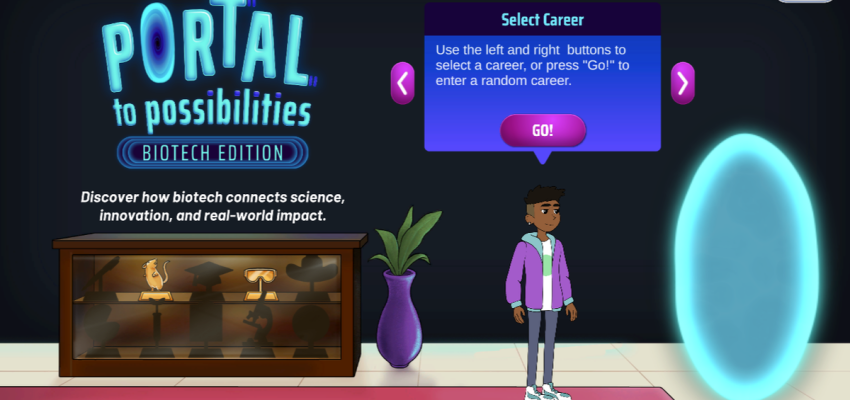

The future of innovation hinges on inspiring the next generation of scientists, engineers, and researchers. Yet, engaging young minds in complex, specialized fields like biotechnology can be a significant challenge. Traditional classroom settings, while foundational, sometimes struggle to convey the dynamic, hands-on excitement of real-world scientific work. This is where cutting-edge educational tools step in, transforming passive learning into active exploration.
Today, we’re witnessing a pivotal shift in how we introduce students to potential career paths, moving beyond textbooks and into interactive, digital realms. A groundbreaking initiative from New Mexico State University (NMSU) and UConn Extension, in collaboration with 4-H, exemplifies this perfectly. They’ve developed a free, immersive digital experience designed to demystify biotechnology and open doors to a vast array of scientific professions. This isn’t just another educational app; it’s a meticulously crafted interactive platform aimed at fostering genuine curiosity and providing tangible insights into the fascinating world of biosciences. As André Lacerda, an AI specialist and tech enthusiast, I believe this convergence of education and interactive technology is precisely what’s needed to ignite the spark of scientific discovery in our youth.
### Biotech Game: A Gateway to 10 Science Careers
At the heart of this innovative educational outreach is the `biotech game` itself – a meticulously designed interactive learning platform that allows students to dive headfirst into the intricacies of biotechnology. This isn’t about memorizing definitions; it’s about doing. Through a series of engaging, hands-on tasks, young participants are guided through simulations that mirror the work of actual scientists across 10 distinct career paths within the biosciences. Imagine a high school student, perhaps unsure of their future, suddenly tasked with virtually designing a new, disease-resistant crop strain, or analyzing DNA sequences to identify a genetic marker for a rare condition. These are the kinds of immersive experiences this `biotech game` delivers.
What makes this approach so powerful? Firstly, it leverages the inherent human desire for play and exploration. Gamification, when applied thoughtfully, transforms learning from a chore into an adventure. Students aren’t just consumers of information; they become active participants, decision-makers, and problem-solvers. Each task within the `biotech game` is a puzzle to be solved, a challenge to overcome, providing immediate feedback and a sense of accomplishment that traditional learning often struggles to replicate.
Secondly, the collaboration with 4-H is strategic. 4-H, a youth development organization with a rich history dating back to 1902, has long been a champion of experiential learning, emphasizing hands-on projects in agriculture, civic engagement, health, and science. Its ‘learn by doing’ philosophy perfectly aligns with the interactive nature of this `biotech game`. By integrating this digital tool into the established 4-H framework, NMSU and UConn Extension are reaching a wide, diverse audience, particularly in rural and underserved communities where access to advanced scientific equipment or career guidance might be limited. The fact that this resource is *free* is a critical element, ensuring equitable access for all interested students, regardless of socioeconomic background.
Within the game, students might encounter simulations that introduce them to roles such as a **Geneticist** by virtually manipulating DNA, or a **Pharmacologist** by testing the efficacy of a new drug compound on simulated cells. They could explore the work of a **Bioinformatician** by analyzing large datasets of biological information to identify patterns, or that of an **Agricultural Scientist** by optimizing crop growth conditions in a virtual field. Other potential careers could include a **Forensic Scientist** examining biological evidence, a **Microbiologist** culturing and identifying microbes, a **Biomanufacturing Technician** overseeing production processes, a **Food Scientist** developing new food products, an **Environmental Biotechnologist** working on bioremediation, or even a **Clinical Lab Scientist** performing diagnostic tests. Each module within the `biotech game` is crafted to not only explain the role but also to provide a taste of the challenges and rewards inherent in each profession, fostering a deeper, more personal connection to the subject matter than a mere textbook description ever could.
### The Power of Gamification in STEM Education
The use of gamified learning platforms, such as this innovative `biotech game`, represents a significant leap forward in STEM education. Research consistently shows that engaging students through interactive play drastically improves retention rates, enhances problem-solving skills, and cultivates a growth mindset. Unlike passive learning, games demand active participation, critical thinking, and often, iterative attempts at solving problems, fostering resilience and adaptability – qualities essential for any scientific endeavor.
Consider the broader landscape of educational technology. We’ve seen a surge in virtual reality (VR) and augmented reality (AR) applications in classrooms, providing immersive field trips to distant ecosystems or detailed explorations of human anatomy. While this `biotech game` may not delve into full VR, its foundational principles of interactive simulation and guided discovery leverage the same psychological benefits. Students learn by experimenting in a safe, consequence-free virtual environment. They can make mistakes, understand the implications, and try again, solidifying their understanding without the real-world costs or time constraints of a physical laboratory.
Moreover, gamification taps into intrinsic motivation. The desire to progress, to unlock new levels, to earn points or badges, or simply to see the outcome of one’s decisions, can be far more compelling than external motivators like grades alone. This intrinsic drive is particularly vital in STEM fields, which can sometimes appear daunting from an outside perspective. By making complex subjects accessible and enjoyable, a well-designed `biotech game` can dismantle barriers and make scientific exploration an inviting prospect for a broader range of students.
The development of such a robust digital learning tool also showcases the incredible potential of inter-institutional collaboration. NMSU and UConn Extension, both leaders in agricultural and youth education, bring complementary strengths to the table. NMSU’s expertise in agricultural sciences and research, combined with UConn Extension’s long-standing commitment to 4-H and community engagement, creates a powerful synergy. This partnership ensures the content is not only scientifically accurate and relevant but also pedagogically sound and accessible to its intended audience. Their joint effort underscores a commitment to innovation in educational delivery, using technology to bridge gaps and create opportunities that might otherwise be unavailable.
### Paving Pathways: Exploring Science Careers Digitally
The impact of initiatives like this `biotech game` extends far beyond just teaching scientific concepts; it’s fundamentally about career guidance and future workforce development. Many students, especially in middle and high school, have a limited understanding of the vast array of careers available within science. Their perception might be confined to a few well-known roles, often overlooking the dynamic, interdisciplinary nature of modern scientific fields. By offering a virtual “day in the life” experience across 10 diverse biotech professions, the game helps to demystify these roles and present them as tangible, exciting possibilities.
The biotech industry itself is a rapidly expanding sector, with immense potential for growth and innovation. From personalized medicine and gene editing to sustainable agriculture and biofuels, biotechnology is at the forefront of addressing some of humanity’s most pressing challenges. Yet, the demand for skilled professionals in these areas often outpaces supply. By introducing students to these career paths early and in an engaging manner, the `biotech game` serves as a vital pipeline, encouraging more young people to consider higher education and professional training in STEM. This proactive approach is crucial for building a robust scientific workforce capable of driving future advancements.
Furthermore, an interactive platform such as this contributes to fostering critical skills that are transferrable across many disciplines. Students engaging with the game are implicitly developing problem-solving abilities, analytical thinking, data interpretation, and even a nascent understanding of experimental design. These are not just biotech skills; they are foundational literacies for success in the 21st century. The game’s emphasis on ‘hands-on tasks’ – even if virtual – means students are actively engaging with scientific methodology, rather than passively receiving information. This active engagement is paramount for developing true scientific literacy and a deeper appreciation for the rigor and creativity inherent in scientific inquiry.
The accessibility of this free resource is also a significant factor in promoting diversity and inclusion in STEM. Historically, access to high-quality science education and career mentorship has been unevenly distributed. Digital tools that are freely available can help level the playing field, ensuring that students from all backgrounds have the opportunity to explore, engage, and envision themselves in scientific careers. This inclusive approach is not only fair but also strategically important; a diverse scientific community brings a wider range of perspectives, experiences, and ideas, leading to more innovative and equitable solutions for global challenges.
In essence, this collaborative effort between NMSU, UConn Extension, and 4-H is more than just a game; it’s a strategic investment in the intellectual capital of the next generation. It acknowledges that education must evolve to meet the demands of a rapidly changing world, embracing technology not as a mere supplement but as a transformative vehicle for learning and discovery.
The advent of the NMSU and UConn Extension 4-H `biotech game` marks a significant milestone in educational innovation. By leveraging the power of gamification and digital interaction, it effectively bridges the gap between abstract scientific concepts and tangible career opportunities. This initiative provides an invaluable, accessible resource for students, allowing them to not only understand biotechnology but to experience it firsthand, fostering curiosity and empowering them to envision a future in science.
As we look ahead, the success of such initiatives will undoubtedly inspire further integration of advanced technologies, potentially even AI-driven adaptive learning systems, into educational content. The goal remains clear: to equip the next generation with the knowledge, skills, and passion required to tackle the complex challenges of our world. The `biotech game` is not just exploring careers; it’s shaping them, one engaging task at a time, proving that the future of science education is indeed interactive, immersive, and incredibly inspiring.










