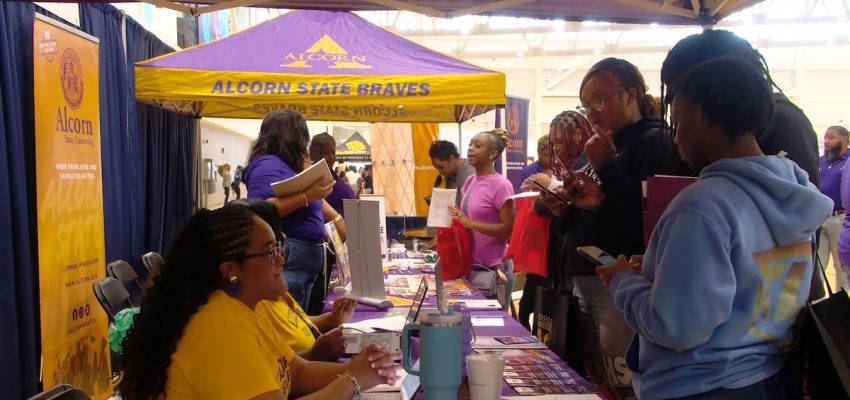

The world of work is undergoing a seismic shift, driven by the relentless march of artificial intelligence and advanced technology. What seemed like science fiction just a decade ago is now everyday reality, transforming industries, creating entirely new job categories, and fundamentally redefining the skills required to thrive. In this rapidly evolving landscape, guiding our youth toward meaningful and sustainable careers is more critical than ever. Events like the recent career fair for 5,000 Memphis-Shelby County Schools (MSCS) students, where they explored colleges, universities, trade schools, and other work opportunities, exemplify a crucial step in this preparation. They offer a vital glimpse into the myriad future career paths available, but the true challenge lies in understanding how these traditional avenues intersect with the digital frontier.
As an AI specialist, writer, and tech enthusiast, I believe our collective responsibility is to not only inform but also inspire the next generation to embrace this transformation. It’s about equipping them with the foresight and flexibility to navigate an employment landscape that will be profoundly different from our own. The key is to shift focus from merely choosing a job to cultivating a dynamic skill set and an adaptable mindset that will serve them throughout their professional lives. This article delves into how students can chart their course through this exciting, yet complex, new world, highlighting the immense opportunities AI presents for those ready to innovate and adapt.
Future Career Paths: Bridging Education and Innovation
For decades, the standard advice for students was often a linear progression: high school, college, and then a career. While higher education remains a cornerstone for many future career paths, the advent of AI has diversified and accelerated this journey. Events like the MSCS career fair, which exposed thousands of students to a broad spectrum of post-secondary options, are invaluable because they initiate this crucial conversation early. Students are no longer confined to a few well-trodden routes; the opportunities span from traditional university degrees in emerging fields like Data Science and Machine Learning to specialized vocational training in AI-driven robotics or cybersecurity, and even direct entry into tech apprenticeships and startup cultures.
The imperative now is to view education not just as a means to acquire knowledge, but as a continuous process of skill development and adaptation. Consider the shift in manufacturing: once dominated by repetitive manual tasks, it now integrates AI-powered robotics, predictive maintenance, and data analytics. This transformation doesn’t eliminate jobs entirely but rather changes their nature, demanding a workforce capable of managing, programming, and interacting with intelligent systems. Similarly, sectors like healthcare, finance, and entertainment are being reshaped, creating new needs for professionals who can leverage AI for diagnostics, algorithmic trading, or personalized content creation.
The beauty of this evolving landscape is the increased emphasis on practical application and interdisciplinary understanding. A student exploring a trade school might find specialized programs in automation and control systems, directly applicable to operating the next generation of smart factories. Those considering universities might pursue degrees that combine computer science with ethics, psychology, or even creative arts, recognizing that the most impactful AI solutions require a deep understanding of human interaction and societal implications. The critical insight is that every educational pathway, from a four-year degree to a vocational certificate, can be a gateway to exciting future career paths when viewed through the lens of technological advancement and a commitment to lifelong learning.
The AI Revolution: Redefining Work and Opportunity
Artificial intelligence isn’t just a tool; it’s a fundamental force reshaping the very fabric of our economy and society. The AI revolution is creating an unprecedented demand for new skills and completely novel job roles that didn’t exist a decade ago. Take, for instance, the role of a ‘Prompt Engineer.’ This position focuses on crafting the most effective queries and instructions for large language models (LLMs) to achieve desired outputs – a skill that blends technical understanding with linguistic artistry. Similarly, ‘AI Ethicists’ are emerging as crucial guardians, ensuring that AI systems are developed and deployed responsibly, without perpetuating biases or causing harm. These roles highlight a broader trend: AI isn’t just about coding; it’s about understanding its impact, its limitations, and its potential.
Beyond these entirely new categories, AI is profoundly transforming existing professions. Doctors will increasingly rely on AI for diagnostic assistance and personalized treatment plans, creating roles for ‘Medical AI Specialists.’ Financial analysts will leverage AI for predictive modeling and fraud detection, leading to demand for ‘AI-Augmented Financial Advisors.’ Even creative fields are not immune; graphic designers and artists are now exploring ‘AI Art Directors’ roles, using generative AI tools to accelerate their creative process and explore new aesthetics. The World Economic Forum, among other organizations, consistently highlights the exponential growth in demand for skills related to artificial intelligence and machine learning, projecting millions of new jobs in these domains over the next decade.
This redefinition of work means that students need to look beyond traditional job titles and focus on the underlying competencies that AI demands. It’s about developing the capacity to collaborate with intelligent systems, to understand data, and to apply computational thinking to solve real-world problems. The future career paths are not just about working *with* AI, but about working *smarter* because of AI, freeing human potential for more complex, creative, and strategic tasks. This paradigm shift underscores the importance of a diverse educational foundation, as mentioned at the MSCS career fair, providing multiple entry points into this dynamic and rewarding ecosystem.
Cultivating the Skills for a New Era
To truly thrive in an AI-driven world, students must cultivate a blend of technical acumen and distinctly human capabilities. The focus should be on building a robust skill set that is both specialized and adaptable. On the technical front, foundational skills in data literacy, computational thinking, and perhaps introductory programming languages like Python or R are becoming increasingly valuable, regardless of the ultimate career choice. Understanding the basics of machine learning, cloud computing, and even cybersecurity will provide a significant advantage. These aren’t just for ‘techies’ anymore; they are critical tools for almost any modern profession.
However, the skills that AI cannot easily replicate are perhaps the most vital. Critical thinking, complex problem-solving, creativity, emotional intelligence, and effective communication are paramount. As AI handles more routine and analytical tasks, human professionals will be elevated to roles that demand higher-order cognitive abilities, ethical judgment, and nuanced interpersonal interaction. Adaptability and resilience are also non-negotiable; the pace of technological change means that continuous learning isn’t just a recommendation but a necessity. Students must foster a mindset of curiosity and a willingness to upskill and reskill throughout their entire careers.
Moreover, an often-overlooked skill for future career paths is interdisciplinary thinking. The most profound innovations often occur at the intersection of different fields. Combining AI knowledge with, say, biology could lead to breakthroughs in bioinformatics or drug discovery. Marrying AI with design principles could revolutionize user interfaces and experiences. Encouraging students to explore subjects beyond their primary focus, to draw connections between seemingly disparate fields, will unlock a new level of innovation and open up previously unimagined professional avenues. This holistic approach to skill development is what will truly prepare them to lead and innovate in the AI age.
Navigating the Educational Landscape: Diverse Avenues to Success
The MSCS career fair rightly highlighted a diverse array of educational and vocational opportunities: colleges, universities, trade schools, and other work programs. In the AI era, understanding the unique strengths of each pathway is key to navigating future career paths successfully. For those drawn to deep theoretical understanding, research, and high-level algorithm development, traditional universities offering degrees in Computer Science, Data Science, Artificial Intelligence, or specialized engineering fields remain vital. These institutions often provide access to cutting-edge research labs, expert faculty, and a comprehensive theoretical foundation that prepares students for roles as AI researchers, machine learning engineers, and data architects.
However, the narrative that a four-year degree is the *only* path to a high-tech career is increasingly outdated. Vocational and trade schools are becoming increasingly crucial, offering practical, hands-on training for roles that are immediately in demand. These might include programs for robotics technicians, AI system implementers, data annotation specialists, or cloud infrastructure support. These paths often provide a faster route to employment, equipping students with highly specific, applied skills that are essential for deploying and maintaining AI systems in various industries. The value of these programs lies in their direct relevance to industry needs and their focus on real-world problem-solving, providing excellent future career paths for individuals who prefer a more applied learning environment.
Beyond traditional institutions, the digital age has also given rise to an abundance of online learning platforms and intensive bootcamps. Platforms like Coursera, edX, and Udacity offer specialized courses and certifications in AI, machine learning, data science, and web development, often developed in partnership with leading universities and tech companies. Tech bootcamps provide accelerated, immersive training designed to quickly upskill individuals for specific industry roles. These flexible, accessible options are ideal for lifelong learners, career changers, or those seeking to complement their formal education with targeted skills. Furthermore, apprenticeships and internships offer invaluable on-the-job experience, allowing students to learn directly from industry professionals and build crucial networks even before formal employment. The key is to explore all these avenues, selecting the one that best aligns with individual learning styles, career aspirations, and financial realities, ensuring a robust foundation for any chosen future career paths.
As we stand at the precipice of an unprecedented technological transformation, the imperative to prepare the next generation for future career paths in an AI-driven world could not be clearer. Events like the MSCS career fair are more than just opportunities to explore options; they are crucial launchpads for critical conversations about adaptability, lifelong learning, and the profound impact of artificial intelligence on every sector of human endeavor. The journey ahead for these students will be one of continuous discovery and evolution, demanding not just technical prowess but also a deep understanding of human values and ethical considerations.
The landscape of work is changing, but so too are the tools and opportunities available for growth. By fostering a proactive approach to education, encouraging a blend of technical and human-centric skills, and embracing the diverse learning pathways now available, we empower students to not just cope with the future, but to actively shape it. The future workforce will be a testament to human ingenuity augmented by intelligent machines, and it is our privilege and responsibility as educators, industry leaders, and enthusiasts like myself, to guide them toward fulfilling and impactful future career paths.