

The future is being built today, brick by innovative brick. From the intricate algorithms that power artificial intelligence to the groundbreaking discoveries in medicine and space exploration, the driving force behind this relentless progress is a deep understanding and application of Science, Technology, Engineering, and Mathematics – collectively known as STEM. But how do we ensure the next generation is not just prepared but passionate about contributing to this future? The answer often lies in early, engaging, and hands-on experiences.
Recently, North Texas witnessed a remarkable example of such engagement, as 500 bright young minds converged at the iconic Perot Museum, transforming its halls into a vibrant laboratory of curiosity and discovery. This wasn’t just another field trip; it was the United Way STEM Fest, a powerful initiative designed to immerse students in the wonders of STEM learning and illuminate the diverse career paths it unlocks. As André Lacerda, an AI specialist and tech enthusiast, I believe that fostering this early spark is paramount to nurturing the innovators and problem-solvers our world desperately needs.
STEM Learning: Cultivating the Minds of Tomorrow
In an increasingly complex and technologically driven world, the importance of STEM learning cannot be overstated. It’s more than just a collection of academic subjects; it’s a foundational framework for critical thinking, problem-solving, and innovation. Studies consistently show that economies with a strong STEM workforce are more resilient, adaptable, and competitive. Yet, despite this recognized importance, many students, particularly from underrepresented groups, face barriers to accessing quality STEM education or simply don’t see themselves pursuing careers in these fields. This gap highlights the crucial role of informal education environments, like museums and community-led festivals, in demystifying STEM and making it accessible and exciting for everyone.
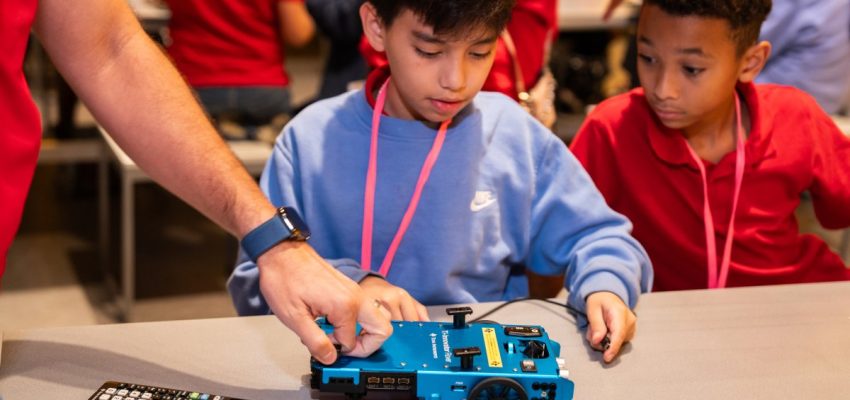
The United Way STEM Fest at the Perot Museum served as a perfect illustration of how to bridge this gap. By bringing together 500 students from various North Texas communities, the event aimed to break down stereotypes and expose them to the practical, exciting applications of what they learn in classrooms. Imagine a child, perhaps previously intimidated by mathematics, suddenly seeing how it underpins the construction of a towering skyscraper, or a student who thought science was only about textbooks being captivated by a live chemistry demonstration that explodes with color and reaction. These are the moments that ignite a lifelong passion. The event focused on interactive stations and exhibits that encouraged active participation, moving beyond passive observation. Students weren’t just told about science; they *did* science. They engineered simple machines, coded basic programs, explored the intricacies of human anatomy, and pondered the vastness of the cosmos. This hands-on methodology is proven to significantly enhance comprehension and retention, transforming abstract concepts into tangible experiences. Furthermore, it allows students to develop essential soft skills such as collaboration, communication, and perseverance – skills that are just as vital as technical knowledge in any STEM career.
The Perot Museum: A Catalyst for Scientific Discovery
The Perot Museum of Nature and Science stands as a beacon of scientific exploration in North Texas, renowned for its commitment to inspiring young minds. Its architectural marvel alone, with escalators traversing outside the building, sets the tone for an extraordinary experience, but it’s the meticulously curated exhibits within that truly make it a catalyst for discovery. Designed to engage visitors of all ages, the museum boasts 11 permanent exhibit halls covering diverse topics from dinosaurs and human biology to energy, engineering, and space. Each hall is crafted to be highly interactive, encouraging exploration and critical thinking rather than rote memorization. For instance, the “T. Rex Encounter” exhibit doesn’t just display fossils; it brings the prehistoric world to life through immersive simulations. The “Sports Hall” explains physics through interactive games, and the “Texas Instruments Engineering and Innovation Hall” provides opportunities to design, build, and test structures, directly applying engineering principles.
This makes the Perot Museum an ideal venue for an event centered around immersive STEM learning. Rather than creating temporary setups from scratch, the festival leveraged the museum’s existing, world-class infrastructure and its team of dedicated educators and scientists. This synergy meant students had access to sophisticated tools, detailed explanations, and a broad spectrum of scientific disciplines all under one roof. The museum’s philosophy aligns perfectly with the goals of promoting STEM: to make complex ideas accessible, to spark wonder, and to connect scientific concepts to real-world applications. By hosting events like the United Way STEM Fest, the Perot Museum extends its reach beyond its regular visitors, actively fostering a community of young scientists and engineers, particularly those who might not typically have such enriching opportunities. It transforms from a place of mere observation into a dynamic center for hands-on experimentation and career exploration, reinforcing the idea that science is not just for an elite few, but for anyone with curiosity and a desire to understand the world around them.
United Way’s Vision: Bridging Gaps and Fostering Talent
The success of the STEM Fest at the Perot Museum owes much to the visionary partnership with United Way. United Way is a global non-profit organization dedicated to improving lives by mobilizing the caring power of communities around the world. Their focus areas often include education, income stability, and health – all interconnected challenges that benefit significantly from a skilled and engaged workforce. In the context of education, United Way recognizes that equitable access to high-quality learning experiences is not just an ideal, but a necessity for community development and individual prosperity. Their involvement in initiatives promoting STEM learning is a direct reflection of this commitment.
For many students in North Texas, particularly those from underserved communities, opportunities for high-quality, extracurricular STEM engagement can be scarce. Financial constraints, lack of transportation, or simply a lack of awareness can create significant barriers. United Way’s role in the STEM Fest was pivotal in dismantling these barriers. By coordinating logistics, securing funding, and mobilizing volunteers, they ensured that 500 students, who might otherwise miss out, had the chance to participate. This isn’t just about providing an enjoyable day out; it’s about strategic investment in human capital. United Way understands that fostering an interest in STEM from a young age is a critical step towards creating a diverse pipeline of future scientists, engineers, technologists, and mathematicians. This diversity is not merely a matter of social justice; it’s an economic imperative. Diverse teams bring varied perspectives, which leads to more innovative solutions and better outcomes in all fields, especially in rapidly evolving areas like technology and scientific research.
The partnership exemplifies a powerful model for community impact. It brings together the educational resources of a leading museum, the logistical and financial muscle of a major non-profit, and the enthusiasm of educators and students. Events like the United Way STEM Fest demonstrate how collective action can create significant positive change, opening doors to possibilities that students might never have considered. By connecting these young minds with real-world applications of STEM, showcasing potential career paths, and providing direct interaction with professionals and advanced concepts, United Way and the Perot Museum are actively shaping the future workforce and ensuring that the North Texas region remains at the forefront of innovation. This holistic approach ensures that the spark ignited during the festival can translate into sustained interest and, ultimately, successful careers that benefit both the individuals and the wider community. It’s an investment in a smarter, more capable, and more equitable future for everyone.
The United Way STEM Fest at the Perot Museum was far more than just a single event; it was a potent affirmation of the transformative power of engaging and accessible STEM learning. By bringing together 500 enthusiastic students, world-class exhibits, and dedicated community partners, North Texas has set a shining example of how to inspire the next generation of innovators, problem-solvers, and critical thinkers. Such initiatives are vital for cultivating a workforce equipped to tackle the complex challenges of tomorrow, from climate change to the ethical development of artificial intelligence, and to drive economic growth and societal advancement. The spark of curiosity ignited in these young minds is an investment in our collective future, demonstrating that education, when made exciting and relevant, can indeed change lives and shape destinies.
As we look ahead, the lessons from this successful collaboration must serve as a blueprint for continued efforts. It is incumbent upon educators, community leaders, and policymakers to champion and expand opportunities for experiential STEM learning, ensuring that every child, regardless of their background, has the chance to explore, discover, and develop their potential in these critical fields. The future belongs to those who can innovate, and by empowering our youth with the tools and inspiration to do so, we are not just preparing them for jobs; we are preparing them to build a better world.










