

In an era defined by accelerating technological advancement and an increasingly dynamic global landscape, the path from student to successful professional has never been more intricate. The traditional blueprints for success are continually being redrawn, demanding not just knowledge, but adaptability, critical thinking, and a robust understanding of diverse pathways. As an AI specialist, writer, and tech enthusiast, I’m consistently fascinated by initiatives that proactively prepare the next generation for this complex future. It’s not just about what jobs exist today, but about equipping individuals with the foresight and skills to thrive in roles that haven’t even been conceived yet, especially as artificial intelligence reshapes industries at an unprecedented pace.
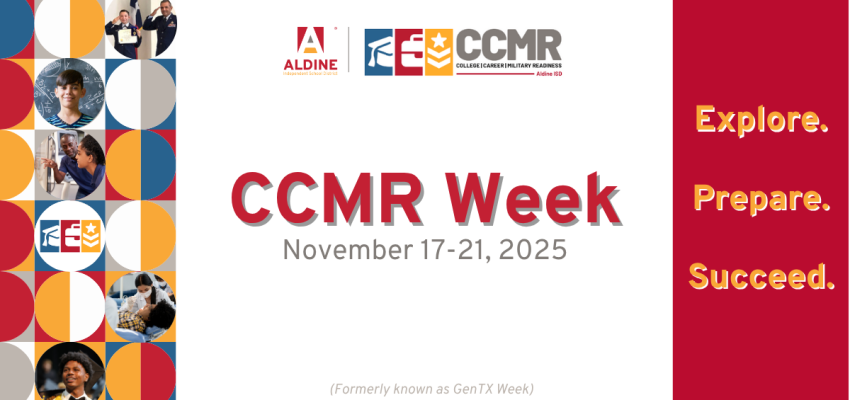
It is within this context that programs championing comprehensive student preparedness truly shine. One such commendable effort is the College, Career, and Military Readiness (CCMR) Week, set to be hosted by the Aldine Independent School District from November 17 to November 21, 2025. This district-wide initiative transcends the conventional boundaries of classroom learning, offering students from prekindergarten through 12th grade a week of engaging, age-appropriate activities designed to illuminate their postsecondary options and lay a solid foundation for lifelong success. It’s an invaluable investment in human potential, fostering the kind of foresight and strategic thinking that will be paramount in an increasingly automated world. Let’s delve into why such focused readiness programs are not just beneficial, but absolutely critical for empowering the architects of our future.
College, Career, and Military Readiness: A Blueprint for the Future Workforce
The concept of College, Career, and Military Readiness is far more than a simple aspiration; it’s a strategic imperative for any forward-thinking educational system. In an age where information is abundant but wisdom is scarce, guiding students toward informed decisions about their post-high school trajectory is a responsibility of immense magnitude. The global economy is a turbulent sea, with waves of innovation, automation, and shifting demand constantly redefining the skills required for prosperity. Reports from organizations like the World Economic Forum consistently highlight the rapid evolution of job roles, emphasizing the need for continuous learning, digital fluency, and a suite of ‘human’ skills that AI currently struggles to replicate, such as creativity, critical thinking, complex problem-solving, and emotional intelligence.
Aldine ISD’s CCMR Week is a proactive step towards bridging this gap. By dedicating an entire week to exploring diverse pathways, the district acknowledges that success doesn’t follow a single, linear trajectory. For some students, higher education at a four-year university is the ideal route; for others, a vocational certificate, a two-year associate’s degree, or direct entry into a skilled trade apprenticeship offers a more direct and fulfilling path. Still others may find their calling and develop invaluable leadership skills through military service, gaining technical expertise and practical experience that translate seamlessly into civilian careers. This holistic approach ensures that every student, regardless of their background or current academic standing, has the opportunity to envision a viable, exciting future for themselves.
The week’s daily themes—spanning college awareness, career exploration, military appreciation, and financial literacy—are meticulously crafted to cover the fundamental pillars of postsecondary preparedness. This systematic exploration helps demystify often overwhelming processes, from understanding college applications and financial aid to identifying personal interests and aligning them with potential career fields. It’s about empowering students with agency over their own futures, providing them with the tools and knowledge to make deliberate choices rather than stumbling into pathways by default. Such initiatives are particularly vital in diverse districts like Aldine, where providing equitable access to information and opportunities can profoundly alter life trajectories and contribute to broader societal upliftment. It’s a testament to the understanding that true readiness encompasses not just academic achievement, but also practical knowledge about the world beyond the classroom.
Deconstructing Readiness: The Pillars of Postsecondary Success
To truly understand the profound impact of a program focused on College, Career, and Military Readiness, it’s essential to unpack its core components. Each theme within Aldine ISD’s CCMR Week serves a distinct, yet interconnected, purpose in building a robust foundation for student success:
- College Awareness: Expanding Horizons Beyond High School. This theme goes beyond simply extolling the virtues of a four-year degree. It introduces students to the vast ecosystem of higher education, including community colleges, technical schools, and specialized vocational programs. For younger students, it might involve imagining what it’s like to learn in a university setting, while older students engage with topics like application processes, scholarship opportunities, and the diverse academic programs available. In an age where AI can automate many routine tasks, higher education often focuses on developing advanced analytical skills, research capabilities, and the nuanced understanding required to innovate and manage complex systems. Understanding the return on investment for various educational paths, both financial and intellectual, becomes a key part of informed decision-making.
- Career Exploration: Charting a Course in a Dynamic Landscape. This pillar is arguably the most dynamic, especially considering the rapid evolution of the global job market. Activities might range from virtual career fairs and guest speakers from various industries to self-assessment tools that help students identify their interests, strengths, and aptitudes. Critically, it encourages students to look beyond traditional roles and consider emerging fields, many of which are being shaped or created by AI and automation. For instance, understanding roles in data science, robotics engineering, AI ethics, or even creative fields augmented by AI tools becomes paramount. This exploration also emphasizes the importance of ‘soft skills’—communication, collaboration, problem-solving—which are universally valued across all professions and are increasingly critical in human-AI collaborative environments.
- Military Appreciation: Service, Skill, and Structure. For many students, military service represents a compelling and honorable pathway offering unparalleled opportunities for personal growth, leadership development, and technical training. This theme provides clarity on the various branches of the armed forces, the diverse roles available (from logistics and IT to healthcare and engineering), and the significant benefits associated with service, including educational assistance (like the GI Bill), healthcare, and career transition support. It’s about showcasing the military not just as a defensive force, but as a vast organization that provides structured training, discipline, and a clear career path, often equipping individuals with highly sought-after skills directly transferable to the civilian sector.
- Financial Literacy: The Foundation of Independence. Irrespective of the chosen postsecondary path, financial acumen is non-negotiable for long-term success and independence. This theme is crucial, covering topics such as budgeting, saving, understanding student loans and debt, investing, and the importance of good credit. For high schoolers, it might involve practical exercises in creating a budget for college or a first apartment. For younger students, it could be simpler concepts like saving for a desired item. By instilling sound financial habits early, students are better equipped to manage their resources, avoid pitfalls, and make strategic financial decisions throughout their lives, a skill set that becomes even more important in an economy with fluctuating job security and complex financial instruments.
The beauty of CCMR Week lies in its age-appropriate scaling. A pre-kindergarten student might engage in imaginative play about different jobs in their community, while a high school senior could be attending workshops on resume building, interview techniques, or filling out the FAFSA. This continuum of engagement ensures that the seeds of future planning are sown early and nurtured consistently, preparing students for the intricate choices that lie ahead. It’s a systematic effort to empower students with self-awareness and world-awareness, which are crucial prerequisites for informed decision-making.
Cultivating Resilience in the Age of AI: Beyond Traditional Pathways
As an AI enthusiast, I see a clear parallel between the objectives of College, Career, and Military Readiness initiatives and the broader societal need to cultivate human resilience in an age increasingly influenced by artificial intelligence. The rise of AI isn’t just about automation; it’s about augmentation. It demands a workforce that can collaborate effectively with intelligent machines, leverage data for decision-making, and apply uniquely human attributes to novel challenges. This means moving beyond a sole focus on memorization or routine tasks, which AI excels at, and instead emphasizing skills that foster adaptability, critical inquiry, and creative problem-solving.
Aldine ISD’s CCMR Week is inadvertently (or perhaps intentionally) nurturing precisely these qualities. By exposing students to a spectrum of possibilities—from the structured discipline of the military to the innovative spirit of entrepreneurship—it encourages a flexible mindset. When students understand that there are multiple pathways to success, they are less likely to be derailed by unforeseen changes in the job market or technological disruptions. They learn to pivot, to reskill, and to see challenges as opportunities for growth. This resilience is a hallmark of future-proof individuals.
Furthermore, the emphasis on financial literacy equips students with the practical tools to navigate economic uncertainties, making them more robust in the face of career shifts or economic downturns—scenarios that might become more frequent in an AI-driven economy where entire job categories can be transformed rapidly. The exposure to diverse careers, including those that might leverage advanced technologies, encourages an early engagement with the future of work, sparking curiosity and preparing students to be innovators rather than just consumers of technology.
This holistic approach to readiness fosters more than just a job seeker; it develops a well-rounded individual capable of contributing meaningfully to society, regardless of the technological landscape. It’s about understanding one’s strengths, passions, and how they intersect with the needs of the world. In an educational environment often criticized for being slow to adapt, initiatives like Aldine ISD’s CCMR Week demonstrate a vital commitment to preparing students not just for current challenges, but for a future that is still being written, often by the very technologies we are developing today.
The Aldine ISD’s College, Career, and Military Readiness Week is more than just a calendar event; it’s a profound statement about the district’s commitment to its students’ futures. In a world characterized by relentless change and burgeoning opportunities, providing a clear compass and a robust toolkit for navigating postsecondary pathways is an indispensable educational mission. By fostering an early understanding of diverse options—be it higher education, vocational training, military service, or direct entry into the workforce—and by equipping students with essential life skills like financial literacy, the program lays a bedrock for informed decisions and sustainable success.
As we advance deeper into the 21st century, with artificial intelligence increasingly reshaping industries and society, the emphasis on human adaptability, critical thinking, and the ability to forge one’s own path will only grow. Initiatives like CCMR Week are vital in cultivating these essential attributes, empowering a generation not merely to survive, but to thrive and innovate. They are a testament to the belief that with foresight, comprehensive guidance, and a commitment to individual potential, every student can be prepared to contribute meaningfully to the world, becoming active architects of their own destinies in an exciting, ever-evolving future.










