

Trees are more than just silent sentinels of our planet; they are living testaments to nature’s resilience, vital players in our ecosystems, and silent guardians of urban well-being. From sequestering carbon and purifying air to providing shade and enhancing biodiversity, their importance is immeasurable. Yet, the dedicated professionals who ensure their health, longevity, and safe coexistence with human infrastructure often operate beneath the radar. This often leads to a significant gap in public awareness regarding the vital and diverse opportunities within their field. Enter events like Tree Tech, a beacon of connection and inspiration designed to bridge this divide. What began as a regional gathering has steadily blossomed into a critical nexus, linking educational pathways with industry demands, fostering robust workforce pipelines, and igniting passion in the hearts of future tree specialists. This article will delve into the multifaceted world of arboriculture careers and explore how innovative initiatives like Tree Tech are not just showcasing, but actively shaping, the future of this essential profession.
Arboriculture Careers: More Than Just Tree Trimming
When many people think of tree work, they often picture someone with a chainsaw and a hard hat, perhaps a scene of emergency storm cleanup. While physical prowess and operating heavy machinery are certainly components, the reality of arboriculture is far more intricate, scientific, and sophisticated. It is a specialized branch of horticulture that focuses on the cultivation, management, and study of individual trees, shrubs, vines, and other perennial woody plants. This field is a blend of art, science, and practical skill, demanding a deep understanding of tree biology, soil science, pathology, entomology, and urban planning.
The spectrum of roles within arboriculture is remarkably broad, offering paths for individuals with diverse interests and skill sets. A certified arborist, for instance, is a highly trained professional who diagnoses and treats tree issues, performs advanced pruning, assesses risks, and provides expert consultation. Achieving this certification, often through bodies like the International Society of Arboriculture (ISA), signifies a commitment to ethical practice and ongoing education. But the profession extends far beyond the traditional arborist.
Consider the urban forester, a role increasingly crucial in our rapidly urbanizing world. These professionals manage entire urban tree populations, developing strategies for planting, maintenance, and removal across public and private lands. They are instrumental in planning green infrastructure, maximizing the environmental benefits of trees, and navigating the complex interplay between trees and urban development. Then there are consulting arborists, who lend their expertise to legal cases, property development projects, and detailed tree inventories, often working with municipalities, developers, and homeowners associations.
Further specialization can lead to roles as plant health care (PHC) specialists, who focus on integrated pest and disease management, using a holistic approach to maintain tree vitality without excessive chemical intervention. Utility arborists are critical for maintaining safe clearances around power lines, ensuring reliable energy supply while preserving tree health where possible. For those with a passion for research and education, paths exist in academia, studying tree responses to climate change, developing new cultivation techniques, or training the next generation of professionals. Even entrepreneurial roles flourish, with many arborists establishing and running their own successful tree care businesses. These diverse professional avenues underscore that arboriculture careers offer dynamic and impactful opportunities.
Tree Tech: A Catalyst for Workforce Development
The vision behind the Tree Tech event is a powerful one: to address the pressing need for skilled professionals in the arboriculture industry by directly connecting educational resources with real-world applications. As the original snippet highlights, it serves as a robust “regional event connecting education and industry,” and its growth reflects the success of this model. Typically, such events gather high school students, vocational trainees, college students, and career changers, alongside leading companies, equipment manufacturers, and educational institutions.
At its core, Tree Tech excels at “building workforce pipelines.” The arboriculture industry, like many skilled trades, faces a significant labor shortage. There’s a growing demand for qualified individuals who can safely and effectively manage trees, driven by increasing public awareness of environmental issues, urban development, and the threats posed by climate change, pests, and diseases. Tree Tech acts as a critical bridge, allowing aspiring arborists to meet potential employers, learn about different career paths, and understand the training and certifications required. Many events incorporate job fairs, resume workshops, and even on-the-spot interviews, directly facilitating entry into the workforce.
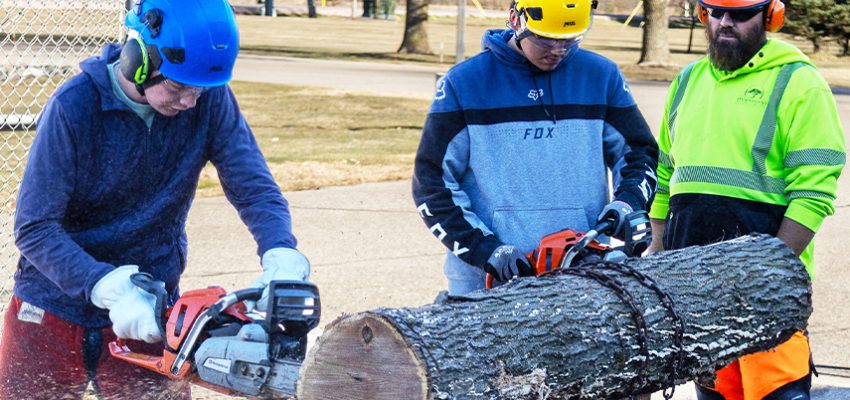
Perhaps the most inspiring aspect of Tree Tech is its ability to foster passion and “inspire future arborists.” The event environment is a vibrant hub of activity, far removed from the confines of a classroom. Attendees are treated to an array of “hands-on training” opportunities and live demonstrations that truly bring the profession to life. Imagine watching a certified arborist expertly scale a towering oak, demonstrating advanced climbing techniques with precision and safety. Or witnessing the power and finesse of specialized rigging equipment as large limbs are safely lowered to the ground. Participants often get the chance to operate simulators for cranes or chippers, try their hand at knot tying, or learn about tree identification and pest diagnosis from seasoned experts.
These immersive experiences are invaluable. They provide a tangible sense of the work, allowing potential candidates to test their aptitude and develop a deeper appreciation for the skill, knowledge, and physical demands involved. For a young person contemplating their future, the chance to interact directly with professionals, observe cutting-edge techniques, and even participate in supervised activities can be the spark that ignites a lifelong career. It transforms abstract concepts into concrete possibilities, making arboriculture careers feel accessible and exciting. The event’s emphasis on safety protocols, proper equipment use, and environmental stewardship also instills a strong foundation of responsible practice from the outset, cultivating not just workers, but conscientious stewards of our natural resources.
The Growing Demand and Evolving Landscape of Tree Care Technology
The importance of well-managed urban and suburban tree populations has never been higher. As cities expand and climate change brings more extreme weather events, the demand for skilled arborists is projected to continue its upward trajectory. The U.S. Bureau of Labor Statistics, for instance, projects consistent growth in tree care occupations, highlighting the stability and future potential of these roles. This isn’t just about maintenance; it’s about resilience, sustainability, and enhancing the quality of life in our communities.
Furthermore, the field of arboriculture is far from stagnant; it is continuously embracing technological advancements that make the work safer, more efficient, and more precise. The “tech” in “Tree Tech” is not merely a clever alliteration but a nod to the growing integration of cutting-edge tools and methodologies into traditional tree care practices. Drones, for example, are revolutionizing canopy assessment, allowing arborists to inspect tall trees for disease, structural issues, or pest infestations from a safe distance, capturing high-resolution imagery and data that would be impossible or hazardous to obtain otherwise.
Geographic Information Systems (GIS) mapping has become indispensable for urban foresters, enabling them to create detailed inventories of tree populations, track health trends, plan planting initiatives, and manage resources effectively across vast areas. Advanced diagnostic tools, from resistographs that measure wood decay to spectroradiometers that assess plant stress, provide arborists with non-invasive methods to understand the internal health of trees. Even the traditional tools of the trade—chainsaws, climbing gear, and rigging equipment—have undergone significant innovation, incorporating ergonomic designs, enhanced safety features, and lighter, more durable materials, making the work both safer and more efficient.
Software solutions are also playing a crucial role, assisting with everything from client management and scheduling to risk assessment modeling and long-term urban forestry planning. These technological shifts are not replacing the fundamental skills of an arborist but rather augmenting them, allowing professionals to work smarter, more safely, and with a greater positive impact. This integration of modern technology not only enhances the appeal of arboriculture careers but also underscores the necessity for continuous learning and adaptation within the profession. It transforms what some might perceive as a purely manual labor job into a dynamic, intellectually stimulating, and technologically advanced career path that contributes directly to ecological health and urban sustainability.
Conclusion
The health of our planet and the well-being of our communities are inextricably linked to the vitality of our trees. In this context, the role of the arborist, urban forester, and all related tree care professionals is nothing short of critical. Events like Tree Tech serve as powerful platforms, demonstrating the profound value and dynamic nature of arboriculture careers. By meticulously connecting educational opportunities with real-world industry demands, providing invaluable hands-on training, and fostering an environment of inspiration, these regional gatherings are not just addressing current workforce shortages but are actively cultivating a passionate and skilled future generation of tree stewards. They illuminate a path where scientific inquiry meets practical application, where environmental stewardship goes hand-in-hand with technological innovation.
For anyone considering a career that blends science with nature, physical activity with intellectual challenge, and offers a tangible positive impact on the environment, exploring arboriculture careers is a truly rewarding endeavor. The field is evolving, driven by technological advancements and an ever-increasing global appreciation for green infrastructure. As André Lacerda, an AI specialist and tech enthusiast, I find the blend of traditional knowledge with modern innovation in arboriculture fascinating and inspiring. The future of our urban forests and natural landscapes depends on the dedication and expertise of these professionals, and events like Tree Tech are ensuring that this vital legacy continues to grow, strong and resilient, just like the magnificent trees they care for.










