
The landscape of work is undergoing an unprecedented transformation, largely driven by the relentless march of artificial intelligence and automation. As an AI specialist and keen observer of technological trends, I’ve spent years contemplating not just the innovations themselves, but their profound impact on human potential and our societies. One area that demands immediate attention is education – specifically, how we prepare the next generation for roles that are rapidly evolving or haven’t even been conceived yet. It’s no longer enough to simply educate; we must equip, adapt, and empower. This challenge, though global, is being tackled head-on by forward-thinking communities, and the initiatives underway in places like Palm Beach County offer a compelling blueprint for the future of learning and career development.
The traditional educational pipeline, for decades, has often focused on a linear path from academia to employment, with practical skills often acquired on the job. However, the accelerating pace of technological change has rendered this model increasingly insufficient. Industries across the board are clamoring for a workforce armed with specific, practical, and adaptable skills – competencies that go beyond theoretical knowledge. This growing demand creates a significant ‘skill gap,’ a chasm between the capabilities employers need and what the incoming workforce possesses. Addressing this gap requires a paradigm shift, one that prioritizes hands-on experience, industry relevance, and early exposure to professional environments. It’s a shift that champions proactive intervention, ensuring students aren’t just learning *about* the world, but actively preparing to shape it.
Vocational Training: A New Blueprint for Future Careers
Historically, **vocational training** has sometimes been viewed as a secondary option, distinct from more traditional academic paths. Yet, in our rapidly digitizing world, its importance has never been more pronounced. Modern **vocational training** programs are far removed from outdated stereotypes; they are dynamic, responsive, and often at the cutting edge of technological adoption. They represent a strategic investment in human capital, designed to equip individuals with directly applicable skills for high-demand industries.
The proactive approach seen in Palm Beach County, where students are engaging in substantial career preparation even before graduation, exemplifies this modern resurgence. Such initiatives recognize that the best way to bridge the skill gap is to start early, integrating real-world skills into the educational journey. This isn’t just about learning a trade; it’s about developing a robust skillset that includes problem-solving, critical thinking, collaboration, and adaptability – all crucial ‘soft skills’ that complement technical proficiency and are highly valued in an AI-augmented workplace. By offering students direct pathways into specific career fields, these programs not only enhance their future employability but also provide a clearer sense of purpose and direction during their formative years.
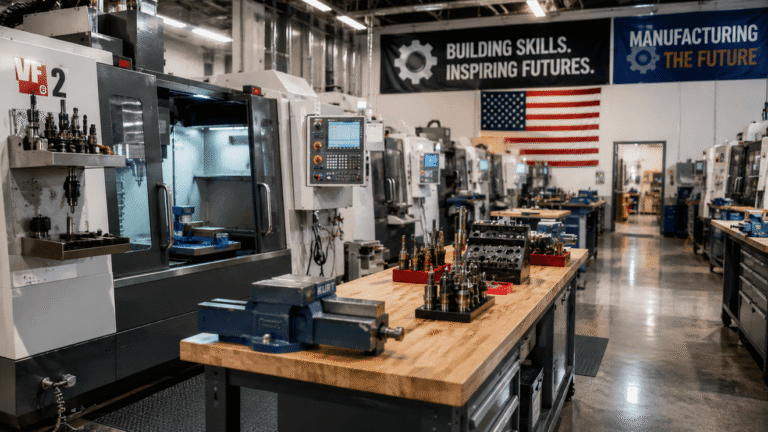
Consider the implications of AI. While some fear job displacement, the more nuanced reality is job transformation. AI will automate repetitive tasks, but it will also create new roles focused on AI development, maintenance, ethical oversight, and particularly, roles that require uniquely human skills like complex problem-solving, creativity, and emotional intelligence, often augmented by technology. **Vocational training** in areas like advanced manufacturing, cybersecurity, healthcare technology, robotics, and renewable energy is precisely what’s needed to prepare students for these hybrid roles. These fields demand practical expertise, understanding of complex systems, and the ability to work with sophisticated tools – skills that are best cultivated through hands-on, project-based learning. Programs that immerse students in these environments are essentially future-proofing their careers.
Cultivating an AI-Ready Workforce: The Power of Early Engagement
The most effective response to a changing job market is not to resist change, but to prepare for it. The initiatives in Palm Beach County highlight the significant advantages of early engagement in career-focused education. By exposing students to professional environments and specialized skill development before they even graduate, these programs offer several critical benefits:
**1. Informed Career Choices:** Early exposure helps students understand different career paths, allowing them to make more informed decisions about their post-graduation journey. This reduces the likelihood of pursuing degrees or training that don’t align with their true interests or market needs.
**2. Accelerated Skill Acquisition:** Students gain practical, job-specific skills years earlier than their peers following traditional routes. This head start means they can enter the workforce with valuable experience, potentially reducing the need for extensive on-the-job training.
**3. Industry Relevance and Adaptability:** Programs often collaborate directly with local businesses, ensuring the curriculum remains relevant to current industry demands and emerging technologies. This constant feedback loop helps curricula adapt to new advancements, including those driven by AI.
**4. Economic Empowerment:** Graduates of such programs often command higher starting salaries, have better job security, and are less likely to accrue significant student debt. This contributes to individual financial stability and broader economic prosperity.
**5. Bridging the Equity Gap:** For many students, particularly those from underserved communities, direct pathways to well-paying careers can be transformative. These programs democratize access to opportunities that might otherwise seem out of reach, fostering social mobility and inclusivity. It’s about ensuring that the benefits of technological advancement are shared widely, creating a more equitable future.
The success of such programs often hinges on robust partnerships between educational institutions, local businesses, and community organizations. The mention of the Education Foundation in Palm Beach County, along with contributions from companies like Office Depot and a substantial grant, underscores the importance of this collaborative ecosystem. This synergy ensures that resources are pooled, curricula are aligned with industry needs, and students have access to mentorship, internships, and job placement opportunities. This multi-stakeholder approach creates a virtuous cycle: businesses gain a pipeline of skilled talent, schools provide relevant education, and students secure promising futures. It’s a model that many regions globally are striving to emulate, recognizing that public-private collaboration is the engine of modern workforce development.
Beyond the Classroom: Real-World Readiness for the Future of Work
The true value of this proactive approach lies in its ability to instill not just technical skills, but a fundamental readiness for the challenges of the modern workplace. It’s about more than just a certificate; it’s about fostering a mindset of continuous learning and problem-solving, which are paramount in an AI-driven economy. For instance, in areas where AI is automating routine tasks, human workers will increasingly be called upon to manage AI systems, interpret complex data generated by AI, troubleshoot issues, and innovate new applications. These are not roles that can be learned solely from textbooks; they require hands-on experience, critical thinking under pressure, and the ability to collaborate in dynamic teams.
Imagine a student in Palm Beach County working on a project that involves programming robotic arms for an advanced manufacturing process, or analyzing cybersecurity threats in a simulated environment, or utilizing AI tools to assist in healthcare diagnostics. These are not hypothetical scenarios; they are the practical experiences that modern **vocational training** provides. Such programs move beyond abstract concepts to tangible applications, allowing students to see the direct impact of their learning. This not only deepens their understanding but also ignites a passion for their chosen field, fostering the innovators and problem-solvers of tomorrow.
Moreover, the skills acquired in these environments – project management, team collaboration, communication, and adaptability – are universally transferable and highly sought after by employers across all sectors. As AI continues to reshape industries, the ability to pivot, learn new tools rapidly, and apply existing knowledge to novel challenges will be invaluable. **Vocational training** that emphasizes real-world projects and industry immersion is, therefore, not just preparing students for their first job, but for a lifetime of career evolution and growth.
Conclusion: A Vision for Adaptable Education
The efforts in Palm Beach County to equip students with pre-graduation career training offer a powerful blueprint for how educational systems can proactively respond to the demands of the 21st century. In a world increasingly defined by artificial intelligence and rapid technological shifts, waiting for students to graduate before they gain practical, industry-aligned skills is a strategy doomed to fail. Instead, by integrating robust **vocational training** and career readiness programs directly into the high school experience, communities can foster a generation of adaptable, skilled, and confident individuals ready to navigate and contribute to an evolving global economy.
This holistic approach is not merely about creating a workforce; it’s about nurturing potential, fostering economic resilience, and ensuring that technological progress serves to empower, rather than displace, human endeavor. As we look to the future, the success of regions that embrace such forward-thinking educational models will undoubtedly inspire others, demonstrating that with strategic vision and collaborative action, we can indeed prepare our students not just for jobs, but for meaningful and impactful careers in an AI-driven tomorrow.