
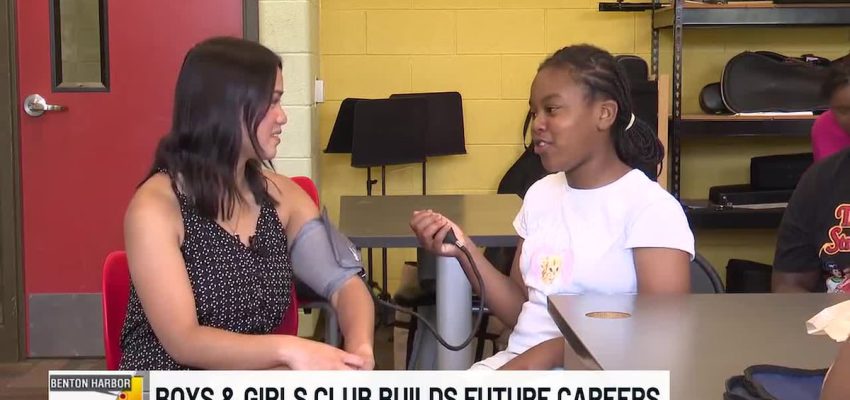

Summer break. For many, the phrase conjures images of endless sunny days, relaxed schedules, and a much-needed pause from academic rigors. Yet, in communities across the nation, an inspiring counter-narrative is taking shape. For a growing number of students, particularly in places like Benton Harbor, summer is not a period of pause, but rather one of profound acceleration. It’s a time when traditional notions of summer leisure give way to purposeful engagement, where dreams are not just entertained but actively explored and cultivated into tangible career pathways.
At the Boys & Girls Club of Greater Southwest Michigan, this transformative approach is vividly on display. Here, young people are gaining invaluable insights into the myriad possibilities their futures hold, venturing far beyond conventional aspirations. The program offers a crucial lens through which students can envision themselves not just as future employees, but as innovators, leaders, and contributors to their communities. It’s an initiative that recognizes the immense potential within every young individual and provides the tools and exposure needed to unlock it. As an AI specialist and tech enthusiast, I’m deeply passionate about how we prepare the next generation for an increasingly complex and technologically driven world, and programs like this are foundational to that mission.
### Youth Workforce Development: Paving Diverse Career Paths
The landscape of professional life has undergone a radical transformation in recent decades. The days of a single, lifelong career path are largely behind us, replaced by a dynamic, multi-faceted journey that demands adaptability, diverse skill sets, and a robust understanding of various industries. This evolution underscores the critical importance of early career exposure and the need for comprehensive youth workforce development initiatives.
Such programs do more than just offer a summer job; they provide a crucial framework for students to explore their interests, identify their strengths, and understand the real-world application of their academic learning. For many young people, particularly those from underserved communities, these opportunities can be a lifeline, opening doors that might otherwise remain closed. They demystify professions that might seem out of reach and expose students to roles they never even knew existed. Consider, for instance, the rapid growth in fields like data science, renewable energy, or even specialized roles within advanced manufacturing – areas that demand a forward-thinking approach to talent cultivation. Without early intervention and guided exploration, many students might miss out on understanding these emerging opportunities.
The ‘dream of going pro,’ while inspiring for a select few, doesn’t capture the vast spectrum of fulfilling and impactful careers available. Youth workforce development initiatives broaden this horizon significantly. They introduce students to the intricate world of business operations, the creative demands of marketing, the precision of engineering, the empathy required in healthcare, or the entrepreneurial spirit needed to build a startup. Through structured mentorships, hands-on projects, and site visits, participants gain a pragmatic understanding of daily work life, workplace ethics, and the collaborative nature of professional environments. These experiences are invaluable for building confidence, fostering curiosity, and cultivating a proactive approach to career planning.
Moreover, these programs often fill critical gaps left by traditional schooling. While schools excel at academic instruction, they may not always have the resources or direct industry connections to provide extensive vocational or career-specific exploration. Non-profit organizations like the Boys & Girls Club step in to bridge this divide, offering practical, experiential learning that complements classroom education. They create a safe and supportive environment where students can experiment with different roles, learn from professionals, and develop a clearer vision for their post-graduation journey, whether that involves higher education, vocational training, or direct entry into the job market.
### The Boys & Girls Club Model: Cultivating Future-Ready Individuals
The Boys & Girls Club of Greater Southwest Michigan exemplifies an institutional commitment to fostering holistic youth development. Their approach extends beyond mere job shadowing; it’s about cultivating future-ready individuals equipped with both hard and soft skills essential for success in any chosen field. This model is particularly effective because it leverages the existing trust and community presence of the Club, transforming it into a hub for career exploration and skill-building.
At the heart of their program is the understanding that true career readiness encompasses more than just technical proficiency. It involves developing critical thinking, problem-solving abilities, communication skills, and emotional intelligence – often referred to as ’21st-century skills.’ For example, a student might learn how to code (a hard skill) but also learn how to collaborate effectively on a team project (a soft skill) that utilizes that coding knowledge. These interdisciplinary skills are vital for navigating an increasingly automated and interconnected global economy, where human ingenuity and adaptability remain paramount.
The Club’s program acts as a vital bridge between education and employment, offering practical experiences that illuminate potential career pathways. It empowers students by demystifying the professional world, replacing abstract ideas about ‘jobs’ with concrete, experiential learning. Imagine a student spending a summer learning about the logistics of supply chains, the intricacies of digital marketing, or the precision required in modern manufacturing. These aren’t just isolated lessons; they are interconnected pieces of a larger puzzle, helping young people see how different roles contribute to a larger enterprise and how their own unique talents can find a place within it.
Furthermore, these initiatives often focus on local industries and economic needs, creating a pipeline of talent that can bolster regional economies. By connecting students with local businesses and mentors, the program not only exposes them to diverse careers but also fosters a sense of community pride and a desire to contribute locally. This localized approach to youth workforce development is incredibly powerful, transforming potential brain drain into local talent retention.
### Building Essential Skills and Bridging the Opportunity Gap
The impact of robust youth workforce development programs cannot be overstated, especially when considering the broader societal context. We live in an era characterized by rapid technological advancement, global economic shifts, and persistent disparities in access to opportunities. Programs like the one in Benton Harbor play a crucial role in leveling the playing field, ensuring that all students, regardless of their socio-economic background, have access to the resources and mentorship needed to build successful futures.
Such programs often focus on practical, transferable skills. Students might learn project management by organizing a community event, develop public speaking skills through presentations, or hone their negotiation abilities in a simulated business scenario. These experiences are invaluable, cultivating a work ethic, a sense of responsibility, and an understanding of professional decorum that are fundamental for any career. They also provide students with a tangible resume of experiences, making them more competitive when applying for future jobs, internships, or college admissions.
Moreover, these programs address a critical gap: the understanding of how educational choices directly impact career trajectories. By exposing students to professionals in various fields, they learn firsthand about the educational pathways, certifications, and lifelong learning commitments required for different professions. This can be a powerful motivator for academic excellence and thoughtful planning, helping students make informed decisions about their high school courses, post-secondary education, and vocational training options.
The globalized economy demands a workforce that is not only skilled but also adaptable and resilient. Organizations like the Boys & Girls Club are at the forefront of this preparation, instilling a mindset of continuous learning and growth. As technology continues to reshape industries, from healthcare to entertainment, the ability to learn new tools and embrace emerging methodologies will be paramount. By offering foundational experiences that encourage curiosity and practical application, these programs lay the groundwork for a generation of problem-solvers who are ready to tackle the challenges and harness the opportunities of tomorrow. The commitment to comprehensive youth workforce development is, therefore, an investment not just in individual lives, but in the collective future of our communities and our nation.
The success stories emerging from programs like these are testament to their profound impact. Students who might have otherwise spent their summers disengaged are instead gaining invaluable exposure, mentorship, and practical experience. They are learning what it means to be part of a team, to meet deadlines, to solve real-world problems, and to contribute meaningfully. These are not just fleeting summer memories; they are foundational experiences that shape character, build confidence, and ignite a lifelong passion for learning and achievement. The grind, far from stopping in the summertime, indeed ramps up – and in doing so, it builds the very foundation for a brighter, more prosperous future for all.
In conclusion, the transformative power of comprehensive youth workforce development cannot be overstated. By investing in programs that extend learning beyond the traditional classroom and into the dynamic realm of practical application, we are not merely preparing students for jobs; we are empowering them to become active participants in shaping their own futures and the future of their communities. These initiatives are critical conduits for social mobility, economic empowerment, and the cultivation of a skilled, adaptable, and engaged populace ready to meet the demands of an ever-evolving world.
As we look ahead, the continued support and expansion of such programs will be paramount. They represent a fundamental commitment to equity, ensuring that every young person has the opportunity to explore their potential, develop essential skills, and forge a path toward a fulfilling and impactful career. The efforts of organizations like the Boys & Girls Club in places like Benton Harbor are not just local successes; they are blueprints for national progress, demonstrating how targeted investment in our youth can yield profound and lasting benefits for society as a whole.










