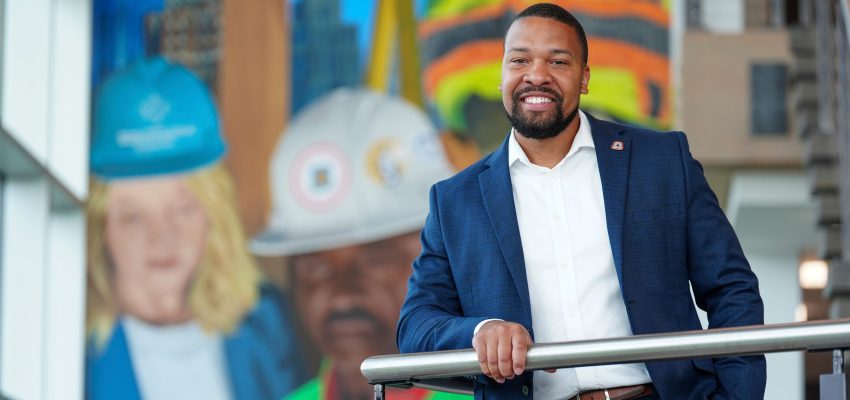

In a world increasingly driven by digital interfaces and abstract algorithms, there remains an undeniable, fundamental need for tangible creation—for the architects of our physical reality. Yet, the pathways to mastering these essential crafts are often obscure, especially for young individuals eager to apply their hands and minds. This was once the dilemma of John Perkins Jr., a man who harbored a simple yet profound desire: to build. He wanted to be a carpenter, but the practical knowledge, the hands-on training, and the opportunities to learn the craft eluded him. His story, however, isn’t one of deferred dreams; it’s a powerful narrative of transformation, demonstrating how one individual’s initial frustration can ignite a movement to empower an entire generation.
As an AI specialist and tech enthusiast, I, André Lacerda, am constantly fascinated by the intersection of innovation and enduring human needs. While we laud the advancements in artificial intelligence and automation, it’s crucial to remember that our physical infrastructure, our homes, our cities, and the very machines that drive our digital world, are all products of human ingenuity and craftsmanship. The story of John Perkins Jr. serves as a poignant reminder that even in an era of unprecedented technological acceleration, the foundational value of hands-on expertise, the practical application of skill, and the art of creation remain indispensable. He saw a void not just in his own past, but in the futures of countless young people, and he stepped up to fill it, building bridges to opportunities in the very fields he once struggled to enter.
Skilled Trades: Building Futures, One Apprentice at a Time
John Perkins Jr.’s early aspirations to become a carpenter were met with a common roadblock: the lack of accessible, practical training. For many young people, especially those without established networks or financial means, entering the world of vocational professions can seem like navigating a labyrinth without a map. There’s often a disconnect between the innate desire to work with one’s hands and the structured pathways to acquire the necessary proficiencies. Perkins experienced this firsthand – the frustration of knowing what he wanted to do but not how to get there. This personal struggle became the bedrock of his mission. Instead of succumbing to the barriers, he decided to dismantle them for others.
His vision crystallized into a concrete initiative, a program designed to bridge this critical gap for young people. While the specifics of his organization, perhaps something akin to the ‘Perkins Pathways to Prosperity’ or the ‘Detroit Craft Collective’ (hypothetical names illustrating the nature of such vital programs), are deeply rooted in community, its impact resonates far beyond. John Perkins Jr. understood that true empowerment comes not just from imparting technical skills, but from fostering a sense of purpose, dignity, and belonging. His programs typically focus on a holistic approach, providing mentorship, practical training, and often, life skills development alongside specific trade education. Imagine a workshop buzzing with the sound of saws, the scent of wood, and the focused determination of young apprentices learning the foundational principles of carpentry, electrical work, plumbing, or HVAC systems. These are not just classes; they are crucibles where raw potential is forged into concrete capability.
The curriculum, while practical and hands-on, often begins with the basics: safety protocols, tool identification, and fundamental measurements, gradually progressing to more complex projects. Mentors, many of whom are seasoned professionals in their respective fields, guide the youth through real-world scenarios, instilling not just techniques but also problem-solving abilities and a strong work ethic. This direct, experiential learning model stands in contrast to purely theoretical instruction, appealing to those who learn best by doing. John Perkins Jr.’s genius lies in recognizing that for many, particularly those from underserved communities, traditional educational paths might not be the most effective or appealing. By offering a tangible alternative, he creates opportunities that can lead directly to sustainable careers in critical fields, transforming individual lives and contributing significantly to the local economy.
The Unseen Crisis: A Growing Gap in Essential Professions
John Perkins Jr.’s initiative isn’t just a feel-good story; it’s a vital response to a pressing economic and societal challenge. Across the globe, and particularly in developed nations, there’s a widening chasm known as the ‘skills gap’ in the vocational professions. Reports from organizations like the U.S. Bureau of Labor Statistics consistently project significant shortages in various **skilled trades** over the next decade. For instance, plumbing and HVAC technicians are expected to see substantial growth, yet there aren’t enough qualified individuals to fill these roles. This isn’t merely an abstract statistic; it translates into tangible consequences: delayed infrastructure projects, higher costs for basic home repairs, and an aging workforce nearing retirement with too few trained successors.
What has led to this unseen crisis? Several factors contribute. For decades, there’s been a predominant societal narrative emphasizing four-year university degrees as the primary, if not sole, pathway to success. Vocational education programs in high schools and community colleges often faced funding cuts and a decline in prestige. Consequently, many young people were steered away from manual expertise, despite the robust demand and excellent earning potential these careers offer. The average age of many electricians, plumbers, and carpenters continues to rise, indicating an impending wave of retirements that will further exacerbate the shortage. This scenario poses a severe threat to economic stability and quality of life, as essential services become scarcer and more expensive.
Furthermore, there’s a misconception that these careers are somehow less intellectually demanding or less ‘modern’ than white-collar jobs. This couldn’t be further from the truth. Modern craftsmanship requires not only physical dexterity but also keen problem-solving skills, an understanding of complex systems, and often, an aptitude for integrating new technologies. The work is challenging, rewarding, and essential. John Perkins Jr.’s work directly addresses this crisis by elevating the perception of these critical careers and actively recruiting and training the next generation of professionals. By demonstrating the clear pathways to well-paying, stable jobs, he is helping to reframe the narrative around blue-collar careers, proving that they are not merely ‘alternatives’ but equally valid, and often more direct, routes to success and personal fulfillment.
Technology and Tradition: The Evolving Landscape of Modern Craftsmanship
In an era where AI and automation are transforming industries at an unprecedented pace, it’s natural to wonder about the future of traditional **skilled trades**. The truth is, far from being rendered obsolete, these professions are evolving, integrating cutting-edge technologies to enhance efficiency, precision, and safety. The modern tradesperson is no longer just a manual laborer; they are often tech-savvy problem-solvers who leverage digital tools as much as traditional ones. And this is where the perspective of an AI specialist like myself converges with John Perkins Jr.’s pragmatic vision.
Consider the carpentry trade, which Perkins initially pursued. Today, carpenters might use Computer-Aided Design (CAD) software to create precise blueprints and 3D models before cutting a single piece of wood. Advanced materials, from engineered lumber to sustainable composites, require new techniques and knowledge. Electrical work now involves smart home systems, renewable energy installations, and complex network infrastructures. Plumbers are employing diagnostic cameras to inspect pipes, using leak detection sensors, and even installing smart water management systems. HVAC technicians rely on sophisticated diagnostic software and IoT devices to monitor and maintain complex climate control systems. Construction sites are leveraging drones for surveying, robotics for repetitive tasks, and Building Information Modeling (BIM) for collaborative project management.
Moreover, AI is beginning to play a role in optimizing workflows, predicting maintenance needs, and even assisting with design and material selection. Augmented Reality (AR) is being explored for on-site training and complex installations, allowing technicians to overlay digital instructions onto real-world objects. This integration of technology means that the next generation of professionals in the **skilled trades** needs to be digitally literate and adaptable, capable of learning new tools and methodologies as quickly as they master traditional techniques. John Perkins Jr.’s programs, whether explicitly or implicitly, must prepare their students for this evolving landscape. By emphasizing foundational skills while also exposing youth to the modern tools and technologies relevant to their chosen trade, his initiatives ensure that graduates are not only competent but also competitive in a rapidly changing job market. This blend of time-honored craftsmanship with forward-thinking technological integration is not just beneficial; it is essential for the longevity and continued relevance of these critical professions.
The synergy between traditional manual expertise and emerging technologies also creates new specialized niches within the **skilled trades**. For instance, ‘smart home’ installers need to understand both electrical wiring and network protocols. Robotics technicians require a blend of mechanical aptitude and programming knowledge. These hybrid roles represent the future, offering exciting and dynamic career paths for those who embrace continuous learning and adaptation. John Perkins Jr., by focusing on youth empowerment in these fields, is inadvertently preparing a workforce that is not only skilled for today’s needs but also agile enough to thrive in tomorrow’s technological landscape.
John Perkins Jr.’s journey from an aspiring carpenter to a beacon of opportunity for young people in the **skilled trades** is a testament to the power of personal vision and community commitment. His work directly addresses a critical societal need, providing accessible pathways to rewarding careers while simultaneously shoring up the foundational infrastructure of our communities. In an age where digital transformation often dominates the discourse, Perkins reminds us of the enduring, indispensable value of hands-on expertise and the profound impact of mentorship. He is not just training a workforce; he is cultivating a culture of capability, resilience, and self-reliance.
As we look to the future, it’s clear that the demand for these essential professions will only continue to grow, evolving hand-in-hand with technological advancements. The work pioneered by individuals like John Perkins Jr. ensures that this demand can be met by a new generation, one equipped with both the foundational skills passed down through centuries and the modern technological literacy required for the decades to come. His story is a powerful reminder that true progress lies in empowering individuals to build, create, and innovate, literally shaping the world around us, one skilled professional at a time.