
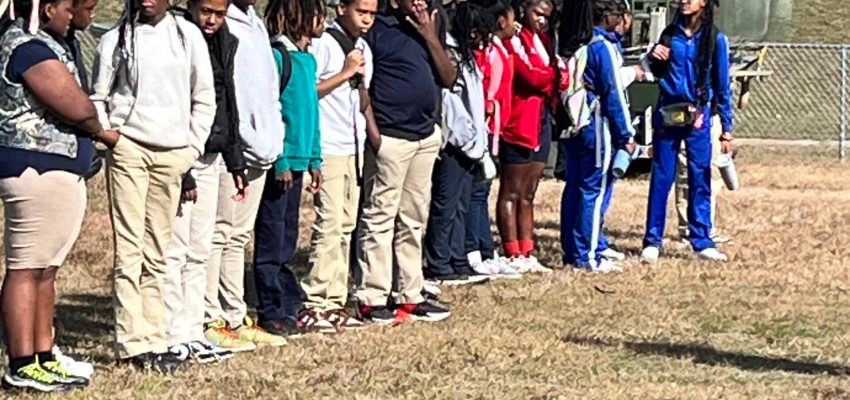

In an age where the pace of technological advancement, particularly in artificial intelligence, is reshaping industries and job markets at an unprecedented rate, the fundamental act of guiding young minds toward their future careers takes on new urgency. Imagine the scene: not in a sterile classroom, but on a vibrant football field, where the air hums not with the shouts of sports, but with the excited chatter of discovery. This was the recent reality for students at Robert Brown Middle School in Greene County, Alabama. Stepping out of their usual academic environment, these students engaged in a hands-on career exploration event, a seemingly simple initiative that underscores a profoundly critical mission: to bridge the career exposure gap for rural students.
As an AI specialist and a fervent advocate for technological literacy and equitable access, I find such grassroots efforts immensely inspiring. They represent the vital groundwork upon which a more inclusive and future-proof educational framework can be built. While the world grapples with the complexities of AI, automation, and the digital economy, we must ensure that no segment of our youth is left behind. For students in rural areas, the challenges are often magnified, from limited access to diverse industries and role models to a scarcity of resources that could ignite their passions for burgeoning fields. The Greene County initiative, though localized, serves as a powerful microcosm of the broader effort required to ensure that every student, regardless of their zip code, has the opportunity to envision and pursue a fulfilling career in a world increasingly defined by intelligence machines and innovative technologies. This article will delve into why a robust approach to Rural Student Career Development is not just beneficial, but absolutely essential for cultivating the next generation of innovators and leaders.
Rural Student Career Development: A Critical Imperative for Equity
The scene in Greene County, where a football field transformed into a career fair, speaks volumes about the ingenuity and dedication often found in smaller communities striving to offer their youth the best possible start. This hands-on approach directly addresses a pervasive issue: the significant career exposure gap that disproportionately affects students in rural areas. Unlike their urban and suburban counterparts, rural students often have fewer opportunities to interact with a wide array of professionals, visit diverse workplaces, or even be aware of the breadth of career paths available in today’s rapidly evolving economy.
The statistics paint a stark picture. According to the National Center for Education Statistics (NCES), rural schools often face unique challenges, including teacher shortages, limited funding, and geographical isolation. This isolation extends beyond just physical distance; it can lead to an informational isolation, where students lack awareness of industries beyond those traditionally dominant in their immediate locale, such as agriculture, manufacturing, or healthcare. While these sectors are vital, the modern economy demands a broader understanding and a more diverse skill set. Studies have shown that rural youth are less likely to pursue higher education or vocational training in fields that are experiencing high growth, often due to this lack of early exposure and the absence of clear pathways to these careers.
For example, while AI is revolutionizing agriculture through precision farming, drone technology, and data analytics, many rural students might not recognize these as viable, high-tech career paths within their own communities. Similarly, the rise of remote work, accelerated by the pandemic, has created opportunities for individuals to work for tech companies or global enterprises from anywhere. However, without proactive initiatives focused on Rural Student Career Development, many students in geographically isolated areas might not be equipped with the digital literacy, networking skills, or even the awareness that such opportunities exist.
The long-term impact of this exposure gap is profound. It contributes to what is often termed ‘brain drain,’ where bright young minds leave their rural communities in search of perceived better opportunities elsewhere, weakening the local economic and social fabric. It also perpetuates a cycle of limited economic mobility, as individuals may not be aware of or prepared for the high-paying, high-growth jobs of the future. By proactively exposing students to a diverse range of professions, from engineering and healthcare to cybersecurity and AI development, we are not just offering them options; we are investing in the economic vitality of their communities and ensuring equitable access to the opportunities of the 21st century. Initiatives like the one in Greene County are fundamental in sparking that initial curiosity and showing students what’s possible, right in their own backyard or through the window of a digital future.
Bridging the Divide: Innovative Approaches and the Role of Technology
While hands-on events like the one at Robert Brown Middle School are invaluable, the sheer scale of the career exposure gap, particularly for rural students, demands a multi-faceted approach, one that strategically leverages the power of modern technology. As an AI specialist, I firmly believe that technology, when thoughtfully integrated, can transcend geographical barriers and democratize access to career exploration and skill development.
Consider the potential of virtual reality (VR) and augmented reality (AR). Imagine a student in a remote village donning a VR headset and suddenly being transported into a high-tech manufacturing plant, observing engineers working with AI-powered robotics, or shadowing a surgeon performing a complex procedure. They could even experience a day in the life of a data scientist, analyzing vast datasets to uncover insights. These immersive experiences can provide a visceral understanding of various professions that traditional career fairs, constrained by physical presence, simply cannot offer. AR, on the other hand, could overlay digital information onto real-world tools, allowing students to virtually dissect a frog in biology class, design a bridge, or even troubleshoot a complex machine, all without leaving their school.
Beyond immersive simulations, online mentorship programs offer another powerful avenue for Rural Student Career Development. Leveraging platforms like LinkedIn, specialized educational networks, or even tailored AI-powered matching systems, students can connect with professionals from diverse fields across the globe. A student interested in astrophysics, despite living hundreds of miles from a major research institution, could be mentored by a leading scientist. This breaks down geographical isolation and provides personalized guidance and networking opportunities that were once unimaginable for rural youth. These mentors can share insights into their daily work, advise on educational pathways, and even help students identify the ‘soft skills’ – critical thinking, problem-solving, creativity, adaptability, and emotional intelligence – that are increasingly valued in an AI-driven workforce.
Furthermore, educational technology (EdTech) tools, often powered by AI, can play a transformative role. AI-driven platforms can offer personalized learning paths, adapting content and pace to individual student needs and interests. Career recommendation systems, using AI to analyze a student’s aptitudes, interests, and local job market trends, can suggest relevant career clusters and the skills required to enter them. Think of an AI tutor that not only helps a student master mathematics but also connects that math skill to careers in data science or AI engineering. This proactive, data-informed guidance is crucial for future-proofing our students.
The ‘future of work’ narrative is intrinsically linked to AI. Automation is redefining job roles, making some obsolete while creating entirely new ones. Rural students need exposure not just to existing careers, but to the *emerging* careers that will shape their adult lives. This includes roles in AI ethics, prompt engineering, machine learning operations, sustainable technology, and digital agriculture. Integrating modules on basic coding, data literacy, and AI fundamentals into the curriculum, complemented by virtual tours and online expert talks, can prepare these students for a future where digital fluency is as important as traditional literacy. By embracing these technological solutions, we can amplify the impact of local initiatives and truly bridge the divide, ensuring equitable access to the skills and knowledge needed for tomorrow’s job market.
Cultivating Tomorrow’s Innovators: Local Action, Global Vision
The success of initiatives like the one in Greene County lies not just in their immediate impact but in their potential to ignite a sustained, community-wide commitment to Rural Student Career Development. Cultivating tomorrow’s innovators, especially in areas with fewer conventional resources, requires a harmonious blend of local action and a global vision, understanding that local efforts have far-reaching implications in our interconnected world.
Community involvement is paramount. Local businesses, even those in traditional sectors, can become powerful partners. A local mechanic shop might not immediately strike one as a tech hub, but with modern vehicles becoming computers on wheels, such businesses offer fantastic opportunities to explore diagnostics, software interfaces, and even basic robotics. Agricultural businesses can showcase precision farming technologies. Healthcare providers can introduce students to telemedicine, medical AI, and digital health records. By opening their doors and sharing their expertise, local employers provide tangible, relatable examples of career pathways and demonstrate the evolving nature of all industries, including those foundational to rural economies.
Educators, parents, and local government officials also play crucial roles in fostering an ecosystem of opportunity. Schools can integrate career readiness into existing curricula, perhaps dedicating specific projects to exploring future industries or inviting local professionals for regular ‘career spotlight’ sessions. Parents, equipped with better information, can guide their children more effectively. Local governments can facilitate partnerships between schools and businesses, secure grants for educational technology, and even explore creating local tech hubs or maker spaces that provide hands-on experience with emerging technologies like 3D printing, robotics, and coding.
Furthermore, focusing on ‘soft skills’ or human-centric skills is more important than ever. While AI excels at automation and data processing, skills such as creativity, complex problem-solving, critical thinking, collaboration, and ethical reasoning remain uniquely human. Career exploration events should not only expose students to job titles but also highlight the underlying skills required. For example, a student interested in law might learn about legal research, but also about the ethical implications of AI in jurisprudence. An aspiring artist might explore digital art and AI-assisted design tools, understanding how to harness technology to amplify human creativity.
The vision extends beyond merely filling existing job vacancies; it’s about empowering rural students to become creators, entrepreneurs, and leaders who can shape their own futures and contribute meaningfully to their communities and the broader world. This means fostering an entrepreneurial mindset, encouraging students to identify problems in their own communities and brainstorm innovative solutions, perhaps even leveraging AI. Imagine rural students developing AI tools to optimize local farming practices, improve local healthcare access, or even create sustainable tourism initiatives.
The ethical dimension of AI also merits attention. As we introduce students to the power of AI, we must also instill in them a sense of responsibility regarding its development and deployment. Discussions around AI bias, privacy, and societal impact should be part of comprehensive career readiness, especially as they consider roles where AI will be a central tool. By integrating these elements, we prepare students not just for jobs, but to be thoughtful, engaged citizens who can navigate the complexities of a technologically advanced society.
In essence, the strategy for nurturing Rural Student Career Development requires a collaborative spirit and a future-forward outlook. It’s about blending traditional, community-focused initiatives with cutting-edge technological resources and a deep understanding of the evolving demands of the global workforce. Only then can we ensure that every student, regardless of their starting point, is equipped to thrive in the AI era.
The journey of career exploration, particularly for students in rural communities, is more critical now than ever before. The Greene County initiative at Robert Brown Middle School, seemingly modest in its scope, is a powerful reminder of the fundamental importance of hands-on exposure and community commitment. It exemplifies the spirit of local action needed to lay the groundwork for a future where every student has the opportunity to discover their potential and find their place in a rapidly evolving world.
As an AI specialist, I see these efforts as cornerstones in building a more equitable and innovation-driven society. By strategically integrating technology, fostering human-centric skills, and cultivating strong community partnerships, we can bridge the career exposure gap and empower rural students not just to adapt to the AI era, but to lead within it. The future belongs to those who are curious, adaptable, and equipped with the right opportunities. It is our collective responsibility to ensure that those opportunities are accessible to all, paving the way for a generation of thoughtful innovators and engaged citizens, irrespective of their geographic location.










