
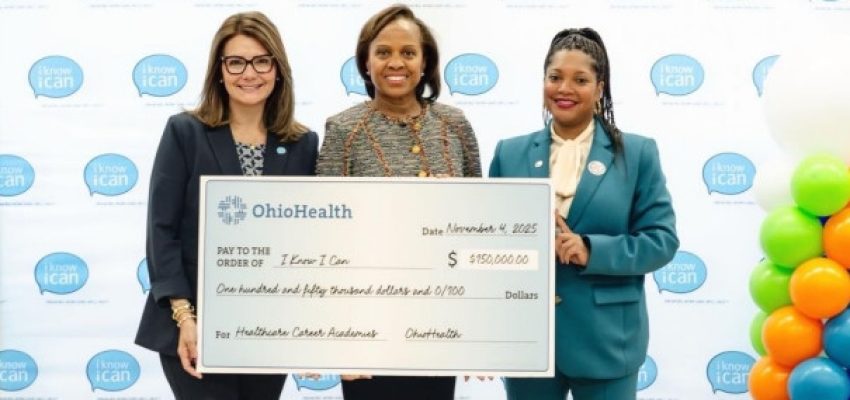

In an era defined by rapid technological advancement, the convergence of healthcare and artificial intelligence is reshaping industries at an unprecedented pace. As an AI specialist and tech enthusiast, I’ve long advocated for proactive strategies to prepare the next generation for the opportunities and challenges this future presents. It’s in this spirit that recent initiatives, such as OhioHealth’s generous donation of $150,000 to I Know I Can, resonate deeply. This isn’t just a charitable act; it’s a strategic investment in the foundational talent pipeline that will navigate the complexities of future medicine, a future intrinsically linked with AI.
The original goal – to help local students explore diverse career paths and strengthen their hands-on experience in the workplace, particularly within health sciences – is more critical now than ever. We’re not merely talking about traditional medical roles anymore; we’re preparing individuals who will work alongside intelligent systems, analyze vast datasets, and apply AI-driven insights to patient care. This investment is a crucial step towards equipping young minds with the exposure and practical learning necessary to not only enter but thrive in an increasingly digitized and AI-infused healthcare ecosystem. It provides a unique opportunity for students to integrate real-world learning with theoretical knowledge, setting them on a trajectory towards impactful contributions in a sector undergoing profound transformation.
Healthcare Career Academies: Nurturing the Next Generation of Medical Innovators
The concept of **healthcare career academies** is not new, but their relevance has skyrocketed in recent years. These specialized programs are designed to provide high school students with focused, in-depth exposure to specific career pathways, often combining rigorous academic coursework with practical, hands-on experiences. For fields like health sciences, this model is invaluable. It addresses a critical need in the United States, where workforce shortages in various healthcare professions continue to be a pressing concern. According to the Association of American Medical Colleges (AAMC), the U.S. could face a shortage of between 37,800 and 124,000 physicians by 2034, underscoring the urgency of fostering interest and talent early on.
What makes these academies particularly powerful is their ability to bridge the gap between classroom theory and real-world application. Students gain insights into the daily routines of healthcare professionals, participate in simulated medical scenarios, and often engage in internships or shadowing opportunities. This early immersion is vital for several reasons: it helps students make informed decisions about their future education and career choices, demystifies complex medical environments, and often instills a sense of purpose and commitment to service. For instance, a student might explore nursing, medical assisting, laboratory technology, or even medical administration, gaining a holistic view of the interconnected roles within a healthcare system.
However, as we look to the future, the traditional scope of these programs must evolve. The **healthcare career academies** of today are not just preparing students for existing roles; they must equip them for positions that are currently emerging or don’t even exist yet. This means integrating foundational knowledge of technology, data literacy, and, crucially, an understanding of artificial intelligence. OhioHealth’s commitment provides a robust platform for this evolution, enabling students to explore not just the human-centric aspects of care but also the technological tools that will amplify their capabilities. By offering these early, tangible experiences, programs like those supported by I Know I Can cultivate a pipeline of curious, skilled, and adaptable professionals ready for the challenges of 21st-century medicine.
The AI Imperative in Medical Education
Artificial intelligence is no longer a futuristic concept in healthcare; it’s a present reality that is rapidly expanding its footprint across diagnostics, treatment, drug discovery, and patient management. From AI-powered imaging analysis that can detect subtle signs of disease earlier than the human eye, to predictive algorithms that forecast patient deterioration, the impact is profound. Preparing students for this landscape requires a fundamental shift in educational paradigms. Simply put, any aspiring healthcare professional today needs to be AI-literate.
Consider the implications:
- Diagnostics: AI algorithms are already assisting radiologists in identifying anomalies in X-rays, MRIs, and CT scans with remarkable accuracy, often reducing diagnostic errors and improving speed. Future medical technicians and diagnosticians will need to understand how to interpret and validate AI-generated insights.
- Personalized Medicine: AI analyzes vast amounts of genomic, proteomic, and lifestyle data to tailor treatment plans unique to each patient, moving beyond the one-size-fits-all approach. Future clinicians will be key navigators of these personalized pathways.
- Drug Discovery and Development: AI is dramatically accelerating the research and development cycle for new pharmaceuticals, identifying potential drug candidates and predicting their efficacy. Careers in biomedical research will increasingly involve working with AI platforms.
- Operational Efficiency: AI streamlines administrative tasks, optimizes hospital logistics, and manages patient flow, freeing up healthcare professionals to focus on direct patient care. Future administrators and IT specialists will leverage these systems.
Given this trajectory, incorporating AI fundamentals into **healthcare career academies** becomes paramount. This doesn’t mean turning every student into an AI engineer, but rather fostering a working knowledge of what AI is, how it functions, its ethical considerations, and its practical applications in healthcare. Students should be exposed to concepts like data privacy, algorithm bias, machine learning basics, and the importance of human oversight in AI-driven systems. This interdisciplinary approach ensures that future nurses, therapists, technicians, and doctors are not just users of technology, but informed partners with it, capable of critical evaluation and ethical deployment.
The statistics reinforce this urgency. A recent report by Statista projects the global AI in healthcare market to reach approximately $188 billion by 2030, growing at a compound annual growth rate of over 37% from 2023. This exponential growth signifies an immense demand for professionals who are not only skilled in their medical disciplines but also fluent in the language of AI. Investments like OhioHealth’s are foundational for building this future workforce, providing early exposure and nurturing the curious minds that will innovate within this evolving technological frontier.
Beyond the Classroom: Hands-on Learning in the AI Age
The “hands-on experience” component emphasized by OhioHealth and I Know I Can takes on new dimensions in an AI-integrated world. Traditionally, this might involve shadowing a nurse, assisting in a lab, or observing patient interactions. While these remain crucial, the modern iteration must include exposure to and interaction with technological tools.
Imagine students in **healthcare career academies** not just observing a diagnostic procedure, but also interacting with an AI tool that assists in anomaly detection from medical images. Or perhaps they engage in simulations where AI models predict disease progression based on synthetic patient data, challenging students to formulate treatment plans. These experiences could include:
- **Data Literacy Projects:** Students could work with anonymized healthcare datasets, learning basic data analysis and visualization skills, understanding how data informs medical decisions.
- **AI Tool Exploration:** Hands-on workshops where students interact with user-friendly AI platforms designed for medical purposes, such as virtual assistants for patient triage or diagnostic support tools.
- **Ethical AI Discussions:** Case studies and debates exploring the ethical dilemmas surrounding AI in healthcare, from data privacy to algorithmic bias, fostering critical thinking.
- **Telemedicine and Virtual Care Simulations:** Practicing patient interactions via telehealth platforms, understanding how technology facilitates remote care delivery, often powered by AI-driven insights.
These types of enriched learning opportunities transform passive observation into active engagement with the tools that will define their future careers. They move beyond mere awareness of AI to practical application and critical engagement. The investment from OhioHealth into these career academies is pivotal because it can fund not just personnel and traditional resources, but also the integration of such advanced technological learning tools and experiences. It’s about creating learning environments that mirror the complex, tech-driven realities of contemporary healthcare, preparing students not just for entry-level positions but for a journey of continuous learning and adaptation in a field that will never stop evolving.
This strategic support ensures that young people from diverse backgrounds have equitable access to these cutting-edge experiences, fostering innovation and inclusion within the future healthcare workforce. It’s an understanding that nurturing talent isn’t just about what’s available now, but about proactively shaping what will be necessary a decade or two down the line. It’s a testament to the foresight that recognizes the foundational impact of early education in preparing for a world transformed by artificial intelligence.
Conclusion
The donation by OhioHealth to I Know I Can is more than just a financial contribution; it’s a potent symbol of commitment to the future of healthcare. By investing in **healthcare career academies**, we are laying the groundwork for a robust, skilled, and adaptable workforce that is ready to embrace the challenges and opportunities presented by artificial intelligence. As an AI specialist, I firmly believe that the future of medicine is a collaborative one, where human ingenuity is augmented by intelligent machines. Preparing our high school students today, by providing them with hands-on experience and a foundational understanding of emerging technologies, is the most effective way to ensure they become architects of this future, not just observers.
This initiative underscores a vital principle: education must evolve alongside technology. By fostering environments where young minds can explore, experiment, and envision their roles within an AI-integrated healthcare landscape, we are empowering them to drive innovation, improve patient outcomes, and contribute meaningfully to society. Such strategic investments are not merely about filling current job vacancies; they are about cultivating the visionary leaders and compassionate practitioners who will define the next era of health and well-being, guided by both human empathy and technological prowess.










