
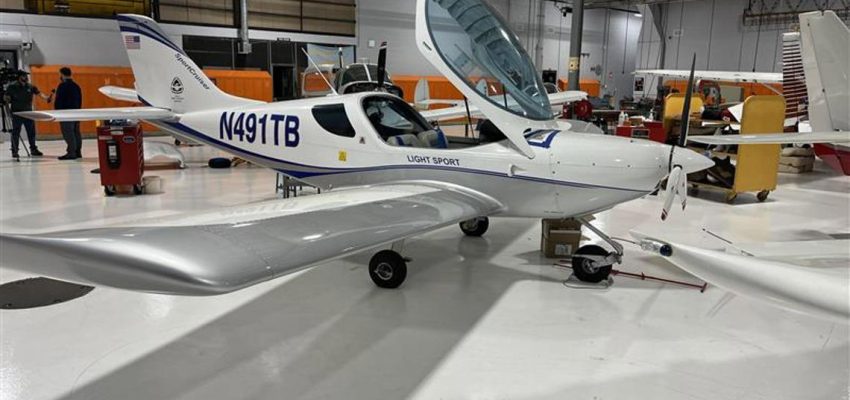

In an era defined by rapid technological advancement and an ever-expanding curiosity about the universe, the fields of aerospace and natural science stand at the forefront of human innovation. From the burgeoning commercial space industry to the critical need for sustainable aviation, the demand for highly skilled professionals in these domains is skyrocketing. Yet, for many young aspiring minds, the path to these high-flying careers can seem distant and abstract. This is where specialized educational institutions play a pivotal role, acting as crucial launchpads for the next generation of pioneers. The Toledo Aerospace and Natural Science Academy, for instance, exemplifies a forward-thinking model designed to give students a transformative head start, blending rigorous academic instruction with unparalleled practical experience. As an AI specialist and tech enthusiast, I find such initiatives not just commendable, but absolutely essential for cultivating the talent required to navigate the complex, exciting challenges of tomorrow.
### Aerospace Education: Paving the Way for Future Innovators
The landscape of education is continually evolving, recognizing that a one-size-fits-all approach no longer suffices for the intricate demands of the 21st century. Specialized academies, particularly those focused on **aerospace education**, represent a paradigm shift towards highly targeted, immersive learning experiences. These institutions are not merely supplementary programs; they are comprehensive ecosystems designed to cultivate passion, foster critical thinking, and build a foundational skillset that is immediately applicable in industry. The Toledo Aerospace and Natural Science Academy stands out as a beacon in this movement, offering a unique curriculum that marries the thrill of aviation and space exploration with the foundational principles of natural sciences.
The global aerospace industry is projected to grow significantly in the coming decades, driven by advancements in air travel, defense, and space technologies. This growth translates directly into a surging demand for a diverse range of professionals – from pilots, air traffic controllers, and aviation mechanics to rocket scientists, aerospace engineers, and data analysts specializing in atmospheric conditions or orbital mechanics. According to Boeing’s latest Pilot & Technician Outlook, thousands of new pilots and technicians will be needed globally in the next 20 years. Such statistics underscore the urgency and relevance of specialized **aerospace education** programs that can prepare students effectively and efficiently.
What makes academies like Toledo’s so impactful is their ability to bridge the gap between theoretical knowledge and practical application. Traditional schooling often introduces these concepts in isolation, but a specialized academy integrates them into a coherent, hands-on learning journey. Students are exposed to real-world challenges, cutting-edge technologies, and industry best practices from an early age. This proactive engagement not only demystifies complex subjects but also builds confidence and a sense of purpose. Furthermore, by focusing on both aerospace and natural science, the academy offers a holistic understanding of the environment in which these technologies operate, promoting an appreciation for sustainability, atmospheric science, and ecological impacts—critical considerations for the future of flight and space exploration.
### Beyond the Classroom: Practical Learning and Real-World Impact
The true power of a specialized academy lies in its ability to transcend traditional classroom boundaries, offering immersive experiences that are simply unattainable in a standard educational setting. The Toledo Aerospace and Natural Science Academy epitomizes this approach, providing students with direct access to sophisticated tools and environments that simulate professional scenarios. Imagine high school students gaining hands-on experience with flight simulators, allowing them to grasp the complexities of aerodynamics, navigation, and air traffic control before they even step into a real cockpit. This early exposure is invaluable, not just for skill development but for cementing career aspirations.
Beyond flight simulation, these programs often incorporate cutting-edge technologies like drone operation and programming, which are becoming increasingly vital in fields ranging from aerial photography and precision agriculture to logistics and infrastructure inspection. Students might engage in engineering projects, designing and building model aircraft or rockets, utilizing CAD software, and even employing 3D printing for rapid prototyping. These activities are far more than mere hobbies; they are foundational exercises in problem-solving, collaborative teamwork, and iterative design—skills that are paramount in any STEM career.
The ‘natural science’ component adds another layer of depth and practicality. Students delve into subjects like meteorology, understanding weather patterns and their impact on aviation; environmental science, exploring sustainable aviation fuels and the ecological footprint of air travel; and even astrophysics, gaining insights into the cosmos that are crucial for space exploration. They might conduct experiments related to material science, studying lightweight composites used in aircraft construction, or analyze data from satellite imagery to understand geographical changes. Such interdisciplinary learning ensures that graduates are not just technically proficient but also environmentally conscious and scientifically informed citizens.
Crucially, these academies often forge strong partnerships with local universities, airports, and aerospace companies. This means students can benefit from dual enrollment opportunities, earning college credits while still in high school, and participate in internships or mentorship programs. Collaborations with institutions like the University of Toledo, Bowling Green State University, or local aviation businesses provide invaluable networking opportunities and real-world context, transforming abstract career paths into tangible goals. Graduates emerge not just with diplomas, but with portfolios of practical experience, industry connections, and, often, certifications that give them a significant competitive edge in securing scholarships, university admissions, or entry-level positions in high-demand fields such as aviation maintenance, air traffic control, or even initial pilot training programs.
### A Launchpad for Lifelong Learning and Innovation
The long-term impact of specialized **aerospace education** extends far beyond securing an initial job. By immersing students in a dynamic, challenge-driven environment, these academies instill a mindset of lifelong learning and relentless innovation. The aerospace sector is characterized by continuous evolution, with new technologies emerging at an astonishing pace. From the development of advanced air mobility (AAM) vehicles like eVTOLs to the expansion of commercial space tourism and the increasing integration of artificial intelligence into everything from air traffic control to predictive maintenance, the future of flight is constantly being rewritten. Academies that equip students with adaptability, critical thinking, and a solid scientific foundation are, in essence, preparing them to be the architects of this future, not just participants.
As an AI specialist, I see a fascinating convergence between **aerospace education** and the burgeoning world of artificial intelligence. Future aerospace professionals will not only need to understand the mechanics of flight and the science of the environment but also how to leverage AI for optimizing flight paths, analyzing vast datasets from sensors, developing autonomous systems, and even designing next-generation aircraft. Programs that introduce computational thinking, data science, and perhaps even basic machine learning concepts within their curriculum will be creating truly future-proof professionals, capable of innovating across disciplines. Moreover, by fostering an inclusive and diverse student body, these academies play a vital role in broadening the talent pipeline, ensuring that the innovation of tomorrow is driven by a wide array of perspectives and experiences.
In conclusion, the Toledo Aerospace and Natural Science Academy, like other pioneering institutions of its kind, represents a powerful model for specialized education. It addresses a critical industry need by providing high school students with a rigorous, hands-on, and highly relevant curriculum that truly gives them a head start on high-flying careers. These academies are not just schools; they are incubators of talent, vision, and the passion needed to push the boundaries of what’s possible in the air and beyond.
By investing in these tailored educational pathways, we are not only equipping individuals with the skills for lucrative and impactful careers but also nurturing the very spirit of innovation that drives human progress. The challenges of tomorrow—from sustainable energy and environmental stewardship to interplanetary exploration—demand a workforce that is not only competent but also deeply imaginative and resilient. Specialized aerospace and natural science academies are proving to be invaluable in cultivating these qualities, ensuring that the future of flight, and indeed the future of our planet, rests in capable and inspired hands.










