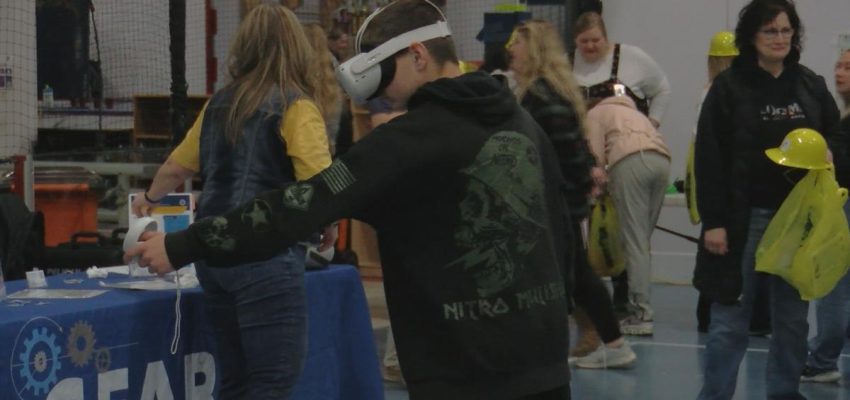

The scene in Eau Claire, where thousands of middle and high school students gathered at the YMCA to explore diverse career paths, is a timeless testament to a fundamental human quest: finding one’s calling. From healthcare to trades, technology to the arts, the palpable excitement of young minds envisioning their futures remains a powerful force. Yet, as we stand at the precipice of an increasingly complex and technologically driven world, the very notion of ‘career exploration’ is undergoing a profound transformation. The days of linear career trajectories, mapped out with a simple aptitude test and a conversation with a guidance counselor, are rapidly evolving. Today, we navigate a dynamic landscape where artificial intelligence isn’t just a subject of study but a powerful co-pilot in our journey to discover purpose and potential.
As an AI specialist and a keen observer of the tech landscape, I see this shift not as a challenge, but as an unparalleled opportunity. AI is not merely changing *what* jobs exist, but *how* we prepare for them, *how* we discover our strengths, and *how* we continually adapt to an ever-evolving professional world. The enthusiasm witnessed in events like the Career Venture in Eau Claire is now amplified by the intelligent systems that can offer personalized insights, predict future trends, and connect individuals with opportunities previously unimaginable. This article delves into the transformative power of AI, exploring how it is redefining career paths and empowering the next generation to confidently chart their professional destinies.
### AI in Career Exploration: A New Paradigm for Discovery
The traditional model of career guidance, often characterized by general information sessions and static job boards, struggles to keep pace with the velocity of change in today’s labor market. While hands-on experiences at career fairs remain invaluable for sparking initial interest and direct interaction, they represent just one facet of a much larger, multi-dimensional exploration process. This is where AI in career exploration steps in, offering a dynamic, personalized, and predictive approach that was once confined to the realm of science fiction.
Imagine a system that learns about your unique skills, interests, personality traits, and even your learning style. This is no longer a futuristic dream. AI-powered platforms can analyze vast datasets—from global job market trends to individual educational histories—to provide highly tailored career recommendations. Unlike a human counselor who might be limited by their own experiences or information access, an AI system has the capacity to process billions of data points in real-time, identifying emerging roles, predicting skill demands, and even suggesting less obvious, interdisciplinary career paths that align perfectly with an individual’s profile. For instance, a student passionate about both art and coding might traditionally be told to choose one path; an AI could identify nascent fields like ‘computational creativity’ or ‘interactive media design’ that combine both interests, complete with relevant educational programs and potential employers.
Beyond simple recommendations, AI tools are revolutionizing skill development. They can identify gaps in an individual’s current skillset for a desired career path and then curate personalized learning modules, online courses, and certification programs from a myriad of global sources. This continuous feedback loop ensures that as the job market evolves, so too does the individual’s preparation. The World Economic Forum, in its ‘Future of Jobs Report,’ consistently highlights that technological advancements, particularly AI, will create 97 million new jobs by 2025, while simultaneously displacing 85 million. This statistic underscores not only the volatility of the job market but also the critical need for agile and intelligent career guidance systems that can help individuals navigate these shifts. Personalized platforms driven by **AI in career exploration** can play a crucial role in managing this transition, facilitating reskilling and upskilling initiatives that empower workers to adapt rather than be left behind.
Consider the power of predictive analytics. AI can analyze recruitment patterns, industry growth forecasts, and demographic shifts to anticipate future demand for certain professions. This foresight is invaluable for students making long-term educational choices and for professionals considering career pivots. Rather than relying on outdated information, individuals can access real-time insights into which sectors are expanding, which skills are gaining currency, and what educational pathways offer the best return on investment. This intelligent guidance mitigates risk and optimizes decision-making, transforming career exploration from a speculative endeavor into a strategically informed journey.
### The Shifting Landscape of Work: Skills for the AI Age
As AI continues to mature, its impact on the nature of work is undeniable. Automation is streamlining routine tasks across industries, freeing human workers to focus on more complex, creative, and strategically important activities. This transformation necessitates a re-evaluation of the skills deemed essential for future success. While technical proficiency in areas like data science, machine learning, and programming will remain critical, the ‘human’ element is increasingly prized.
Skills such as critical thinking, problem-solving, creativity, emotional intelligence, and complex communication are becoming paramount. These are precisely the capabilities that AI, despite its sophistication, struggles to replicate effectively. Humans are uniquely equipped for nuanced interpersonal interactions, ethical reasoning, and generating truly novel ideas. Therefore, career paths are increasingly bifurcating into roles that either build and manage AI systems or leverage AI tools to augment human capabilities in areas requiring profound human insight. For instance, while AI can analyze market data, it often takes human creativity to translate that data into compelling marketing campaigns, or human empathy to design user experiences that truly resonate.
Educational systems must adapt swiftly to this shifting paradigm. The focus should expand beyond rote memorization to fostering creativity, encouraging interdisciplinary studies, and developing critical thinking from an early age. Universities and vocational schools are already beginning to integrate AI literacy into various curricula, recognizing that understanding how AI works, its limitations, and its ethical implications will be essential for nearly every profession. The rise of roles like ‘prompt engineers’ – individuals skilled in crafting effective queries for generative AI models – highlights how even non-technical roles are becoming intertwined with AI interaction.
Furthermore, the concept of lifelong learning has moved from a commendable ideal to an absolute necessity. With the average shelf-life of a skill decreasing, professionals must commit to continuous learning and upskilling. AI-powered learning platforms and micro-credentialing programs make this more accessible than ever, allowing individuals to acquire new competencies flexibly and efficiently. Events like the Eau Claire career fair, while excellent starting points, must be complemented by a continuous engagement with learning resources and evolving insights into the future of work. The best approach for navigating tomorrow’s job market will involve embracing continuous learning, demonstrating adaptability, and cultivating uniquely human skills that complement, rather than compete with, AI capabilities. This holistic approach ensures that individuals remain resilient and relevant in a rapidly changing professional environment, reinforcing the importance of proactive AI in career exploration strategies.
### Empowering the Next Generation: Practical Steps and AI Tools
For students and young professionals eager to navigate this exciting, albeit complex, future, there are concrete steps and AI-powered tools that can provide significant advantages. The key lies in proactive engagement and intelligent utilization of available resources.
Firstly, hands-on experience remains invaluable. While AI can simulate scenarios, real-world internships, volunteer work, and personal projects provide practical skills, networking opportunities, and a deeper understanding of industry dynamics. Pursuing interdisciplinary studies, combining a core major with minors or electives in AI, data science, ethics, or even creative writing, can foster the versatile skillset highly sought after in the AI era. A student exploring career options, for example, might combine a passion for biology with data analytics, opening doors to burgeoning fields like bioinformatics or computational biology.
Secondly, leverage AI as a personal career mentor. Numerous platforms are emerging that utilize AI to assist with resume optimization, interview preparation, and even identifying suitable job openings based on learned preferences and skill matching. Generative AI models can help craft personalized cover letters, analyze job descriptions for key skills, and even simulate interview scenarios, offering feedback on communication style and content. Some advanced AI tools can create virtual reality (VR) simulations of various work environments, allowing individuals to experience a ‘day in the life’ of a specific profession before committing to a long educational path.
Moreover, students should actively engage with online learning communities and Massive Open Online Courses (MOOCs) that offer specialized training in AI, data literacy, and emerging technologies. Platforms like Coursera, edX, and Udacity, often powered by AI algorithms themselves to personalize learning paths, provide access to world-class education that can supplement traditional schooling. These resources are critical for staying abreast of technological advancements and acquiring in-demand skills outside of formal educational structures. The democratizing effect of AI in education means that high-quality learning is more accessible globally, empowering individuals from diverse backgrounds to compete in the global marketplace.
The global AI market, projected to reach over $1.5 trillion by 2030, signifies not just technological growth but a massive expansion of career opportunities across virtually every sector. From AI ethicists and governance specialists ensuring responsible development to AI trainers and data annotators feeding these intelligent systems, new roles are continually emerging. Even traditional fields like law, medicine, and finance are being reshaped by AI, creating demand for professionals who can integrate AI tools into their practice, enhancing efficiency and decision-making. Therefore, fostering an understanding of **AI in career exploration** from an early age is not just beneficial; it’s rapidly becoming essential.
As we look towards a future increasingly shaped by artificial intelligence, the journey of career exploration transforms from a simple navigation task into an ongoing voyage of discovery and adaptation. The enthusiasm of students exploring their options, as seen in community events, is now augmented by intelligent systems that promise to make this exploration more insightful, personalized, and effective than ever before. We are moving beyond static brochures and generic advice to a world where AI acts as a sophisticated guide, helping individuals uncover their unique potential and align it with the dynamic needs of the global economy.
Embracing this new era requires a commitment to continuous learning, the cultivation of uniquely human skills, and a willingness to leverage AI as a powerful ally. For the André Lacerdas of tomorrow, the future is not just about understanding AI, but about using it to craft a meaningful and impactful career path. By doing so, we not only secure individual success but also collectively contribute to building a more intelligent, adaptable, and prosperous society.