
For centuries, agriculture has been the bedrock of human civilization, evolving from rudimentary tools to complex machinery. Yet, the pace of transformation witnessed in recent decades is unprecedented, driven by a silent revolution unfolding in fields and laboratories alike. We are no longer talking about mere mechanization, but rather an intricate dance between biology, data science, and artificial intelligence. The traditional image of a farmer toiling under the sun is rapidly being augmented by precision sensors, autonomous robots, and AI-powered analytics. It’s a shift that demands new skills, new mindsets, and a renewed focus on education.
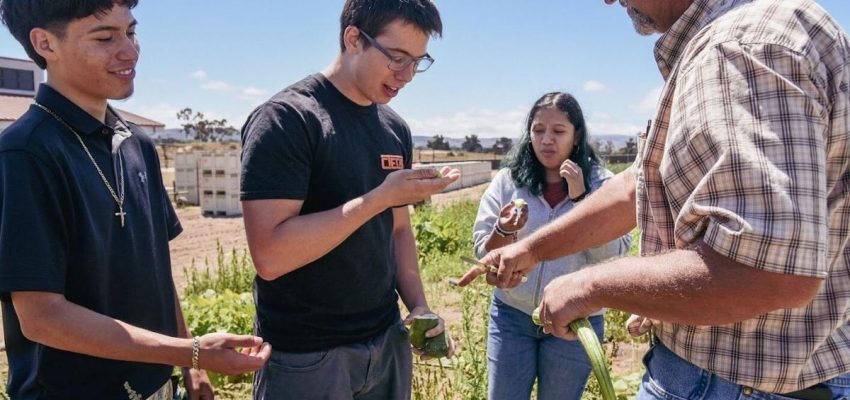
This profound evolution is precisely what institutions like the Mark Richardson Career Technical Education (CTE) Center are addressing head-on. Far from being an anachronism in our digital age, agriculture is emerging as a hotbed for technological innovation, attracting a new generation of talent. The Center’s annual Santa Barbara County Farm Day serves as a vibrant testament to this transformation, opening its gates to provide visitors with a compelling, hands-on look at student-led initiatives in modern farming. It’s an opportunity not just to see the crops, but to grasp the immense potential for careers and community building within a tech-infused agricultural landscape. As André Lacerda, AI specialist, writer, and tech enthusiast, I find these intersections between age-old practices and cutting-edge innovation endlessly fascinating, and critical for our collective future.
Agricultural Technology: Cultivating the Future of Food and Careers
The term agricultural technology encompasses a vast and rapidly expanding field, integrating everything from IoT sensors and drone imagery to advanced robotics and artificial intelligence into farming practices. The Mark Richardson CTE Center, through events like its Farm Day, offers a microcosm of this revolution, demonstrating how educational institutions are adapting to prepare students for these emerging roles. Visitors to Farm Day aren’t just observing; they’re interacting with the practical applications of these innovations, often directly guided by the students themselves.
At its core, modern agriculture is about efficiency, sustainability, and productivity. With a global population projected to reach nearly 10 billion by 2050, the demand for food will escalate dramatically, necessitating smarter, more resource-efficient farming methods. This is where agricultural technology becomes indispensable. Precision agriculture, for instance, uses GPS, satellite imagery, and on-the-ground sensors to optimize crop yields while minimizing the use of water, fertilizer, and pesticides. Farmers can analyze data on soil moisture, nutrient levels, and plant health down to individual plant rows, making hyper-targeted decisions that were once impossible. This level of detail not only boosts output but also significantly reduces environmental impact.
The Mark Richardson CTE Center exemplifies this forward-thinking approach by offering programs that equip students with the skills needed for such data-driven farming. Their curriculum likely includes modules on drone operation for crop scouting, sensor deployment and data interpretation, and even basic programming for automated systems. The ‘corn, careers, community’ mantra of their Farm Day highlights how even a staple crop like corn is now a canvas for technological advancement. Imagine students learning to use AI algorithms to predict optimal planting times, detect early signs of disease in cornfields, or even design automated harvesting systems. These are not distant sci-fi concepts but active areas of development that are transforming the entire food supply chain.
Beyond the technical skills, CTE centers foster an understanding of the broader ecosystem of modern agriculture. This includes supply chain logistics, market analysis, and the critical role of community engagement. Farm Day, in this context, becomes a vital bridge, connecting the academic rigor of technical education with the practical realities and societal importance of farming. It showcases how these future farmers and agritech specialists are not just growing crops, but growing a sustainable future for their communities.
From Soil to Sensors: The AI Revolution in the Field
The true marvel of modern agricultural technology lies in its integration of artificial intelligence and machine learning. AI is no longer confined to data centers and self-driving cars; it’s actively shaping the way we cultivate our food. Consider the power of predictive analytics: AI models, trained on vast datasets of historical weather patterns, soil conditions, crop yields, and disease outbreaks, can now forecast with remarkable accuracy the optimal times for planting, watering, and harvesting. This significantly reduces guesswork and maximizes resource utilization. For instance, an AI system might analyze real-time soil moisture data from IoT sensors, combined with local weather forecasts, to recommend precise irrigation schedules, saving millions of gallons of water annually across large farms.
Robotics is another cornerstone of this revolution. From autonomous tractors that can till, plant, and spray without human intervention to robotic harvesters capable of gently picking delicate fruits, these machines are increasing efficiency and addressing labor shortages. Companies like John Deere are investing heavily in AI-powered autonomous farming solutions, where tractors use computer vision and machine learning to navigate fields, avoid obstacles, and perform tasks with unparalleled precision. Small, agile robots are also being developed for weeding, reducing the need for herbicides, and for precision spraying, where individual plants are targeted, minimizing chemical runoff and environmental damage.
The Mark Richardson CTE Center’s focus on hands-on learning means students are likely getting exposure to the underlying principles of these technologies. They might be working with prototypes of smart irrigation systems, analyzing drone footage to assess crop health, or even experimenting with machine vision systems to sort produce. The inclusion of corn as a highlight on Farm Day offers a tangible example: AI can be used to analyze genetic markers for developing drought-resistant or high-yield corn varieties, or to detect subtle changes in corn leaves indicative of nutrient deficiencies or pest infestations long before a human eye could perceive them. This proactive, data-driven approach is a game-changer.
Furthermore, AI-driven diagnostics are transforming pest and disease management. Instead of widespread, preventative spraying, farmers can use AI to identify specific areas or even individual plants affected by disease, allowing for targeted treatments. This not only saves money but also promotes biodiversity and reduces the overall chemical footprint of agriculture. The potential of this technology is immense, with the global agritech market projected to reach hundreds of billions of dollars in the coming years, underscoring the vast career opportunities for those with expertise in this dynamic field.
Nurturing Tomorrow’s Innovators: CTE Centers as Innovation Hubs
The rapid advancement in agricultural technology means that the workforce of tomorrow needs a very different skill set than that of previous generations. It’s no longer enough to know how to drive a tractor; future agricultural professionals need to understand data analytics, robotics, drone operation, sensor technology, and even basic coding. This is precisely where Career Technical Education (CTE) centers like Mark Richardson play a pivotal role. They are not just vocational schools; they are innovation hubs, designed to bridge the gap between academic theory and practical, industry-relevant skills.
CTE programs provide students with a unique blend of theoretical knowledge and hands-on experience, preparing them for a diverse range of careers in agritech. These careers can include roles such as precision agriculture specialists, who manage sensor networks and data platforms; agricultural drone operators, who collect aerial data for crop analysis; agricultural robotics technicians, who maintain and program automated farm machinery; and even AI specialists focused on developing algorithms for yield optimization or disease detection. These are high-demand, high-tech jobs that offer significant growth potential and contribute directly to food security and environmental sustainability.
The Mark Richardson CTE Center’s Farm Day is an excellent example of how these institutions engage with the community to showcase these opportunities. It allows parents, educators, and potential students to witness firsthand the cutting-edge work being done and to understand the relevance of CTE programs. By highlighting student-led agriculture, the event empowers young people, showing them that they can be at the forefront of innovation. It fosters a sense of community involvement and pride in local agriculture, while simultaneously demystifying the complex technologies involved. This integration of education, technology, and community outreach is crucial for building a resilient and innovative agricultural sector.
Moreover, the emphasis on practical skills ensures that students are not just learning about technology but are actively applying it to real-world problems. This experiential learning approach is invaluable, as it cultivates critical thinking, problem-solving abilities, and an entrepreneurial spirit—qualities essential for navigating the evolving landscape of agricultural technology. These students are not just learning to farm; they are learning to innovate, to adapt, and to lead the charge in feeding a growing world with smarter, more sustainable methods.
The Harvest of Innovation: A Sustainable Future
The transformation of agriculture by technology, particularly AI, is one of the most exciting and critical developments of our time. It represents a potent blend of human ingenuity and technological prowess, aimed at addressing some of humanity’s most pressing challenges: food security, resource scarcity, and climate change. Institutions like the Mark Richardson CTE Center are on the front lines of this revolution, equipping the next generation with the knowledge and skills to wield these powerful tools responsibly and effectively. Their Farm Day is more than just an event; it’s a window into a future where farming is high-tech, sustainable, and deeply integrated with scientific innovation.
As we look ahead, the continued evolution of agricultural technology promises even more astounding advancements. From hyper-local, vertical farms powered by AI to genetically optimized crops that thrive in diverse climates, the possibilities are vast. It’s a future where every seed planted, every drop of water used, and every harvest gathered is informed by intelligent systems working in harmony with human expertise. Investing in vocational education, fostering community engagement, and embracing these technological shifts are not merely options but necessities for cultivating a bountiful and sustainable future for all. The seeds of this future are being sown today, often by the very students showcasing their work at events like the Mark Richardson CTE Center’s Farm Day.